The Coffee Tables I Keep Coming Back To

The Coffee Tables I Keep Coming Back To

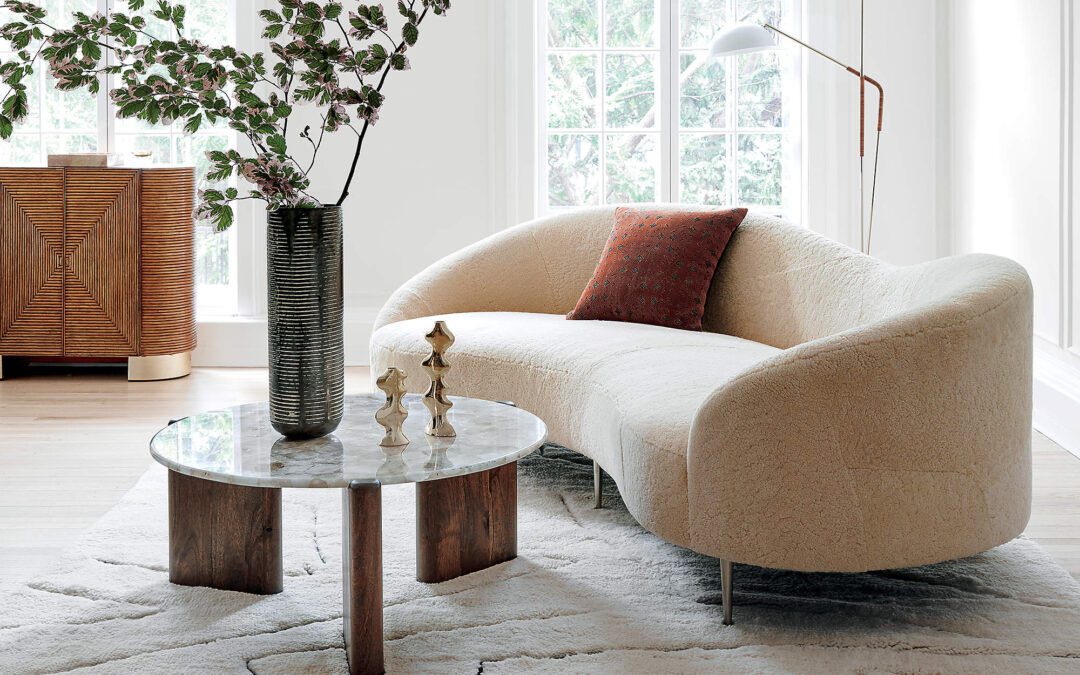
There’s a reason the coffee table is called the centerpiece. It’s not just a place to rest your glass—it’s the quiet anchor of a room. When chosen well, it doesn’t just fill space. It sets the tone. It offers rhythm. It signals how you live.

In my design work—from beachside retreats in Florida to layered living rooms in St. Louis—I find myself returning to a certain kind of coffee table: sculptural yet livable, quietly luxurious, and grounded in materiality.

Below are six of my favorite coffee tables right now—each chosen for its form, function, and ability to elevate a space with restraint and presence. Whether you’re furnishing a full living room or refining a single corner, these are the pieces that bring clarity and calm to the heart of the home.

Click the images to shop them.

Jimenez Round Coffee Table – Lulu & Georgia

1. Jimenez Round Coffee Table – Lulu & Georgia

Wrapped in handwoven water hyacinth over an iron frame, this table brings natural softness without sacrificing structure. I love using it in sun-drenched rooms where texture and light can interact. It’s a quiet nod to coastal design—perfect for layered neutrals, relaxed linen sofas, and rooms that breathe.

“This is the piece I reach for when a room needs warmth, not weight.”
Kapala Nesting Coffee Table Set – Lulu & Georgia

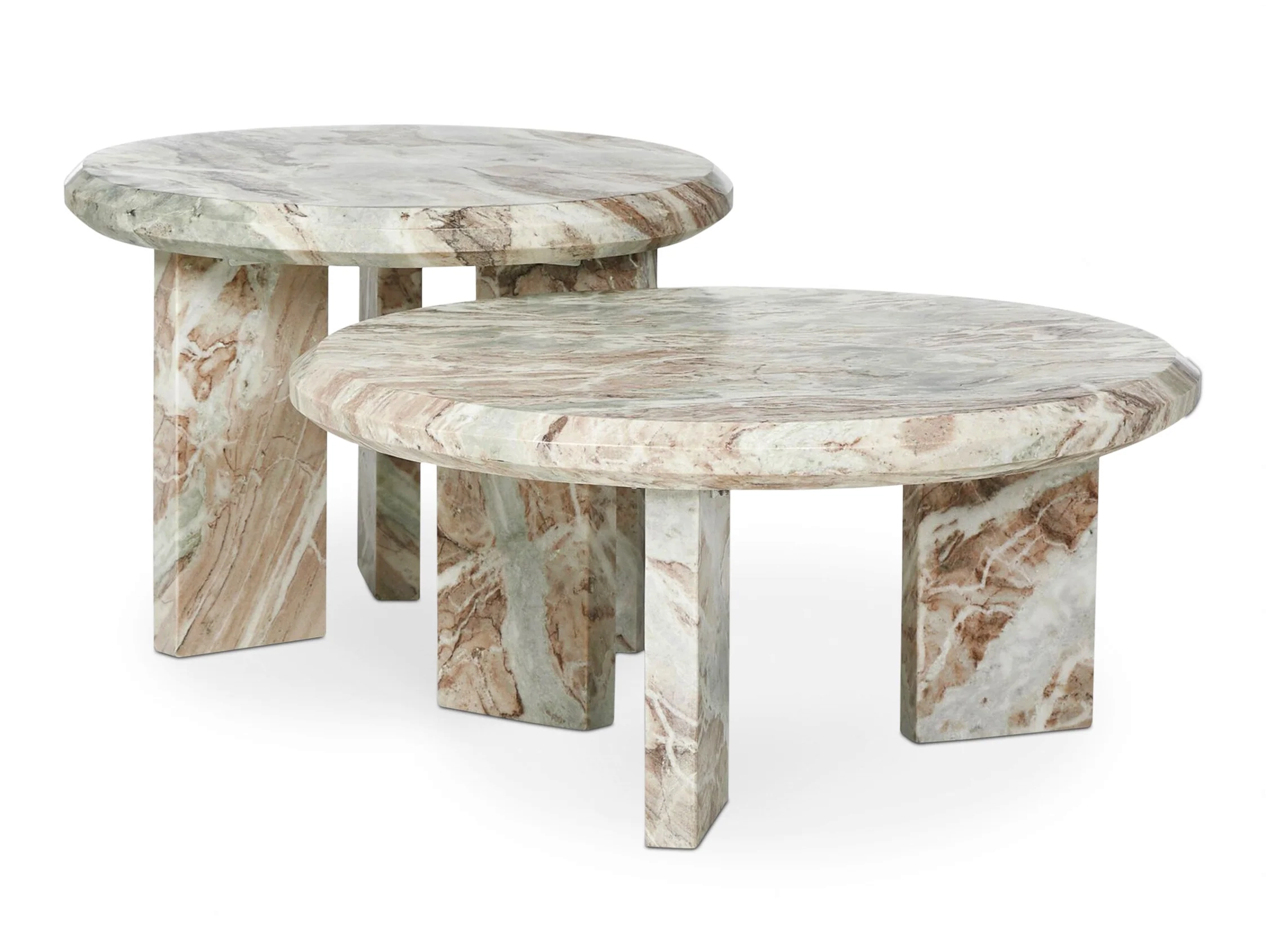
2. Kapala Nesting Coffee Table Set – Lulu & Georgia

This nesting pair is sculpted from creamy taupe marble, with chamfered lines and subtle veining that feel tailored but never overworked. It’s an ideal solution for smaller spaces or homes that shift from entertaining to everyday. The design offers a softness that’s architectural, not fussy.

“Marble doesn’t have to shout. This is marble at its most refined.”

Kimberly Square Coffee Table - Lulu & Georgia

3. Kimberly Square Coffee Table – Lulu & Georgia

The Kimberly mixes bronze-plated legs with an ivory marble top—striking a balance between industrial edge and refined restraint. The open silhouette keeps the piece feeling light, while the materials introduce depth. I often pair this table with boucle, velvet, or sculptural lighting to echo its tension.
Kent Square Coffee Table – Lulu & Georgia

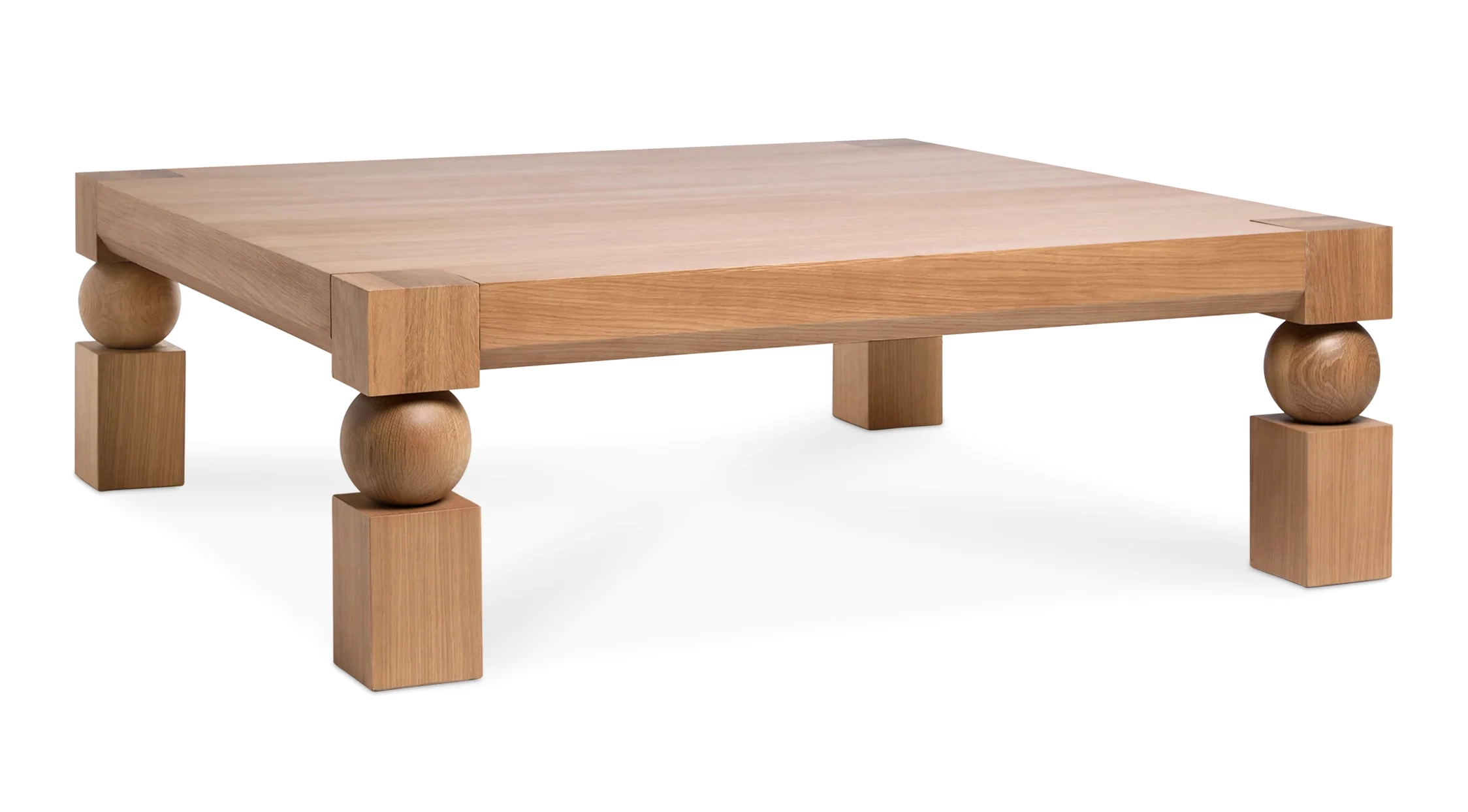
4. Kent Square Coffee Table – Lulu & Georgia

The Kent is a study in geometry and grain. Its oak finish keeps it grounded, while the intersecting planes offer sculptural interest without overwhelming the room. For clients looking for something modern but warm, this is a go-to. It also plays beautifully with textured rugs and tonal upholstery.

Santoro Round White Quartz Coffee Table - CB2

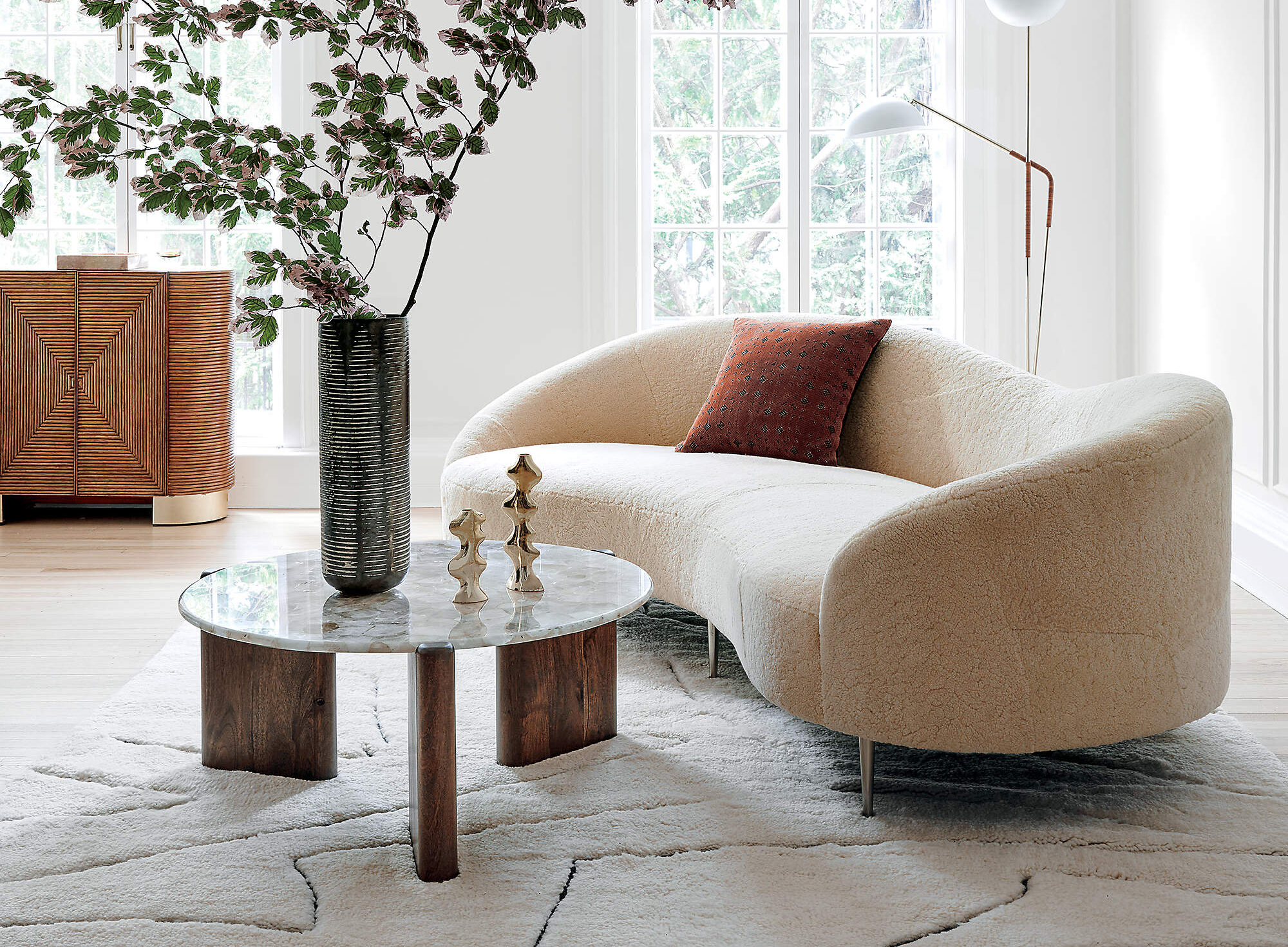
5. Santoro Round White Quartz Coffee Table – CB2

I love contrast in design—and the Santoro is a masterclass in it. The crisp white quartz is refined but not precious, and the acacia wood legs give it soul. This piece brings architectural calm into modern spaces and pairs beautifully with warm metals, creamy palettes, or crisp black-and-white schemes.
Barredo Marble Coffee Table – Lulu & Georgia

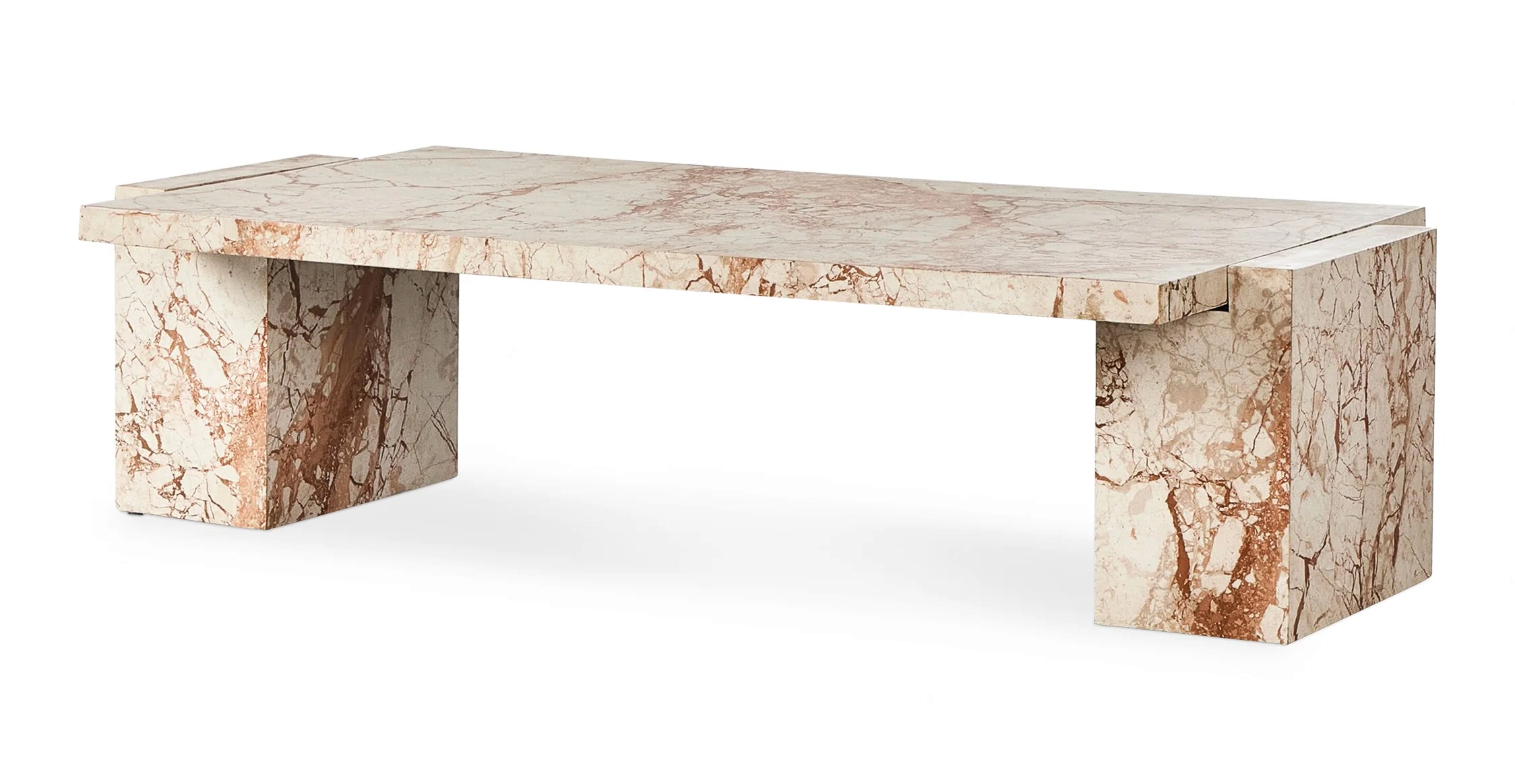
6. Barredo Marble Coffee Table – Lulu & Georgia

This one has presence. With a thick, veined marble top and a sculptural cradle base, the Barredo is bold without being brash. I like it best in rooms that need a grounding moment—something that makes the space feel resolved. It works especially well in neutral spaces that lean minimalist but crave drama.

Which Coffee Table Style Is Right for You?

The right coffee table depends not just on style but on how you live. Here’s a quick guide:

  • For families: Round tables with soft edges and durable wood or stone surfaces.
  • For entertainers: Nesting tables or larger surfaces to support trays and drinks.
  • For minimalists: Sculptural bases in stone or metal with an airy footprint.
  • For organic modernists: Woven textures, travertine, or oak with natural grain.
  • For apartment dwellers: Compact tables with smart storage or nesting designs.

Need help picking the right piece? Book a 2-Hour Design Consultation for one-on-one design support.
Coffee Tables I Love

FAQ: Choosing the Right Coffee Table

What’s the best coffee table shape for a small space?
Round or oval tables tend to work best in smaller rooms. They allow for smoother flow and eliminate harsh corners.

Can you mix a stone coffee table with a fabric sofa?
Yes—the contrast in texture adds depth. I often pair marble with boucle or velvet for a rich sensory experience.

How high should a coffee table be?
Aim for 1–2 inches lower than the seat height of your sofa for visual balance and comfortable reach.

Is it okay to skip a coffee table entirely?
In very small spaces, yes. But a smaller table, ottoman, or pair of stools can still anchor the room without clutter.

What’s the 2/3 rule?
Your coffee table should be roughly two-thirds the length of your sofa—this keeps the room feeling balanced.

Trade-Only Options & Custom Sourcing

While these specific picks are all shoppable online (and without affiliate links), my full-service clients get the benefit of me sourcing from an enormous amount of exclusive trade-only and bespoke/direct from manufacturer coffee tables also. If you’re looking for something truly amazing, unique or handcrafted, inquire about my Interior Design Services or virtual shopping concierge on our shop.

About the Author: Rachel Blindauer

Rachel Blindauer is an award-winning interior and product designer known for crafting spaces that feel as good as they look. With over 15 years of experience, she’s designed more than 1,000 products for brands like Williams-Sonoma and led luxury design projects from Nantucket to Sarasota. Her St. Louis-based firm works nationally with high-end residential clients, hoteliers, and developers.
2 Hour Interior Design Virtual or In Person Consultation

SOMETHING FOR EVERYONE

THE PIECES RACHEL RETURNS TOAGAIN AND AGAIN

The Kitchen as an Extended Living Room? 9 Kitchen Design Shifts Worth Making in 2025

The Kitchen as an Extended Living Room? 9 Kitchen Design Shifts Worth Making in 2025

By Rachel Blindauer, Interior & Product Designer

In the evolving conversation around kitchen design, one thing is clear: the era of soulless, showroom-white kitchens is winding down. The new luxury isn’t perfection. It’s things that will last forever and patina.

From St. Louis to Sarasota, I’m seeing a renaissance in the way people want to live in their kitchens—and more importantly, feel in them. In 2025, kitchens are less about posing for Pinterest and more about crafting spaces that carry warmth, rhythm, and memory.

Below, I unpack the most compelling shifts that are reshaping the heart of the home—with timeless insights and curated picks from shop.rachelblindauer.com to bring the vision home.

Kitchen Shelves & Wood

The Kitchen as an Extended Living Room

Today’s most inviting kitchens don’t just cook—they lounge. The boundaries between kitchen and living room are quietly dissolving, giving rise to spaces designed for both nourishment and connection.

What’s emerging in place of the utilitarian island? Softer silhouettes, cushioned stools, and surfaces styled more like a coffee table than a prep zone. We’re seeing long, easy meals with upholstered seating, layered lighting, and materials that bring the comfort of the living room into the heart of the home.

“A well-designed kitchen doesn’t just function—it hosts, it comforts, it slows you down.”

Picture this: a sculptural pendant above the island, a linen-upholstered bench along one side, and a stack of design books next to a hand-glazed bowl of citrus. It doesn’t just say, “I cook here.” It says, “I live here.”

Design Tip: Style your island like you would a living room vignette. Add a decorative bowl, a stack of art books, or a textured tray. If you’re renovating, consider integrating cushioned seating, curved edges, or softer finishes to enhance the sense of comfort and flow.

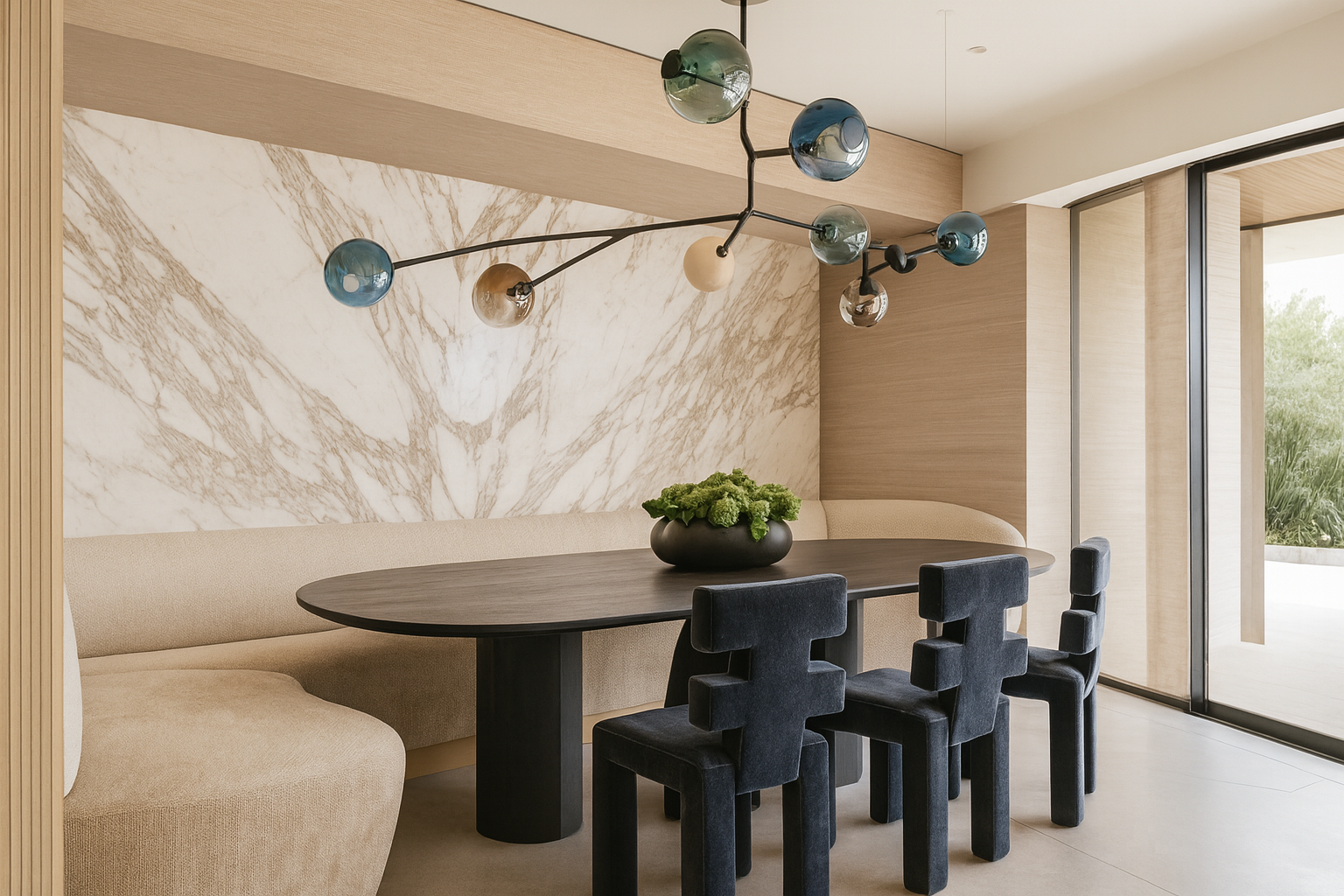
Kitchen Dining Table

Breakfast Nooks That Actually Work

Built-in benches with hidden storage are the new breakfast bars. Whether tucked beneath a window or next to French doors, this zone becomes the gravitational center for morning coffee, homework, and lazy Sunday chats.

Recommended Pairing: Add warmth with textural linen seat cushions, and accent the nook with the sculptural Camella Flush Mount overhead to soften morning light.

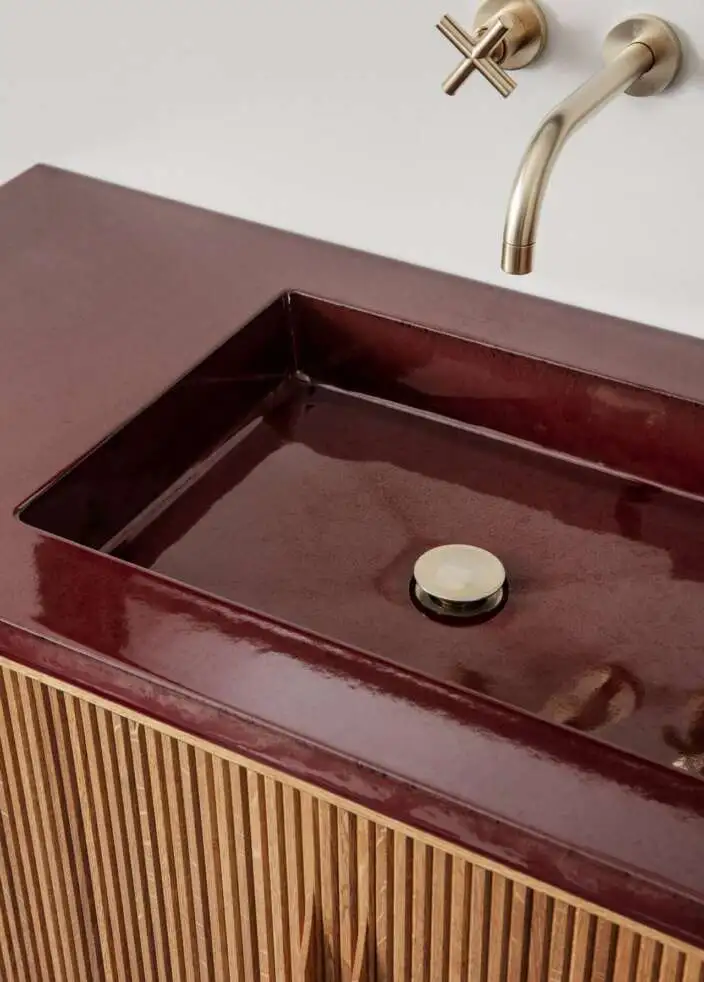
Surface Materials That Speak Up

Say goodbye to safe quartz and overused marble. This is the year of statement counters: glazed lava stone, polished stainless, marine-grade finishes that age boldly and beautifully.

“Surfaces should wear like good denim—with character.”

Browse the home decor section for unexpected finishes, or make a quiet statement with the Helios Bowl.

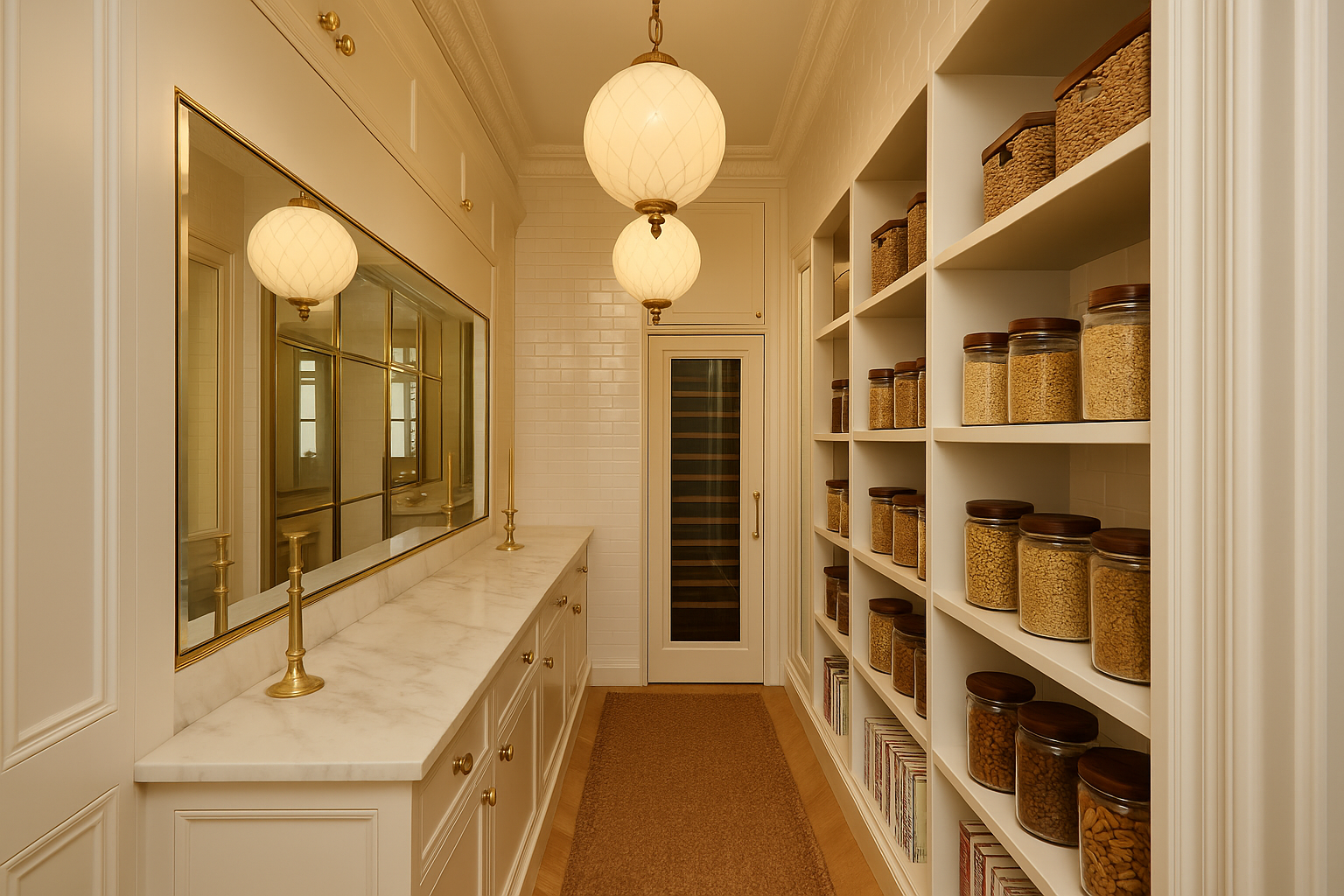
Scullery

The Scullery Revival

With open-concept living, the need for a secondary utility zone—a scullery or back kitchen—is growing. Think hidden dish stations, a backup oven, and room for the not-so-pretty parts of meal prep.

Design Note: Use shaker-style cabinetry and antique-inspired hardware to evoke an elevated but purposeful tone. Add understated lighting like the Norfolk Pendant for a grounded finish.

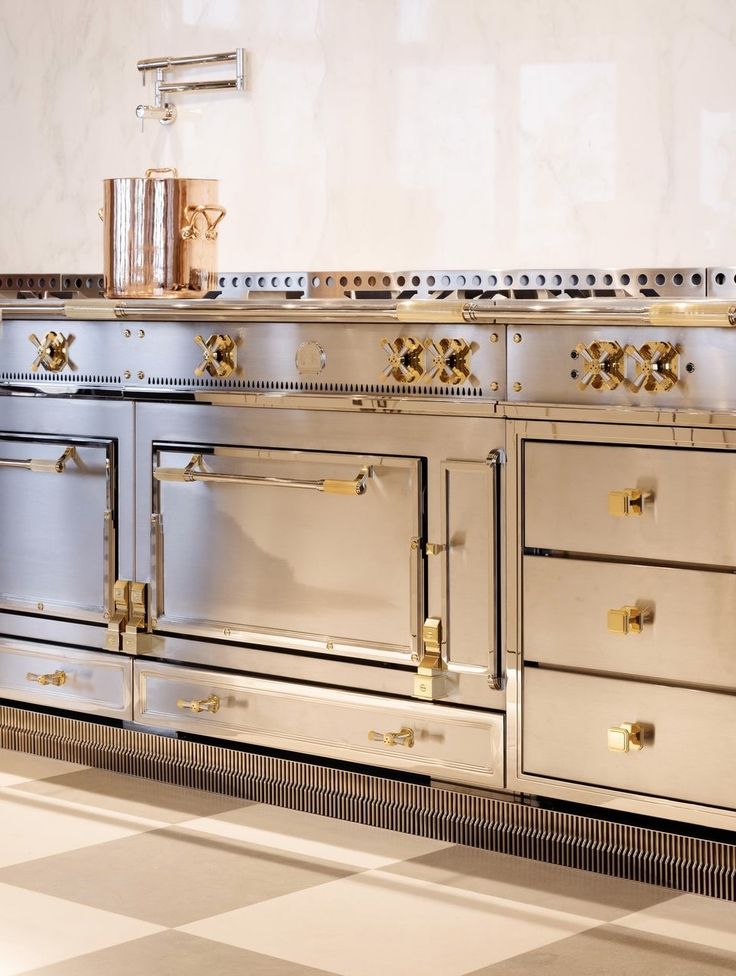
Silver Gold Kitchen Stove

Silver & Gold Takes the Spotlight

Gone are the days when mixed metals felt like a mistake. In today’s most compelling kitchens, silver and gold aren’t rivals—they’re a quiet duet. Think: a silver and brass stove, and Urban Electric silver and brass light fixtures with subtle hardware moments that catch the light like jewelry in motion.

“The right metal mix creates depth, warmth, and an unmistakable sense of refinement.”

Pro Tip: Highlight your architectural trim with mixed-metal accents and balance the look with clean-lined counter stools. Finish the scene with the Siena Large Flush Mount—its soft glow and timeless silhouette tie the whole space together with understated glamour.

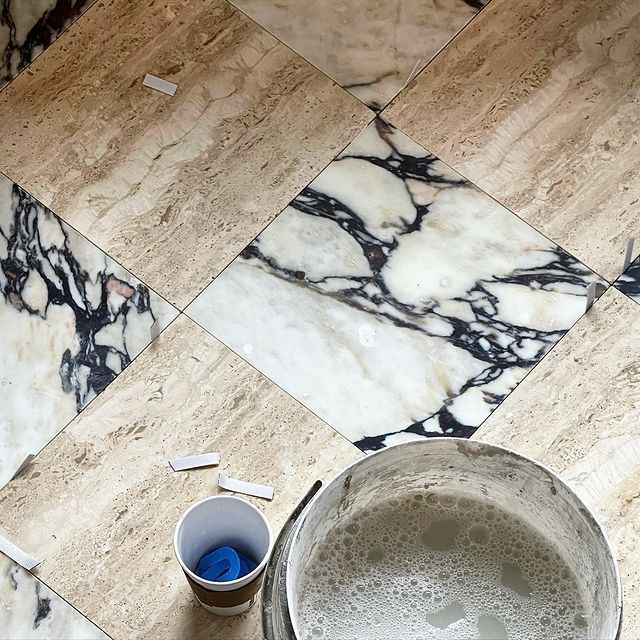
Travertine & Voile Marble Floor

Classic Floors

We’re craving comfort and lineage. From herringbone wood to checkerboard marble and nostalgic details are returning with intention of craftsmanship.

“Design isn’t about trends. It’s about timeless gestures that feel lived in.”

Bring this feeling to life with a hand-thrown ceramic bowl or a wicker sconce. The Hudson Small Square Flush Mount adds a subtle historical nod.

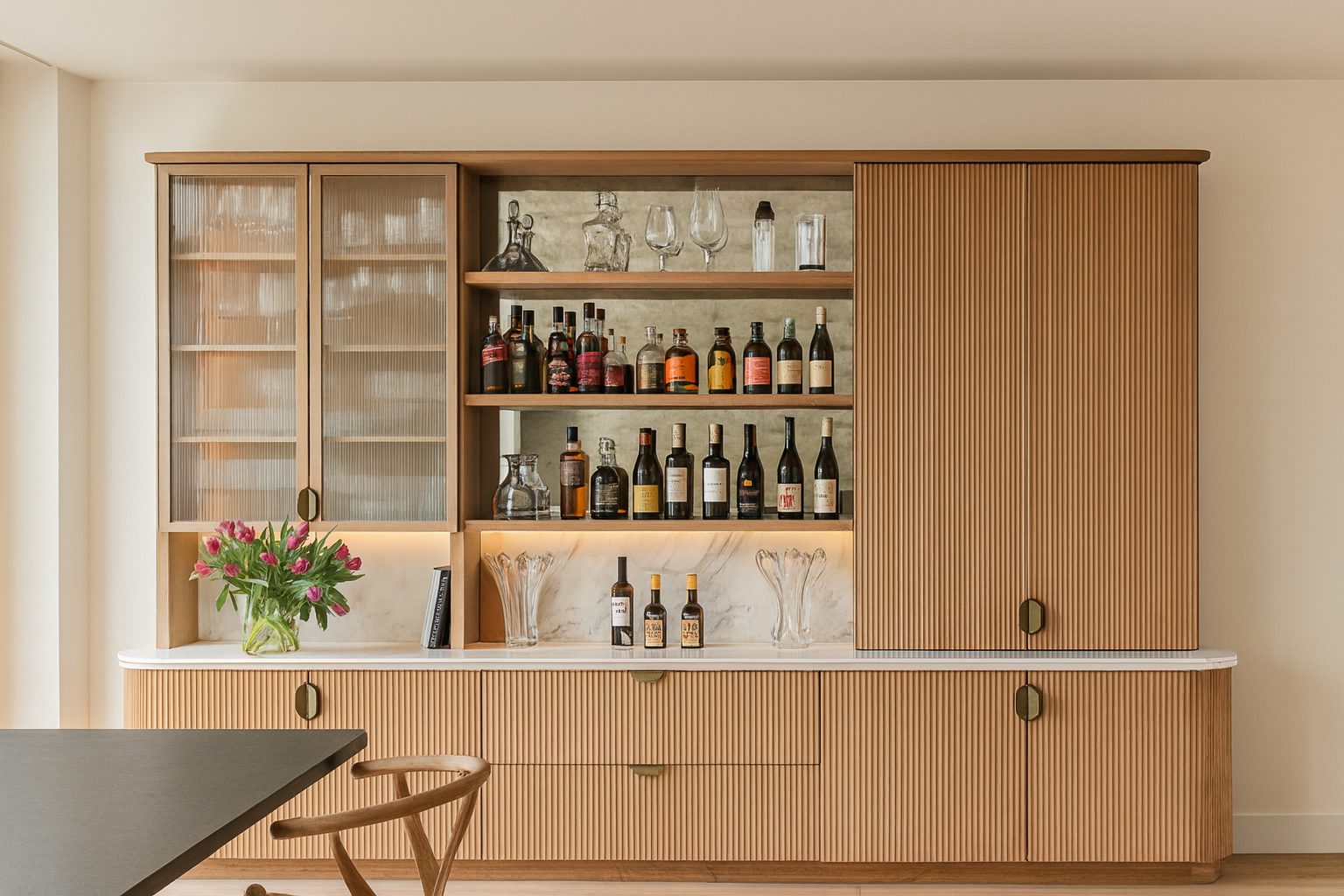
Drink Station Cabinet

Cabinets With Soul

Flat-panel doors are quietly fading. In their place: woven cane, fluted wood, and inlaid veneers. Cabinets are being treated like furniture, each one telling its own story.

Consider layering in woven textures or sculptural pulls to elevate your existing cabinetry.

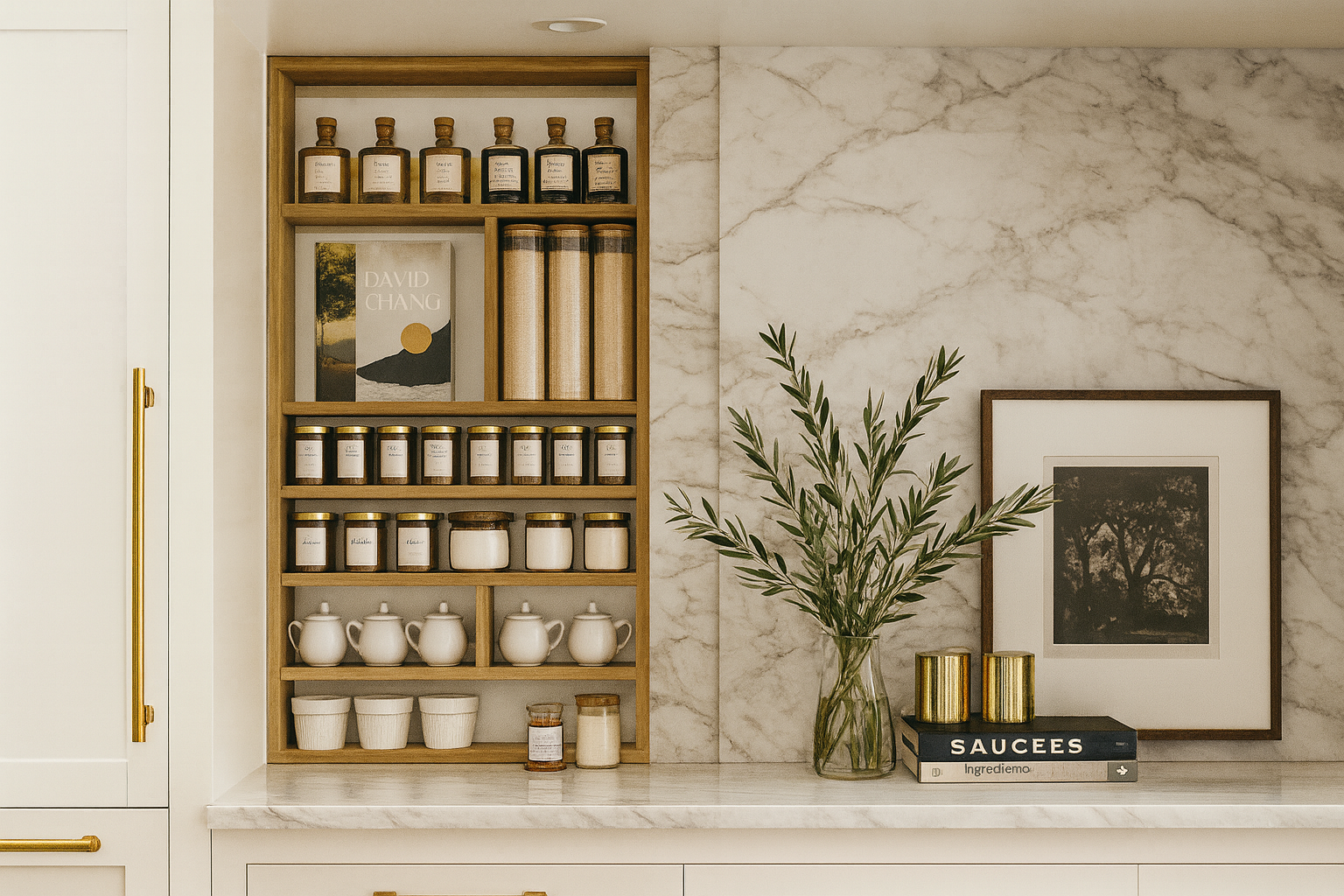
Spice Station

Custom Niches & Built-Ins

Recessed nooks for coffee bars, baking stations, or cocktail prep zones are on the rise. They create intimacy within the openness and offer smart space utility.

Styling Tip: A fluted pewter vase or Murano-style lamp adds elegance to an otherwise utilitarian spot.

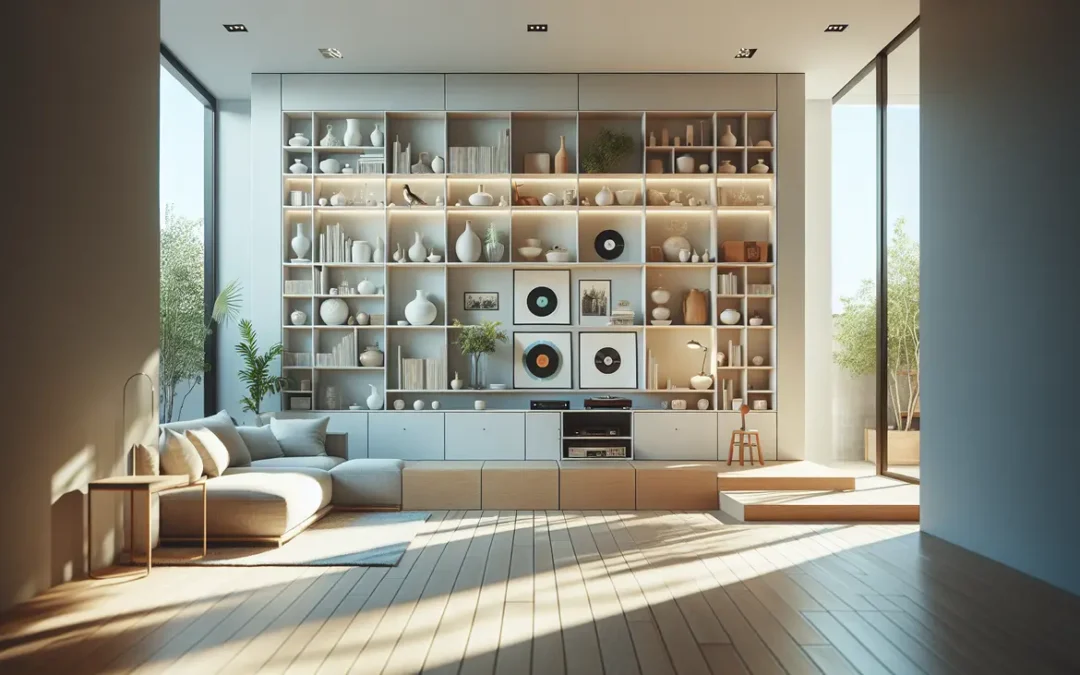
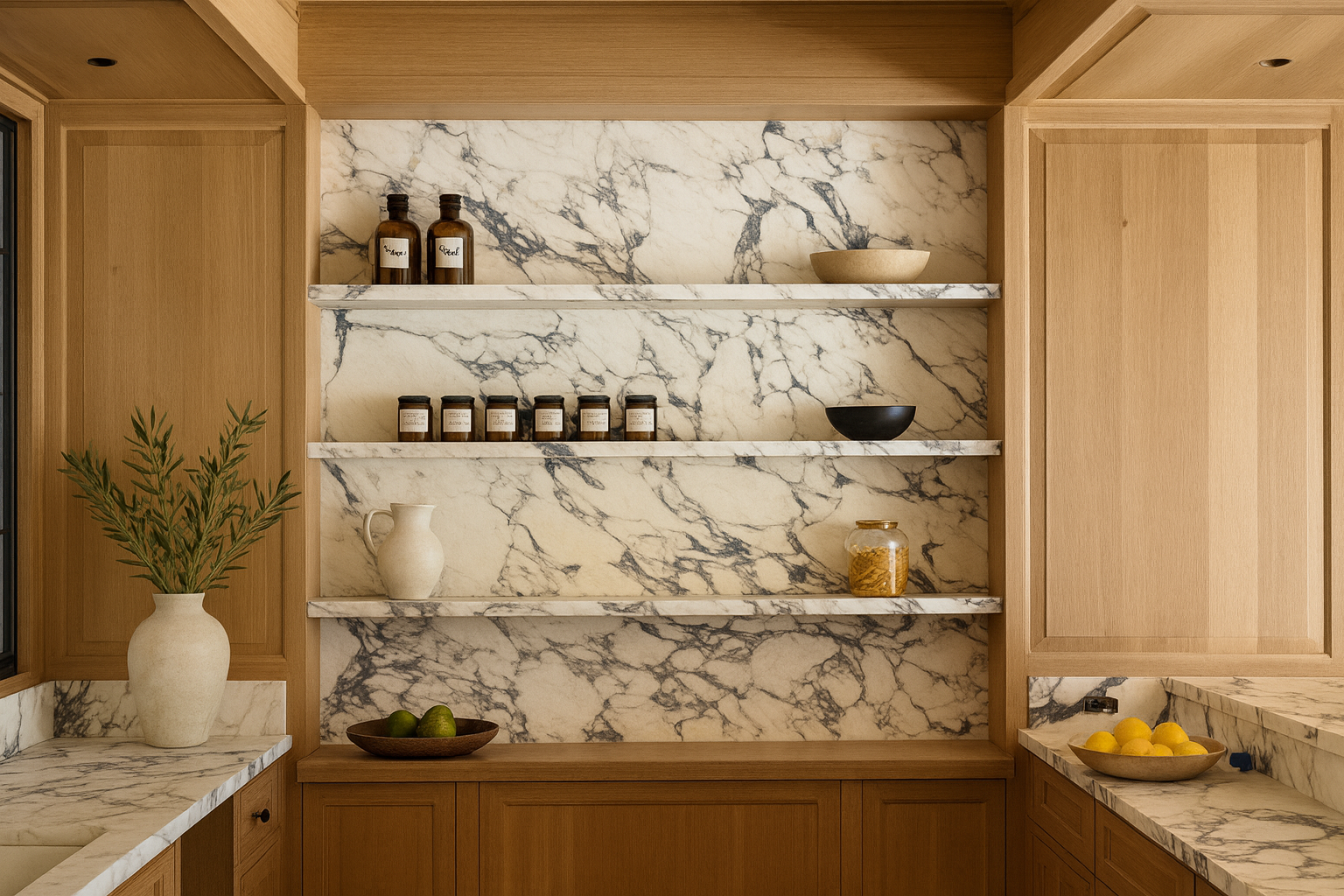
Kitchen Shelves & Wood

The “Invisible” Kitchen

Kitchens are increasingly designed to disappear into the architecture of the home. Think wood-fronted appliances, hidden hoods, and finishes that feel more like furniture than fixtures.

“When design is done right, it becomes background music for your life.”

Warmth, texture, and scale become the design language. Explore handmade tiles, low-contrast lighting, or finish the mood with the Mesa Rug underfoot.

Final Thoughts

Your kitchen shouldn’t look like it came from a catalog. It should feel like it came from you. As a designer, I don’t chase trends—I interpret the undercurrent of what makes a space last. If you’re ready to begin designing a kitchen that reflects your life and legacy, book a 2-Hour Consultation to get started.

Looking for full-service support? Learn more about Interior Design Services, or download the Whole-Home Organization Planner to begin refining your space.

2 Hour Interior Design Virtual or In Person Consultation

SOMETHING FOR EVERYONE

THE PIECES RACHEL RETURNS TOAGAIN AND AGAIN

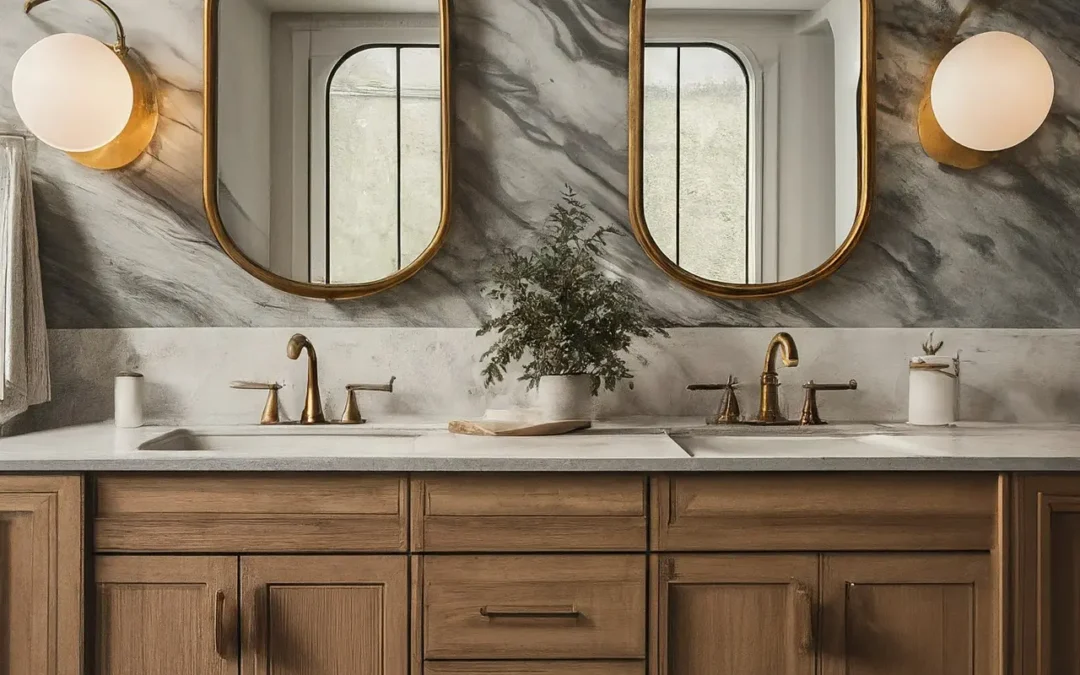
Expert Tips For Successful Bathroom Renovations

Expert Tips For Successful Bathroom Renovations

Diving into a bathroom renovation project can be as thrilling as it is daunting. It’s not just about selecting the right tile or paint color; it involves meticulous planning, vision, and a bit of courage to bring your dream bathroom to life. Let’s embark on this journey together, transforming your space into a sanctuary of relaxation and style.

Planning Your Renovation Journey From Outdated to Oasis

The first step in any successful bathroom renovation is thorough planning. Draft a clear and concise plan that outlines your vision, budget, and timeline. Consider the layout, the fixtures you intend to replace, and the overall aesthetic you aim to achieve. It’s crucial to research and get inspiration from various sources to ensure your renovated bathroom meets both your functional needs and stylistic preferences. Early planning can help avoid costly mistakes and unnecessary stress, making the renovation process smoother and more enjoyable.

A successful bathroom renovation also demands a realistic budget. It’s tempting to dream big, but it’s essential to align these dreams with what you can afford. Account for unexpected costs by setting aside 10-20% of your budget for unplanned expenses. This financial cushion will give you peace of mind and flexibility during the renovation process.

Selecting the Right Materials for Durability and Aesthetics

Choosing the right materials is critical for both the durability and the aesthetics of your bathroom renovation. High-quality tiles, countertops, and waterproofing materials can significantly extend the lifespan of your bathroom, while also enhancing its appearance. Consider materials that are not only visually appealing but also capable of withstanding damp bathroom conditions. Porcelain tiles, for instance, are a popular choice due to their low water absorption rate and durability. Additionally, investing in quality fixtures and fittings can elevate the overall look and feel of the space.

Maximizing Space with Smart Design Choices

Incorporating smart design choices can significantly maximize the functionality and feel of even the smallest bathroom spaces. Consider using light colors for paint and tiles to make the room appear larger and brighter. Recessed shelves and cabinets can provide storage without compromising space, and choosing glass shower doors can create an illusion of openness. Furthermore, strategic placement of mirrors can visually double the bathroom’s size, reflecting light throughout the room. Remember, the goal is to create a sense of space without sacrificing style or function.

Incorporating Efficient Lighting and Ventilation

Proper lighting and ventilation are essential elements in a bathroom renovation that should never be overlooked. Efficient lighting can transform the atmosphere of your bathroom, making it feel warm and inviting. Consider a combination of task, ambient, and accent lighting to achieve a balanced and functional lighting scheme. Ventilation, on the other hand, is crucial for preventing mold and mildew growth, which are common in damp bathroom environments. Installing a high-quality exhaust fan can ensure proper airflow, maintaining a healthy and fresh atmosphere.

Choosing the Right Professional for the Job

The success of your bathroom renovation largely depends on the professionals you choose to execute the project. It’s vital to select contractors and designers with a proven track record of successful renovations. Ask for references, review their portfolio, and ensure they are licensed and insured. Transparent communication about your expectations, budget, and timeline is key to a successful partnership. A skilled professional can bring invaluable insight and expertise to your project, ensuring the final result meets or exceeds your expectations.

Budgeting Wisely Without Compromising Quality

Achieving a balance between budget and quality requires careful planning and smart decision-making. While it’s important to prioritize spending on structural elements and high-use fixtures, there are areas where you can opt for more cost-effective solutions without compromising the overall quality. For example, choosing a less expensive tile for larger areas and splurging on a statement piece for the vanity backsplash can provide a high-end look while keeping costs in check. Always consider the long-term benefits of your choices, focusing on durability and functionality to ensure your renovated bathroom stands the test of time.

2 Hour Interior Design Virtual or In Person Consultation

Something for Everyone

THE PIECES RACHEL RETURNS TO, AGAIN AND AGAIN
Beyond Aesthetics: How Designer Interiors Can Enhance Your Well-being

Beyond Aesthetics: How Designer Interiors Can Enhance Your Well-being

Designer interiors often capture our attention with their stunning aesthetics. However, there’s more to these captivating spaces than meets the eye. This blog explores how well-crafted interiors transcend beauty, impacting our overall well-being in surprising and meaningful ways.

Designing for Emotional Balance

Colors, textures, and lighting are often overlooked elements that dramatically impact our emotional health. The gentle hues of a well-curated space can evoke serenity, while contrasting textures add an element of interest, keeping our senses engaged without overwhelming them. The subtle warmth provided by soft lighting can transform a space into a haven of relaxation and reflection. When these elements work together harmoniously, they create an environment that supports emotional balance by reducing stress and enhancing mood. For instance, cooler tones such as blues and greens are known to induce calmness and tranquility, which can be beneficial in spaces designated for rest, such as bedrooms. Similarly, darker, earthy textures can ground a space, providing a sense of stability.

Incorporating such thoughtful design choices is essential in combating the chaos of everyday life. When you walk into a room that feels tailored to your emotional needs, you’re likely to experience a sense of relief and comfort. This can significantly affect your daily routine and productivity levels. A designer interior isn’t just about the ‘look’ of a space; it’s about creating environments that speak to the soul’s need for rest and rejuvenation.

Functionality Meets Aesthetic

When a well-designed interior successfully marries functionality with aesthetic appeal, it results in spaces that are not only beautiful but also incredibly practical. Imagine a living room where every piece of furniture is not only eye-catching but also serves a purpose—an artful lamp that provides ample lighting for reading or a sleek storage solution that doubles as a decorative focal point. These thoughtfully chosen elements enable us to move through our daily lives more fluidly, offering convenience while simultaneously uplifting our spirits.

Integrating technology seamlessly into design further exemplifies the blend of form and function. From hidden charging stations to smart lighting systems, these modern conveniences discretely complement the elegance of a room, enhancing its usability without detracting from its beauty. This symbiosis of function and aesthetics encourages us to engage more fully with our spaces, knowing that they cater to both our practical needs and our desire for a pleasing visual environment.

Personalization and Reflection of Identity

Your living space is a canvas to express who you are. By infusing personal touches into your interior design, you create a home that resonates with your identity, making you feel more connected and comfortable. Whether it’s through the vibrant colors of a cherished painting, the warmth of family photographs, or the textures of heirloom furniture, personalization fosters a deep sense of belonging. A personalized space is not just a reflection of personal taste; it’s an ongoing narrative of our lives and experiences.

Designer interiors that cater to personal identity offer more than visual satisfaction; they contribute to mental well-being by promoting a sense of security and sanctuary. This emotional connection to our surroundings plays an integral role in our everyday well-being, transforming our homes into personalized retreats that recharge and inspire us.

Creating Spaces for Social and Personal Interaction

Intentionally designed spaces encourage interaction, both social and personal. Socially, they provide welcoming environments that facilitate conversation, connection, and community. The arrangement of seating, the flow of a room, and the strategic use of communal areas are pivotal in sparking interactions among people. Meanwhile, quieter, more intimate corners can offer solitude and a chance to unwind, which is just as vital for our well-being.

Spaces designed with interaction in mind create the backdrop for meaningful relationships and personal introspection. Whether hosting friends for a dinner party or retreating to a cozy nook for reflection and relaxation, our surroundings have the power to shape how we connect with others and ourselves. Thus, investing in designer interiors that enhance interaction quality adds incredible value to our lives.

Sustainable Design for Peace of Mind

Sustainability in design is increasingly recognized for its positive impact on both the environment and mental health. By choosing eco-friendly materials and energy-efficient solutions, designer interiors not only lessen the carbon footprint but also introduce elements of tranquility and peace into a home. This conscious approach aligns with a growing awareness of ecological impact, enabling spaces to reflect a commitment to sustainability which, in turn, provides peace of mind to homeowners.

Moreover, the natural elements often used in sustainable design—such as reclaimed wood or organic textiles—evoke the calming essence of nature. These materials carry a timeless quality, grounding spaces with an authenticity that artificial materials can’t replicate. By integrating sustainability into interior design, the home becomes a space of harmony, nourishing both the planet and the soul.

The Transformative Power of Thoughtful Design

While visual appeal holds significant importance, the influence of designer interiors goes far beyond mere aesthetics. By fostering a sense of harmony, functionality, and personal connection, these spaces can significantly enhance your environment and well-being. Choosing thoughtfully designed interiors could be a transformative step toward a more fulfilling life.

2 Hour Interior Design Virtual or In Person Consultation

SOMETHING FOR EVERYONE

THE PIECES RACHEL RETURNS TO, AGAIN AND AGAIN
Homes That Create High Functioning Adults

Homes That Create High Functioning Adults

Design for Personal Development Begins at Home

Our living spaces are more than just physical structures—they’re catalysts for who we become. A thoughtfully designed home contributes to the development of high functioning adults who are confident, focused, and fulfilled. Interior design isn’t just about aesthetics—it’s a foundation for personal development.

The Power of Minimalism

Embracing minimalism is a key element in creating a wellness-driven interior. Simplifying our living spaces by decluttering and organizing belongings reduces visual noise and promotes a calm, focused mindset. In a clutter-free home, we reclaim our attention—and with it, our potential.

The Role of Natural Light

Natural light plays a critical role in well-being and productivity. From boosting mood and improving sleep to increasing clarity and focus, light is a powerful design tool. Maximizing windows, incorporating skylights, and placing mirrors strategically creates a space that feels both open and alive—key to any interior design for wellness.

Creating Functional Workspaces

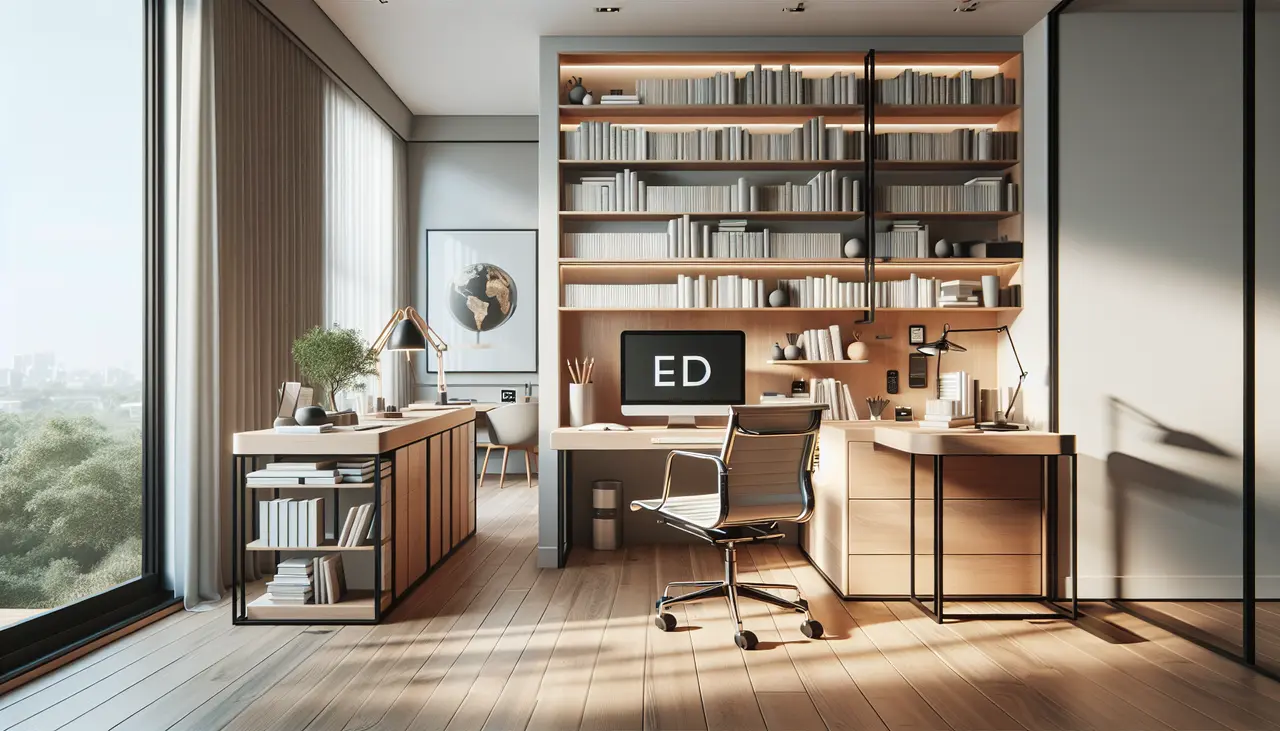
In today’s work-from-anywhere culture, functional home design is no longer a luxury—it’s essential. Carving out dedicated work zones, even within compact footprints, enhances focus and discipline. Rachel’s approach emphasizes ergonomic layouts, clear zoning, and layered lighting to support the full rhythm of life—from creation to restoration.

Promoting Balance and Well-Being

A truly wellness-driven interior supports both physical and emotional health. Spaces for rest, movement, family/community connection, and solitude work together to sustain a high-functioning lifestyle. Whether it’s a yoga nook, a cozy reading alcove, or an open-plan kitchen that invites conversation, or a daily educational ritual (like watching educational tv shows or presenting what each person learned over the dinner table) each element plays a role in nurturing a whole and present adult.

Our homes have the power to shape us into high functioning adults. By embracing minimalism, maximizing natural light, creating functional workspaces, and promoting balance and well-being, we can create an environment that nurtures personal growth and success. Let us strive to design homes that inspire and support us in becoming the best versions of ourselves.

A high functioning home promotes balance and well-being. Incorporating elements that support physical and mental health is essential. Creating spaces for relaxation, exercise, growing your own food and family/community/social interaction within our homes contributes to a well-rounded lifestyle.

The Philosophy Behind Rachel Blindauer’s Designs

Rachel Blindauer’s design philosophy transcends trends, venturing deep into the realm of design for personal development. Her work is rooted in the belief that our environment shapes how we think, feel, and function. Her interiors are described as calmly colorful—artfully balancing stimulation and serenity with an editorial eye for texture, layout, and light.

Creating Productive Living Spaces with Style and Substance

The link between environment and productivity is unmistakable in Rachel’s work. She leverages layout planning and curated materials to optimize function without sacrificing beauty. With purposeful use of color psychology, streamlined zones, and smart storage, she transforms homes into systems that support creative, focused, adult lives.

Creating Spaces that Encourage Growth and Productivity

The nexus between physical space and personal productivity cannot be overstated in Rachel Blindauer’s design ethos. Spaces designed by Rachel are envisaged as canvases that motivate and inspire. She leverages spatial organization and ergonomic design to foster environments that encourage focus and efficiency, tackling the challenge of how one’s surroundings can be optimized to facilitate workflow and creative thinking.

Integrating natural light, comfortable yet functional furniture, and clutter-free layouts, her designs promote a harmonious balance between work and leisure. Rachel’s expertise in color psychology is applied to stimulate the mind without overwhelming the senses, carefully selecting palettes that enhance concentration and creativity.

The Role of Color and Texture in Stimulating Minds

Rachel Blindauer’s approach to using color and texture is both an art and a science, rooted in an understanding of how sensory experiences affect our brain. She believes in the transformative power of color to alter moods and perceptions, employing a strategic palette to invigorate the spirit and calm the mind. Textures, similarly, are chosen not just for their tactile pleasure but for their ability to add depth and interest, stimulating the senses in a subtle yet profound way.

Design by Rachel: A Journey Through Artistry and Elegance

For Rachel Blindauer, interior design is an odyssey, a personal journey intertwined with the dreams and aspirations of her clients. Her projects are narratives of discovery, where each element, from furniture to fabric, encompasses a chapter in a larger story of elegance and refinement. Her signature style, described as an interplay of calmly colorful elements, imbues spaces with a unique identity, transforming them into reflections of the inhabitants’ souls.

Transforming Homes into Havens for High Functioning Adults

The ultimate goal of Rachel Blindauer’s designs is to transform living spaces into sanctuaries that empower and uplift. In her vision, a home is a haven where high functioning adults are not only conceived but also nurtured. By blending aesthetics with functionality, she goes beyond superficial beauty to create spaces that serve as catalysts for personal development and high achievement.

Her commitment to creating environments that resonate with the individuals’ lifestyle and aspirations ensures that each home is not only a place of rest but a foundation for success. Through thoughtful design, Rachel Blindauer lays down the blueprint for a life that is both well-lived and well-loved, making her a pioneer in the art of designing for the sophisticated, modern adult.

The Essence of Design in Cultivating Success

As we’ve journeyed through the principles and philosophies of Rachel Blindauer’s interior design, it’s clear that her approach is more than just about creating spaces that please the eye. It’s about crafting environments that serve as a bedrock for personal growth, productivity, and well-being. The commitment to marrying functionality with aesthetics ensures that every room isn’t just a space but a stepping stone towards becoming a high functioning adult. In the world of Rachel Blindauer, each design element is a thread in the tapestry of a home that supports, inspires, and transforms.


2 Hour Interior Design Virtual or In Person Consultation

Something For Everyone

THE PIECES RACHEL RETURNS TOAGAIN AND AGAIN
What’s Next for the U.S. Housing Market? 2025 Edition

What’s Next for the U.S. Housing Market? 2025 Edition

Back in 2024, the housing market was a wild ride: skyrocketing prices, intense bidding wars, and an overwhelming sense that the pace couldn’t sustain. Fast forward to April 2025, and the landscape has evolved. It’s no longer the chaotic free-for-all it once was, but it’s not quite a buyer’s paradise either. So, what’s happening now, and what can we expect in the months ahead?

The Market Today: A Shift in Dynamics

The U.S. housing market is taking a breath after years of rapid growth. While prices remain high in many areas—some even breaking records—they are no longer climbing at breakneck speed. In fact, certain markets are starting to see slight price dips, especially where inventory is beginning to pick up. This shift is giving buyers more room to negotiate than in recent years.

Demand, however, is still there, but with less urgency. The desire for new homes persists—families are growing, remote work continues to influence location preferences—but the sense of urgency has faded somewhat. Affordability remains a significant concern, with mortgage rates easing but still not low enough to entice everyone into the market. This financial reality is causing many potential buyers to hold off, either renting or waiting for more favorable conditions.

What’s Driving the Shift?

A few significant factors are behind these changes:

  • Increased Homebuilding: After years of underbuilding, builders are finally bringing new homes to market. While it’s not enough to flood the market, regions like Texas and Florida are seeing a surge in new construction, helping meet demand from an influx of new residents.

  • The “Lock-In Effect” Fading: Homeowners who locked in ultra-low mortgage rates a few years ago were reluctant to sell, fearing higher rates on their next purchase. But as rates stabilize and life circumstances change, more of these homes are hitting the market, offering buyers a bit more choice.

  • Policy Changes on the Horizon: With new federal policies being discussed—such as opening up federal land for development—there could be significant shifts ahead in how housing is developed. While nothing is set in stone, it’s something to watch closely as it may impact supply.

Regional Trends: Hotspots and Cool-Offs

The U.S. is never a one-size-fits-all market, and 2025 is no exception:

  • The Sun Belt: States like Arizona, Texas, and the Carolinas remain popular, with relatively affordable prices and ample new construction. These areas continue to attract people looking for a warmer climate and lower cost of living.

  • Coastal Cities: Markets in places like San Francisco and New York are cooling off. While prices remain high, homes are sitting on the market longer, and sellers are getting creative with incentives.

  • Midwest Surge: The Midwest is quietly becoming a hot spot. Cities like Ohio and Indiana are seeing steady interest due to affordability and strong job markets, making them appealing for practical buyers.

What’s Ahead for 2025?

Looking to the rest of the year, we’re not expecting a drastic boom or bust. The market is settling into a more balanced pace—not the chaotic highs of previous years, but certainly not stagnant. Experts predict home prices could rise modestly by around 3% nationally, though this will vary by region. Mortgage rates are likely to hover in a stable, “not terrible, not amazing” range, providing a bit of predictability for buyers and sellers alike.

For buyers, this could be an ideal time to enter the market. With more options and less competition, you might not have to waive every contingency or overbid to secure your dream home. Sellers, however, may need to adjust their expectations. Pricing a home right and offering perks—like covering closing costs—could make all the difference.

The Big Picture

When I wrote about the housing market in 2024, I questioned whether the rapid pace could continue. It turns out, it couldn’t—not forever. What we’re seeing now is a market recalibrating, with supply gradually catching up, demand easing, and affordability still a major challenge for many. While it’s not a perfect storm, it’s also not smooth sailing. For anyone buying, selling, or just watching, 2025 presents a year of cautious opportunity—less chaos, more choices, and the potential for making smart, strategic moves.

2 Hour Interior Design Virtual or In Person Consultation

SOMETHING FOR EVERYONE

THE PIECES RACHEL RETURNS TOAGAIN AND AGAIN