Montessori-Inspired Kids’ Room Design: Spaces That Support Development

Montessori-Inspired Kids’ Room Design: Spaces That Support Development

Every parent wants their child to thrive — to be curious, confident, focused, and resilient. What most don’t realize is that the physical environment where a child sleeps, plays, and learns plays a profound role in shaping those very qualities. As an interior designer who has spent over fifteen years crafting thoughtful spaces — from Nantucket beach houses to St. Louis family homes — I’ve seen firsthand how a well-designed child’s room can nurture concentration, spark creativity, and support the kind of deep, restorative sleep that growing minds require.

The research backs this up. Studies in environmental psychology consistently show that spatial organization, light quality, color saturation, and access to natural elements all measurably affect a child’s cognitive performance, emotional regulation, and sense of agency. Designing a child’s room isn’t just a decorating exercise. It is, in the most literal sense, an investment in your child’s future.

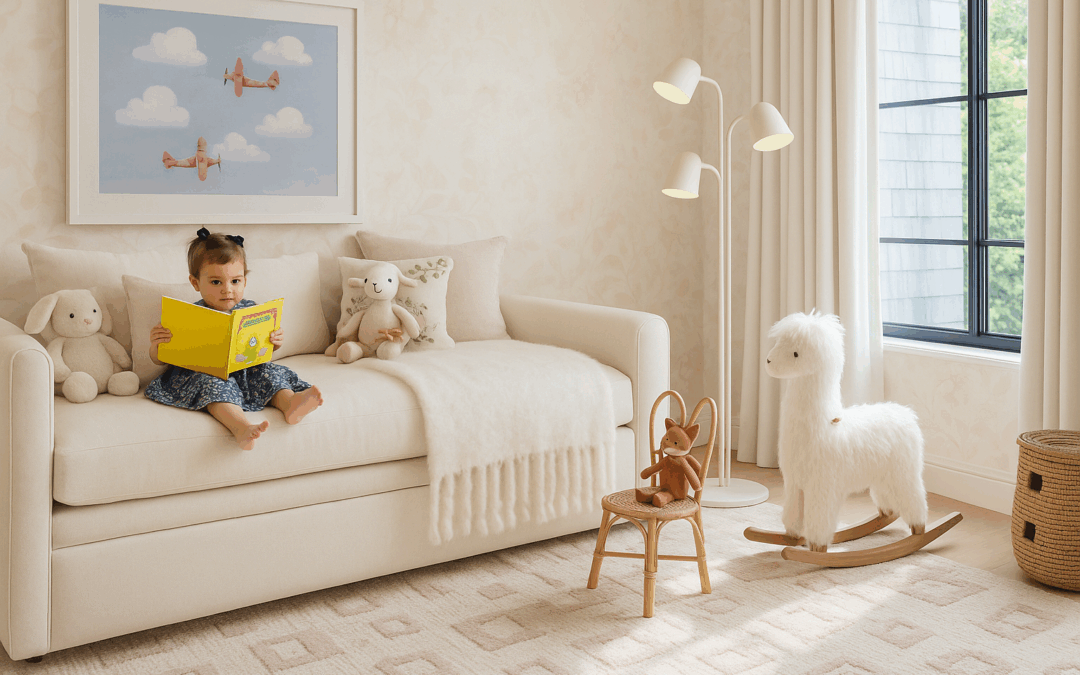
Child’s room with abundant natural light

Light: The Most Powerful Design Tool in a Child’s Room

Before choosing a paint color or a bed frame, consider the light. Natural light governs a child’s circadian rhythm — the internal clock that regulates sleep, mood, hormones, and even immune function. A room flooded with morning light helps a child wake naturally and start the day energized. Blackout shades or drapery that can fully darken the room at nap and bedtime protect the quality of sleep that is essential for memory consolidation and growth.

For artificial lighting, layer your sources: overhead ambient light for general tasks, a warm-toned reading lamp that can be easily switched on and off by the child (fostering independence), and soft nightlights that don’t disrupt melatonin production. Avoid cool-blue LED bulbs in the hours before bed. The best children’s rooms I’ve designed treat lighting as an active, adjustable tool rather than a fixed overhead fixture.
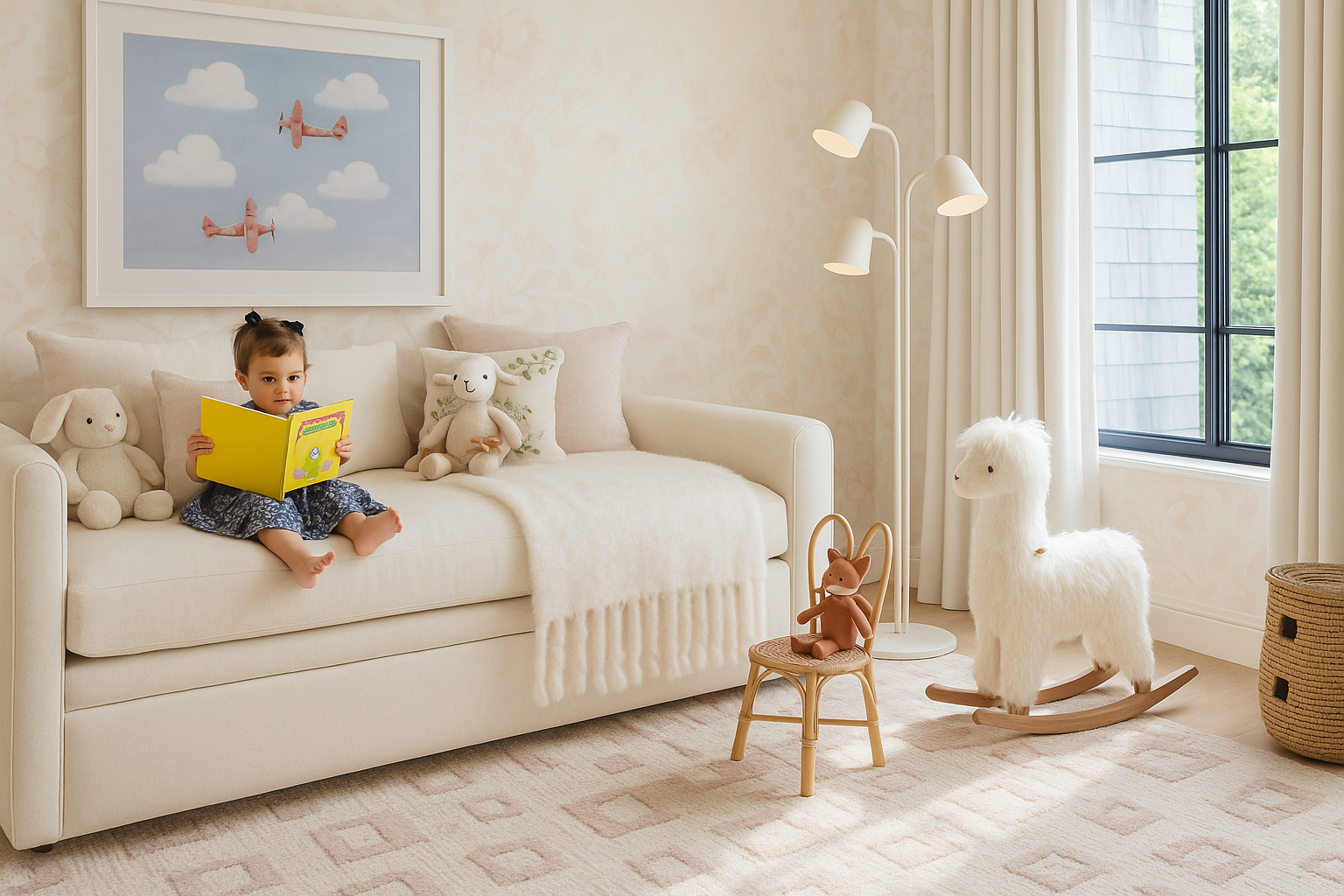
Calm colour palette in a child’s room

Color Psychology: Calm Over Chaos

The instinct to fill a child’s room with primary reds and electric yellows is understandable — and almost always wrong. Highly saturated, high-contrast colors are visually stimulating and can increase cortisol levels, making it harder for children to settle and focus. The research points toward muted, complex hues: sage greens, soft terracottas, warm taupes, dusty blues, and broken whites with undertones that shift in natural light.

These are the same tones that appear in nature — in stone, in bark, in sea glass — and they carry an inherent calming frequency. A child surrounded by thoughtfully chosen color feels contained and secure rather than overstimulated. One caveat: a single wall in a deeper, richer tone — a moody indigo reading nook, a forest green closet interior — can add the sense of magic and wonder that children’s spaces deserve without overwhelming the whole room.
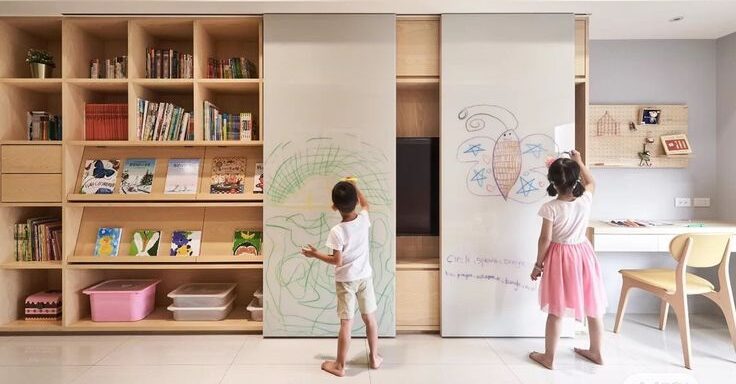
Low open storage in a child’s room

Organization That Builds Independence

A high-performing child is, above all, a capable child — one who can make choices, solve problems, and take ownership of their environment. Storage systems designed for adult convenience — high shelving, opaque bins, closet rods the child can’t reach — undermine that autonomy without realizing it. When I design children’s rooms, I ask: can this child access, use, and put away everything they need without asking for help?

Open, labeled bins at floor level for toys. A low hanging rod in the closet for tomorrow’s clothes. A pegboard at child height for school bags and art supplies. Surfaces clear enough to spread out a project and a system simple enough to actually maintain. When children can manage their own space, they develop executive function — the capacity to plan, organize, and self-regulate — that pays dividends for decades.
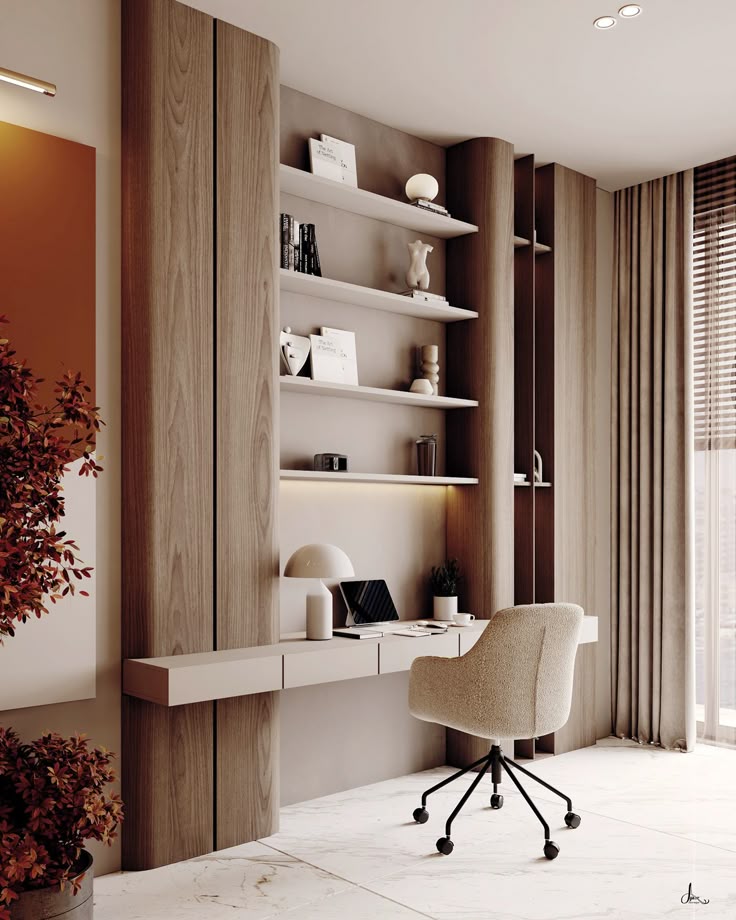
A dedicated desk for focused work

A Dedicated Space for Deep Work

Long before the concept of a “home office” entered the adult lexicon, children needed what researchers now call a dedicated learning environment — a place that signals to the brain: this is where we focus. The homework desk pushed against the wall under a single bare bulb is not that. The ideal study area has good natural or task lighting, sits apart from the bed (to avoid the brain associating study with sleep), and is free of screens and visual clutter during work time.

Consider the orientation of the desk. Facing a wall limits distraction but can feel oppressive for extended periods. Facing a window offers visual rest between focus bursts — research shows that even a brief look at a natural scene resets attention. A window view with trees or sky is, neurologically speaking, a better study companion than a poster of a favorite sports team.

A child’s room with plants and natural materials

Biophilic Design: Nature as a Learning Partner

Children have an innate attraction to the natural world — what biologist E.O. Wilson called biophilia. When we incorporate natural materials and living elements into children’s rooms, we’re not just creating visual interest; we’re engaging an ancient neural pathway that reduces stress and enhances creativity. A small plant the child is responsible for watering. A collection of stones, shells, or feathers arranged on a shelf. Wood-grain surfaces rather than plastic laminate. Woven textures. Cotton and linen instead of synthetic blends.

Nature-connected children show higher levels of curiosity and lower rates of anxiety. In practical design terms, this means choosing natural material toys over plastic when possible, introducing a terrarium or a simple herb garden on the windowsill, and resisting the urge to make the room feel like a theme park. The most extraordinary children’s rooms I’ve ever designed feel, above all, like calm and natural places to be.

A restful bedroom designed for sleep

The Sleep Environment: Designing for Restoration

Sleep is not passive. During sleep, a child’s brain consolidates the day’s learning, repairs tissue, regulates emotion, and produces the growth hormone that drives physical development. Designing for optimal sleep is therefore the highest-leverage thing you can do in a child’s room. Beyond darkness and lighting, consider temperature (the ideal sleep environment is 65–68°F), sound (soft white noise or the quiet of a well-insulated room), and the bed itself.

The mattress and bedding are not places to cut corners. Natural fibers — organic cotton, linen, wool — breathe better than synthetic blends and regulate temperature more effectively. A bed frame that feels solid and grounding — rather than a loft configuration that leaves children sleeping suspended in air — provides a greater sense of security for anxious sleepers. The bed should be the undisputed focal point of the room: inviting, peaceful, and clearly associated with rest rather than play.
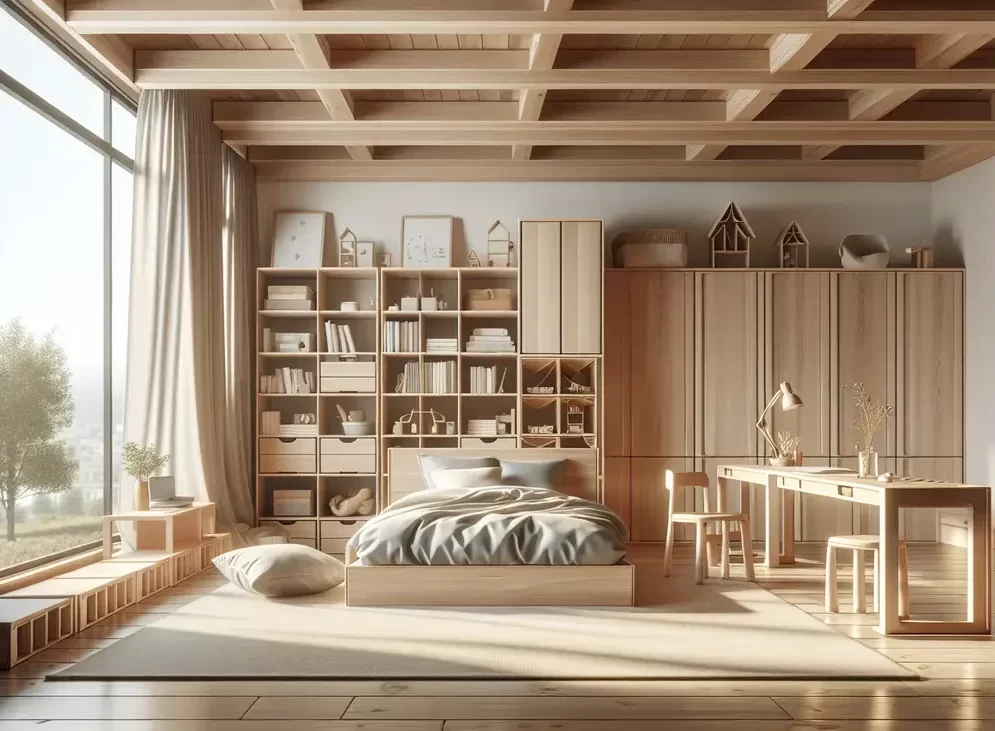
A bedroom designed to grow with a child

Designing a Room That Grows With Your Child

The most common mistake in children’s room design is creating a space that is perfect for one age and obsolete two years later. The child who loved dinosaurs at four will feel mortified by them at nine. Good design anticipates this by building in neutrality at the permanent layer — walls, flooring, furniture — and allowing personality to live at the changeable layer: bedding, art, accessories, and small accent pieces that can evolve without a renovation.

A classic white or natural wood bed frame, a well-made desk that works from age six to sixteen, quality storage that adapts as needs change — these are the investments that hold. The room’s personality can shift dramatically season to season just by changing the art, the throw, the lamp shade. Teaching a child that their room is theirs to curate — that their changing interests deserve a changing space — is one of the most powerful lessons you can deliver through design.

What Changes at Each Age

Age The one change that matters What to skip
0–12 months Floor bed and a low mirror. Nothing above waist height. The crib-plus-changing-table-plus-glider set. You will replace it within a year.
1–3 years Everything reachable: low hooks, low shelves, a step stool at the sink. Toy boxes. Children do not retrieve from a pile.
3–6 years A real work surface at their height, and shelves that hold eight things rather than forty. Themed furniture. It dates within eighteen months.
6–9 years A storage system they can maintain without you. Open shelving above the desk. It becomes visual noise they stop seeing.
9–12 years Give over the wall. Let them choose the color. Anything you chose for them at three.
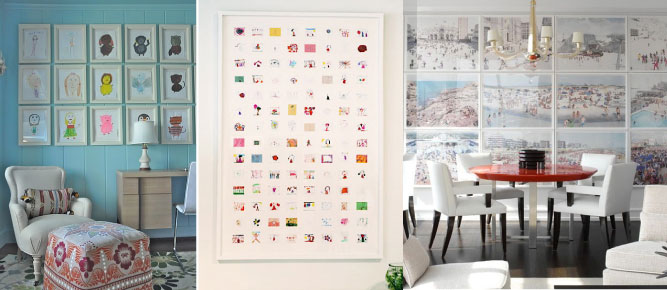
A children’s art wall

What to Do With the Space Between the Bed and the Bookshelf

In the most developmentally rich children’s rooms, the floor is treated as a room within the room. A generous, well-defined floor space for imaginative play — bounded by a good rug and filled with open-ended materials like blocks, drawing supplies, dress-up items, and books — is where some of the most important cognitive work of childhood happens. This isn’t playtime as indulgence. It is, by every measure developmental scientists apply, a child’s primary work.

Design the floor space intentionally: a rug that anchors the play area, low shelves along the perimeter that make materials visible and accessible, and enough open space in the center to spread out, build, pretend, and create. The most beautifully designed children’s rooms I’ve produced have been the ones where, years later, a parent tells me their child still wants to spend all their time in there. That’s the measure of a room done right.

The Kids’ Room Edit

Rattan Roadster Kids' Rocker

Rattan Roadster Kids’ Rocker
$375

Celeste Blue Lacquer Nightstand

Celeste Blue Lacquer Nightstand
$2,530

Colette Cloud Pillow

Colette Cloud Pillow
$297

2 Hour Interior Design Virtual or In Person Consultation
Tulum Seagrass Baskets

Tulum Seagrass Baskets
$115

Marisol Table Lamp

Marisol Table Lamp
$225

Reed Rattan Box

Reed Rattan Box
$350

SOMETHING FOR EVERYONE

THE PIECES RACHEL RETURNS TO, AGAIN AND AGAIN
2024 Interior Design Trends

2024 Interior Design Trends

As we look ahead to 2024, let’s explore the new trends in interior design from furniture to color schemes. Based on my research of trending searches and design knowledge, here are the top 9 trends in interior design for 2024:

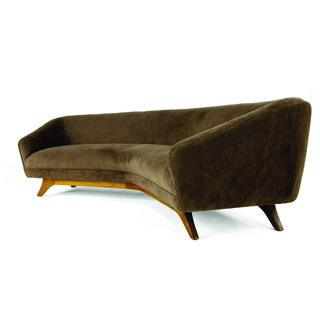
Vladimir Kagan Brown Sofa

Embracing the Warmth of Brown

Brown couches are set to be popular in 2024 as they bring earthen warmth, hide spills/dirt and function as a warm dark neutral in room. They create a cozy and inviting atmosphere and function as a neutral that grounds the popular cream texture looks. Sofa shown by Vladimir Kegan


Curved Couches and Chairs

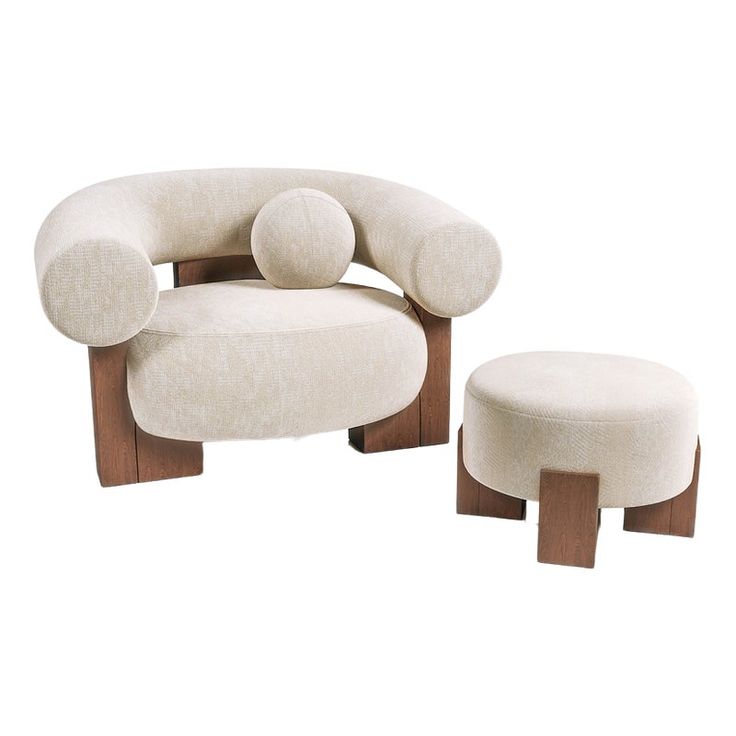
Embracing flowing lines and organic shapes, curved couches and chairs are becoming increasingly popular. They add a touch of modernity and sophistication to your living space while also promoting a sense of comfort and relaxation. Chair and ottoman by Rachel Blindauer’s vendor Collector Group

Cassette Armchair Puff
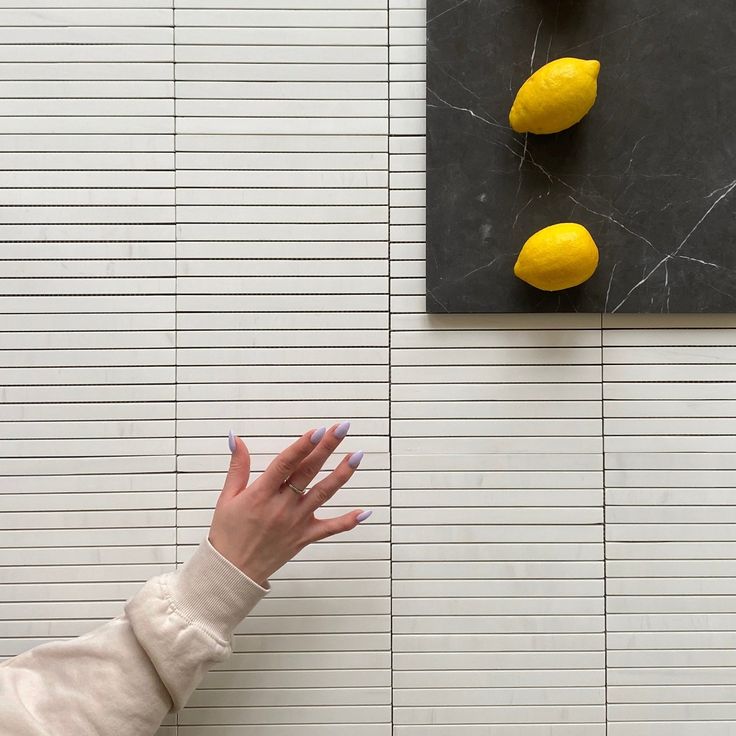
Dolomite Stacked Tile

Stacked Tile and Brick

This trend puts a twist on the classic tile and brick pattern by stacking tiles so they are aligned horizontally and vertically creating an unexpected layout. Stacked-tile backsplashes create visual interest and add a unique touch to your kitchen or bathroom. Domomite stacked tile pictured.

Industrial Charm Gets Sophisticated

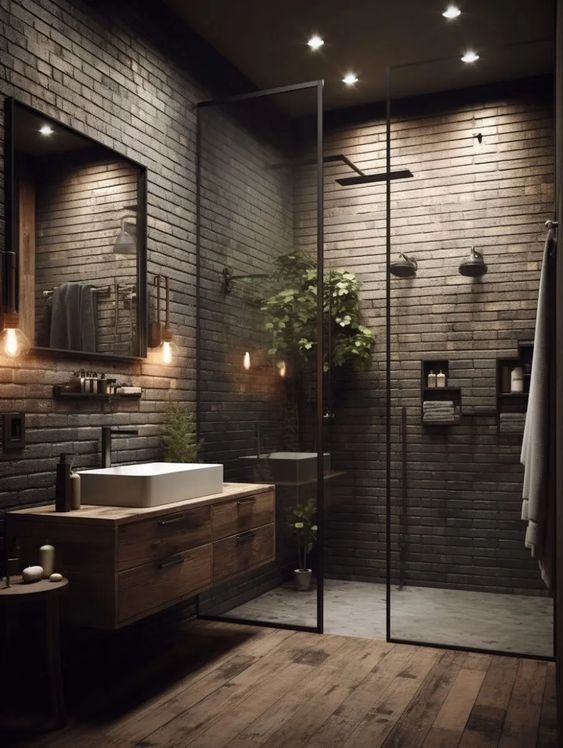
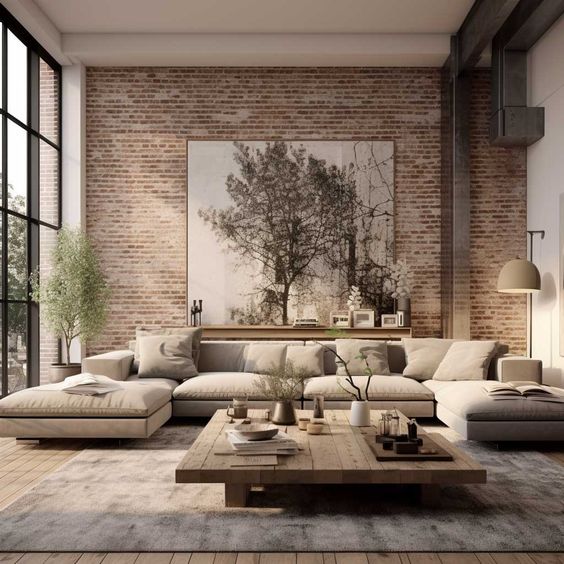
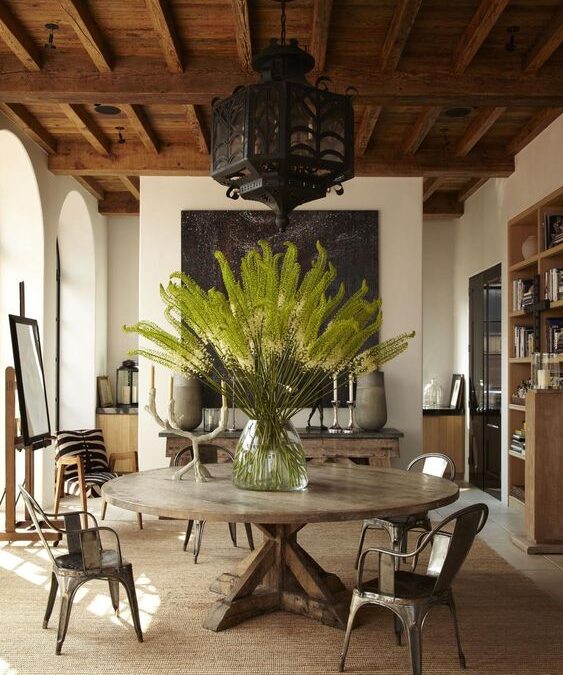
Industrial-style decor continues to be popular in 2024, but gets more sophisticated with hand hewn stone, hand hewn wood, brick and metal accents. These features add a rustic yet modern charm to your home, creating a earthen and relaxed atmosphere.

Exposed Brick Interior Design
Moon Light Future Perfect

Sculptural Art + Statement Pieces

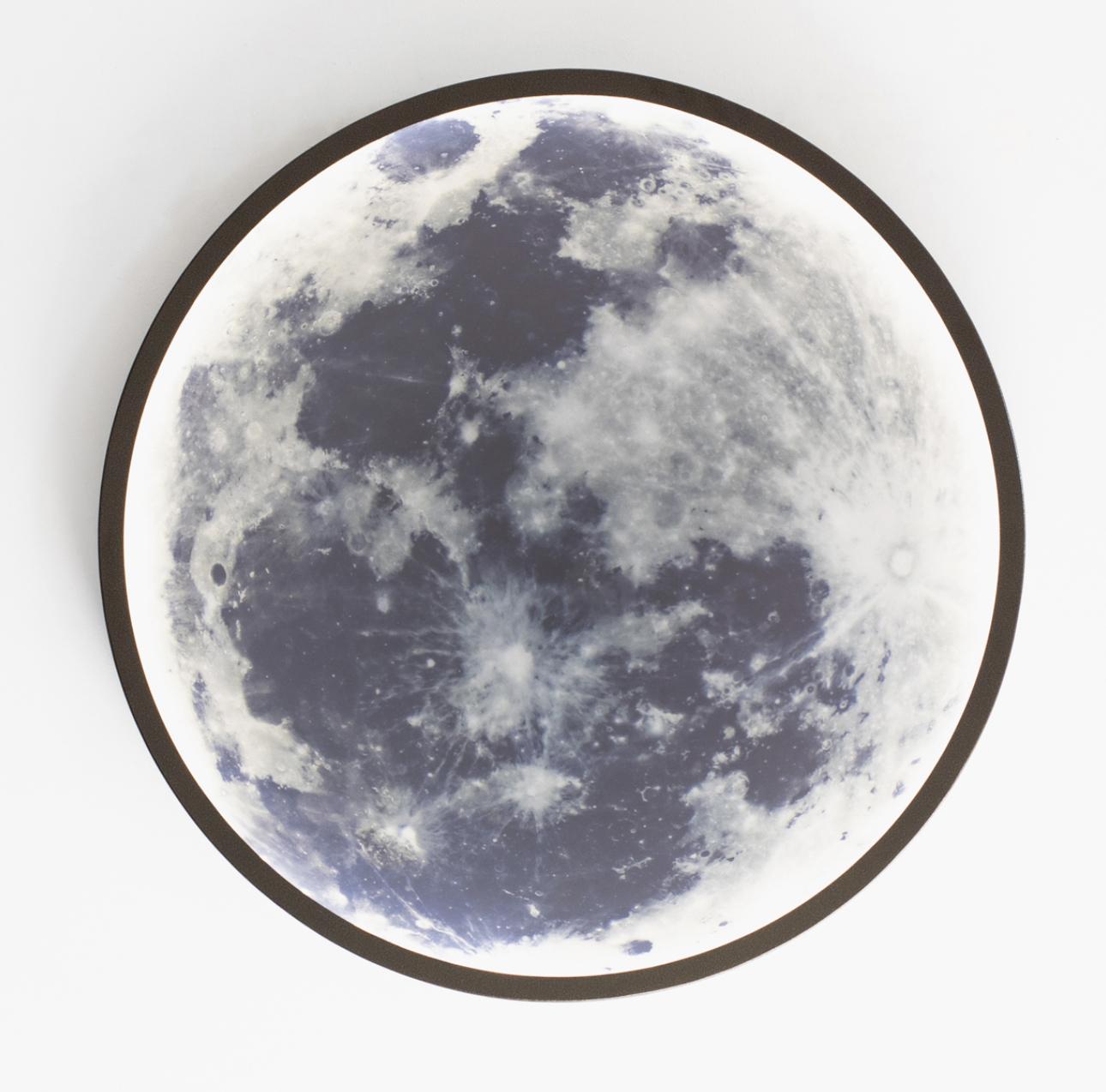
Wall-mounted sculptures offer depth and dimension, adding a unique touch to your space. Mixing artworks in a variety of finishes, textures, and shapes can create a bold statement. Statement pieces add personality and create a wow factor. Moon Light by Rachel Blindauer vendor Ben & Aja Blanc at Future Perfect.

Dynamic Range Hoods

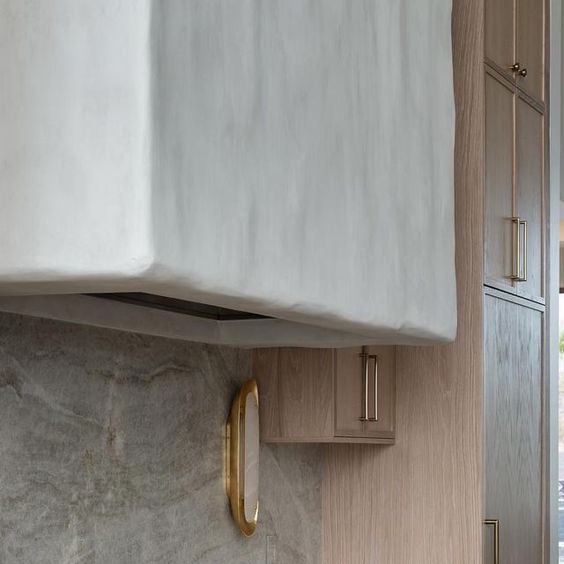
I anticipate a greater focus on hood vent covers in 2024. Bolder designs incorporating distinct textures such as plaster or wood fluting will be popular. Pairing a dramatic hood vent with an eye-catching range can elevate the overall aesthetic of your kitchen. Custom plaster range hood pictured.

Stucco Range Hood
Pink Dining Room

Two or Tri-Tone Color Schemes

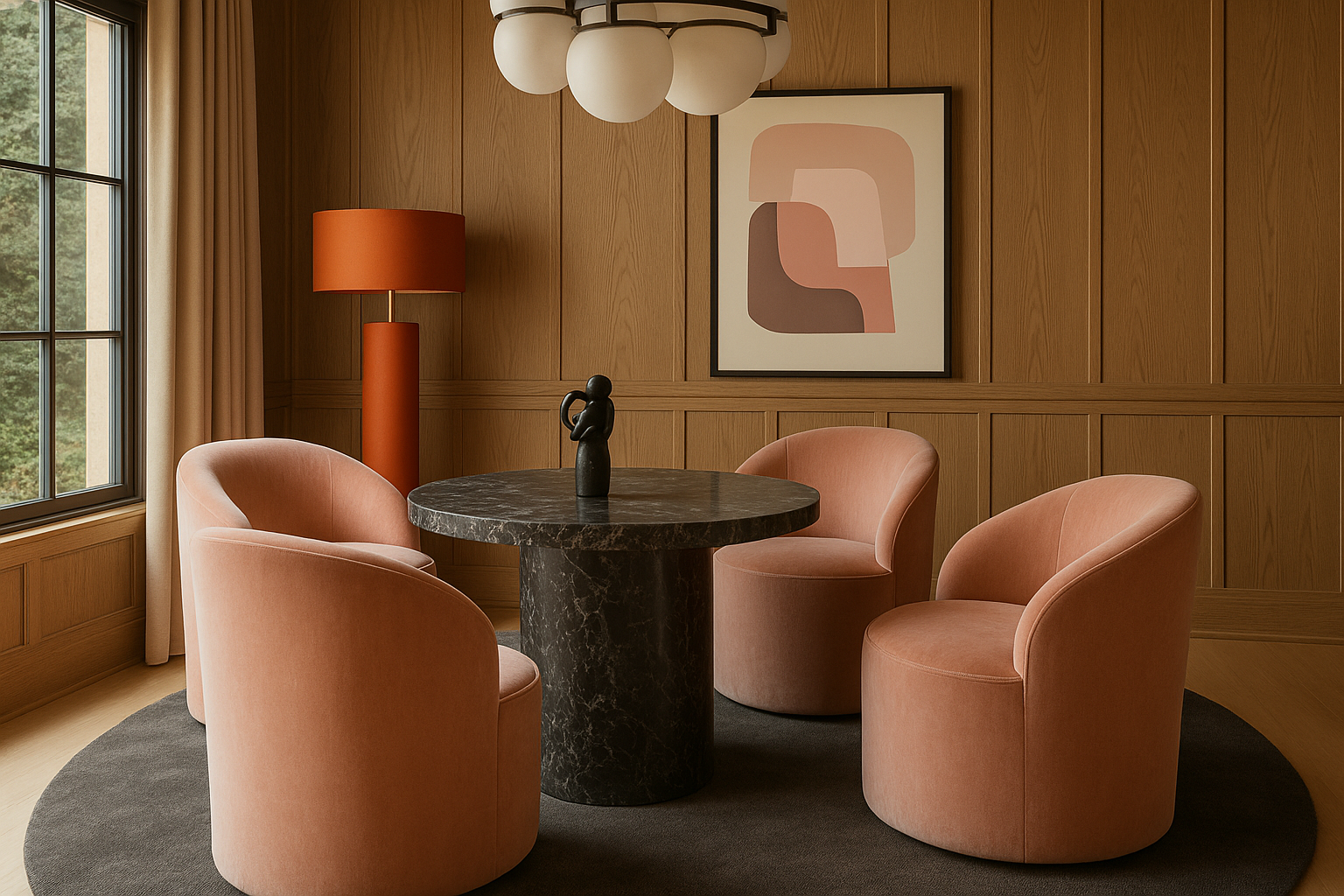
Creating depth and complexity, two or tri-tone color schemes are among the top interior design color trends for 2024. These combinations of colors add visual interest and allow you to play with different shades and tones in your home.

A Pause From Technology

In 2024, there is a shift towards “dumb homes” where clients are seeking a break from technology. Harsh blue daylight lights, flashing led lights, tech listening in and bright touchscreens are giving way to a love of mechanical controls: old-school buttons, switches that toggle up and down, and simpler toilet washlets.

Keep Life Simiple
Exposed Brick Interior Design

Inviting Living Rooms

So long to cold, white living rooms! Embrace a living room you can actually enjoy without worrying about accidental wine stains. Minimalism has evolved into a look that is less rigid for a more organic and inviting feel. Warm, textural spaces with natural materials in moodier, earthy color palettes. We’re moving away from bright whites and grays toward more creams, browns, rusts.

Take the first step towards creating your dream space. If you are a couple with multiple homes looking for a decorator near you, a hotelier doing a redesign, or a developer looking for top-notch interior design services near you, Rachel Blindauer and her team are here to bring your vision to life. With our wealth of experience and expertise, we can create stunning and functional spaces that exceed your expectations and bring you to a new height of design and sophistication.

Timeless Pieces

Sorrento Alabaster Dome Table Lamp

Sorrento Alabaster Dome Table Lamp
$2,995

Lucent Selenite Bowl

Lucent Selenite Bowl
$690

Hancock 2-Drawer Lacquer Side Table

Hancock 2-Drawer Lacquer Side Table
$2,219

2 Hour Interior Design Virtual or In Person Consultation
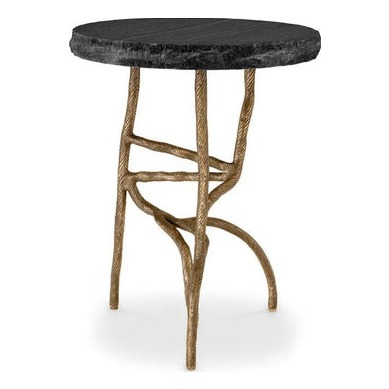
Monteverde Marble Side Table

Monteverde Marble Side Table
$1,595

Siena Marble Urn Vase

Siena Marble Urn Vase
$1,695

Westcott Arc Table Lamp in Aged Brass & Linen

Westcott Arc Table Lamp in Aged Brass & Linen
$769

SOMETHING FOR EVERYONE

THE PIECES RACHEL RETURNS TO, AGAIN AND AGAIN
Moving? Let an Interior Designer help.

Moving? Let an Interior Designer help.

Moving? Let an Interior Designer Help.

Moving? Let an Interior Designer Help.

Rachel Blindauer interior designer can help streamline your move by optimizing the layout and placement of your furniture and décor and place it in tour space before your arrive to your new home regardless of if its a new build or new to you home. Assisting in coordinating the move in, placement and design of your new home, and arrange new furniture purchases to create a cohesive look in your new space.

Meet Rachel Blindauer, Your Interior Designer

Well we wish there was two of her 😉 Rachel Blindauer is a talented and experienced interior designer who can bring your vision to life. With a keen eye for detail and a passion for design, Rachel has helped countless clients transform their houses into homes. Rachel’s personalized approach and attention to detail ensure that your interior design reflects your unique style and meets your specific needs. Whether you’re looking for a modern, traditional, or eclectic design, Rachel’s creativity and passion for interior design can transform your space into a place you’ll love to call home.

Why hire an Interior Designer?

The benefits of hiring an interior designer far outweigh the costs. Here are a few reasons why you should consider working with Rachel Blindauer:

1. Expertise and Creativity

Rachel Blindauer’s expertise in interior design allows her to see the potential in any space. She can envision the possibilities and come up with creative solutions to maximize your space’s potential. From selecting the right color palette to choosing the perfect furniture, Rachel will ensure that every element in your home complements each other flawlessly, regardless of whether it’s modern, traditional, or eclectic.

2. Add Value to your Home

As you prepare to move into your new home, consider collaborating with Rachel Blindauer, an experienced interior designer who can help you transform your space into a personalized and functional oasis. With Rachel’s expertise, you can expect to:

  • Discuss your design preferences, functionality to create a tailored plan for your home.
  • Gain insight into what is possible and innovative solutions for your living space.
  • Explore various options for furniture, décor, color palettes, and layout to achieve a harmonious and inviting atmosphere.
  • Receive professional guidance on selecting and sourcing quality materials and furnishings that align with your vision and budget.
  • Experience a seamless and enjoyable design process from concept to completion, as Rachel brings your design dreams to life.

3. Stress-Free Experience

Moving is already a stressful process, and adding the responsibility of designing your new space can become overwhelming. By hiring Rachel Blindauer as your interior designer the move in is easier and the furniture and missing pieces you need are already ordered and on the way.

  • If desired, Rachel can meet your movers and place your furniture as it comes off the truck and ensure all boxes of personal effects labeled with the room names are put in their proper location for your arrival and unpacking. Rachel has often arranged professional organizers to assist in unpacking boxes or personal effects. I assure you it will be the best money you ever spent.

4. Personalized Style + Functionality

Rachel Blindauer, an experienced interior designer, can help you personalize your living spaces according to your needs, preferences, and goals, optimizing the layout/functionality of your new home to make the most of the available space while ensuring that it reflects your personal style. She specializes in blending functionality and style to create spaces that are both livable and beautiful. With her expertise, your new home can become a harmonious blend of comfort and visual appeal, tailored to your unique preferences. Whether you’re moving to a new home or looking to refresh your current space, Rachel can work with you to bring your vision to life. From selecting furniture and décor to optimizing the layout and color scheme, Rachel can guide you through the design process.

5. Time + Money Savings

Contrary to popular belief, working with an interior designer actually saves you time and money in the long run. Rachel Blindauer has a vast network of trusted suppliers, factories and contractors, which means she can source high-quality materials and furnishings at lower prices. Additionally, her knowledge of the industry allows her to streamline the design process, ensuring that everything is done efficiently and within budget.

  • Stick to neutral colors if you want to create an easily resell-able space
  • Incorporate plants and greenery to bring life and freshness to your space.
  • Invest in versatile furniture pieces that serve multiple purposes.
  • Mix old and new objects and collections and high and low to give a mix that is not all new, not all old, not all high end but just right. This also helps budgets
  • DIY painting projects can be a cost-effective way to personalize your space and add unique touches. Check out this project for examples https://rachelblindauer.com/eichler-casual-color-pop/
  • Interior designers have access to a wide range of resources and can help you make decisions, avoiding costly mistakes. For example “Don’t buy an uncomfortable sofa that looks good because no one will use it”

Summary and Next Steps

Now that you’ve met your interior designer, Rachel Blindauer, you can look forward to a smooth and stress-free moving process. Rachel will work with you to create a vision for your new space, taking into account your personal style and preferences. She will then use her expertise to help you transform your new home into a place that reflects you. In the next steps, you can expect to collaborate closely with Rachel to finalize the design plan. This may involve selecting furniture, choosing color schemes, and deciding on any additional decorative elements. With Rachel’s guidance, you’ll soon be settling into a home that truly feels like your own.

Settle Into the New Home

Elevated Black Marble Bowl

Elevated Black Marble Bowl
$2,205

Sable Travertine Buffet Lamp

Sable Travertine Buffet Lamp
$813

Bomba Small End Table

Bomba Small End Table
$414

2 Hour Interior Design Virtual or In Person Consultation
Biarritz Round Travertine Coffee Table

Biarritz Round Travertine Coffee Table
$2,658

Belgrave Brass Sculptural Bowl

Belgrave Brass Sculptural Bowl
$695

Foliate Plaster Table Lamp

Foliate Plaster Table Lamp
$870

SOMETHING FOR EVERYONE

THE PIECES RACHEL RETURNS TO, AGAIN AND AGAIN