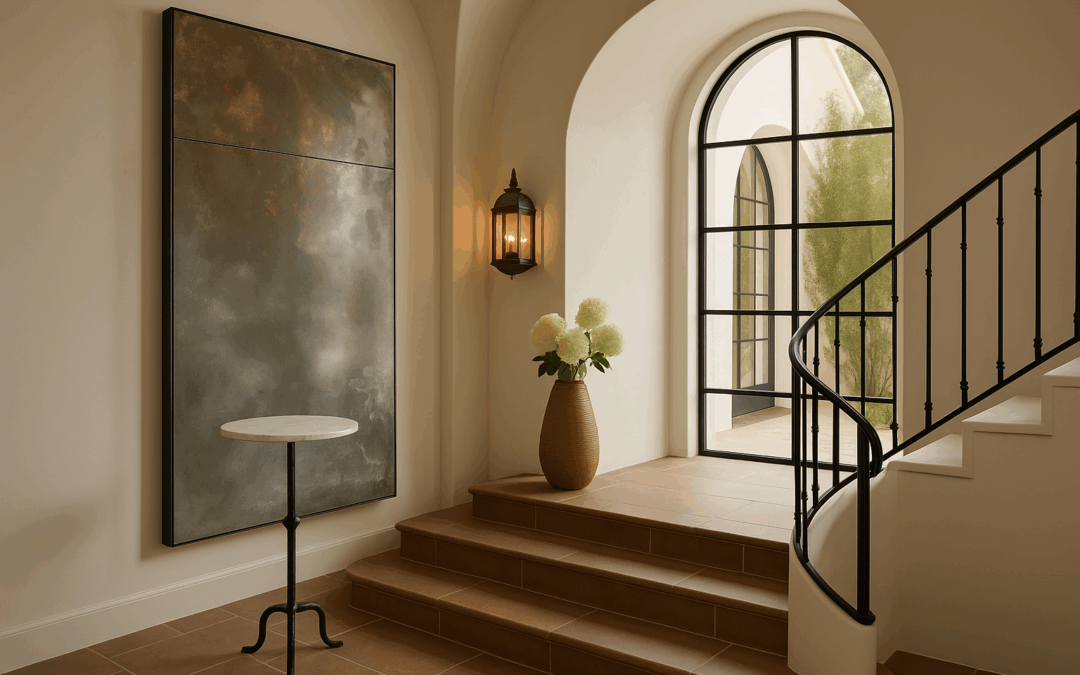
How to Decorate a St. Louis Historic Home Without Losing Its Soul

How to Decorate a St. Louis Historic Home Without Losing Its Soul

St. Louis has architecture that other American cities would be envious of—the Craftsman bungalows of Webster Groves, the Queen Anne and Italianate homes of Lafayette Square, the grand brick colonials of Ladue and Clayton, the mid-century moderns tucked into the hills of Frontenac. Designing interiors for historic homes is one of the most satisfying challenges in this work. It’s also one of the most commonly botched. The two failure modes are mirror opposites: treating the house as a museum, frozen in its original period; or treating it as a blank canvas and destroying everything that makes it worth owning.
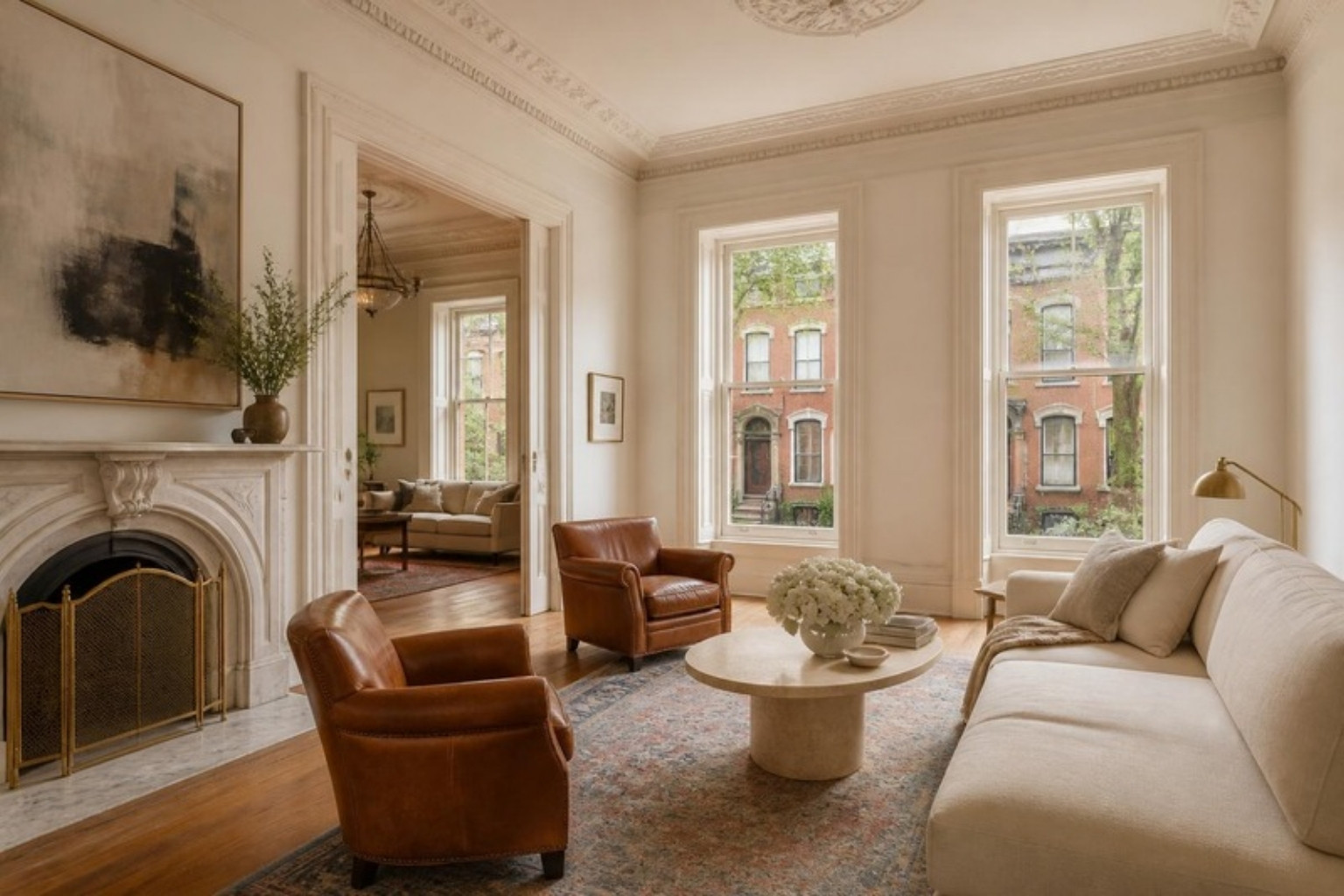
Restored St. Louis Victorian townhouse parlor with original crown molding, marble fireplace and brick rowhouses outside the windows

First: identify what’s original and what’s been added

Most St. Louis historic homes have been through multiple owners and multiple renovations. The first job is always triage: what is original and irreplaceable, what is a period addition that has become part of the home’s character, and what is later modification with no relationship to the home’s authentic identity?

Original elements to protect at nearly all cost: original millwork (baseboard, crown, door and window casings), original hardwood floors, original built-ins, original hardware, any original plasterwork or decorative ceilings. These are what make a historic home irreplaceable.

The millwork question

In pre-war St. Louis homes, the millwork is often the most valuable thing in the room. Wide baseboards, built-up crown molding, paneled doors with original hardware, deep window surrounds with interior sills wide enough to sit on—these create the proportional language of the interior. Everything else in the room should respond to them.

For painted millwork in historic homes, I almost always recommend a warm white—Farrow & Ball Pointing, Benjamin Moore White Dove, or Sherwin-Williams Alabaster—against a wall color with enough body to make the trim read as architectural. The millwork should frame the room. The color on the walls should fill it.

Bringing contemporary furniture into historic rooms

The principle I work from: contemporary furniture reads beautifully in historic rooms when the contemporary pieces are honest about their own time and the historic elements are allowed to anchor the space. A clean-lined linen sofa in a room with original crown molding creates productive tension—both elements are clearly of their moment, and they respect each other. A reproduction Victorian settee in the same room just creates confusion about whose house it is.

Antique and vintage pieces work beautifully for the same reason—they’re honest about their origin. A 1930s French armchair in a 1910 Craftsman reads as layered and collected. A brand-new reproduction of the same chair reads as costume.

For the Historic Home

Harrington Brass Lantern

Harrington Brass Lantern
$7,470

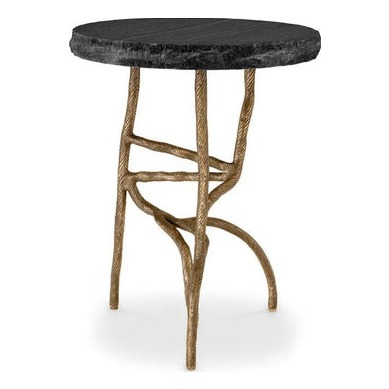
Chesham Marble Top Accent Table, Hazel/Walnut

Chesham Marble Top Accent Table, Hazel/Walnut
$601

Gilded Reflection Mirror

Gilded Reflection Mirror
From $1,600

Color in historic homes

Period-correct paint colors are often more saturated and complex than contemporary taste expects. The Victorians used deep, rich colors—forest greens, burgundies, golds, complex blues—and they were right to do so. A contemporary cool gray in a Victorian parlor flattens everything and makes the ornate millwork look stranded. You don’t have to paint your 1890 home in period-correct colors, but the principle that historic homes benefit from more color, more saturation, and more complexity than modern interiors generally holds.

The best St. Louis historic homes I’ve designed feel like they’ve always been exactly the way they are. That comes from listening to what the architecture is telling you, and then responding to it rather than overriding it.

Rachel Blindauer is an award-winning interior designer based in St. Louis with projects across the United States and internationally. Book a consultation at rachelblindauer.com.

2 Hour Interior Design Virtual or In Person Consultation
Lucerne Oval Mirror

Lucerne Oval Mirror
$1,495

Monteverde Marble Side Table

Monteverde Marble Side Table
$1,595

Harlow Swivel Chair in Cozy Linen

Harlow Swivel Chair in Cozy Linen
$4,344

SOMETHING FOR EVERYONE

THE PIECES RACHEL RETURNS TO, AGAIN AND AGAIN
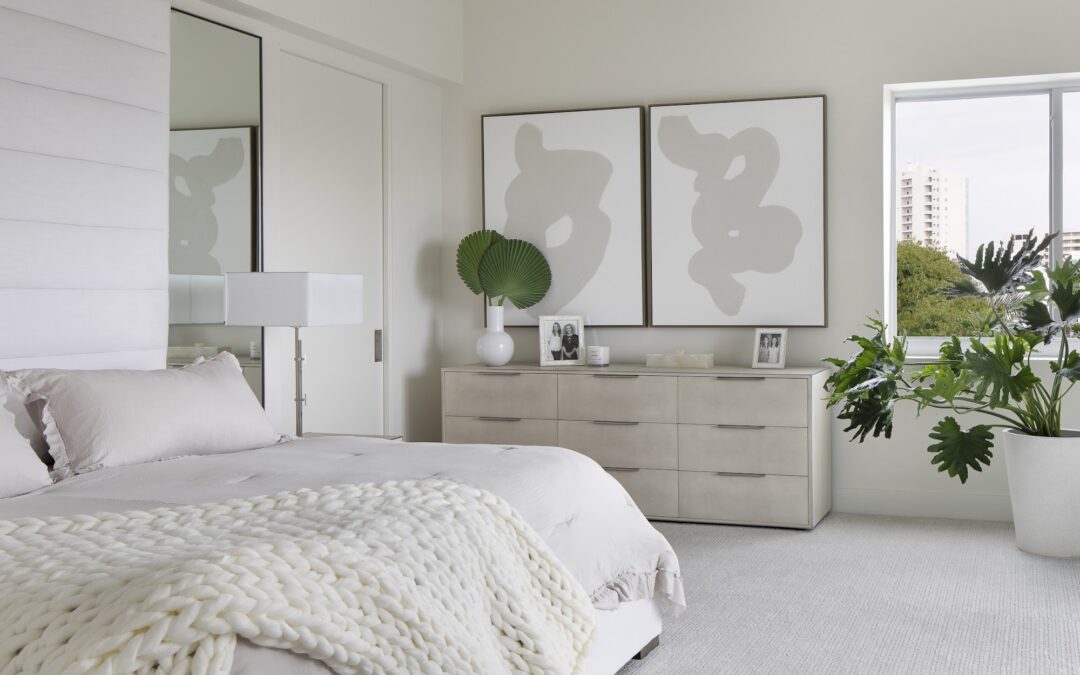
A Designer’s Guide to the Cozy Bedroom (That Isn’t Beige)

A Designer’s Guide to the Cozy Bedroom (That Isn’t Beige)

The word “cozy” has been so thoroughly weaponized by the home decor industry that it has nearly lost its meaning. Cozy, in the language of fall marketing, means: add a chunky knit blanket, burn a candle, place three decorative pillows you will move every night before bed.

That is not what cozy means. Cozy is a technical quality of a room—a specific combination of scale, texture, light temperature, and material warmth that makes a space feel protective and restorative. It can be achieved in virtually any aesthetic, and it has nothing inherently to do with beige.

Scale is the first variable

The human nervous system responds to scale. Rooms where the ceiling feels closer, where furniture fills the space proportionately, where the human body feels properly nested rather than exposed, read as private and restorative. In a bedroom, your bed should be generous relative to the room. A king bed in a small room often creates more coziness than a queen—counterintuitive, but real. The bed becomes the room’s anchor, and the body feels correctly housed by it.

If you have high ceilings, bring them down visually: a statement ceiling light hung low, a canopy bed or curtains hung from ceiling to floor, artwork that draws the eye across rather than up. You’re not making the ceiling lower—you’re redirecting attention to the human scale of the space.

Cozy bedroom with a canopy bed, low-hung pendant over a reading chair and warm paneled walls

The Cozy Bedroom Edit

Dune Handwoven Cotton Coverlet

Dune Handwoven Cotton Coverlet
From $485

Hand-Loomed Cotton Throw

Hand-Loomed Cotton Throw
$79

Sorrento Alabaster Dome Table Lamp

Sorrento Alabaster Dome Table Lamp
$2,995

Texture is the second variable—and the most underused

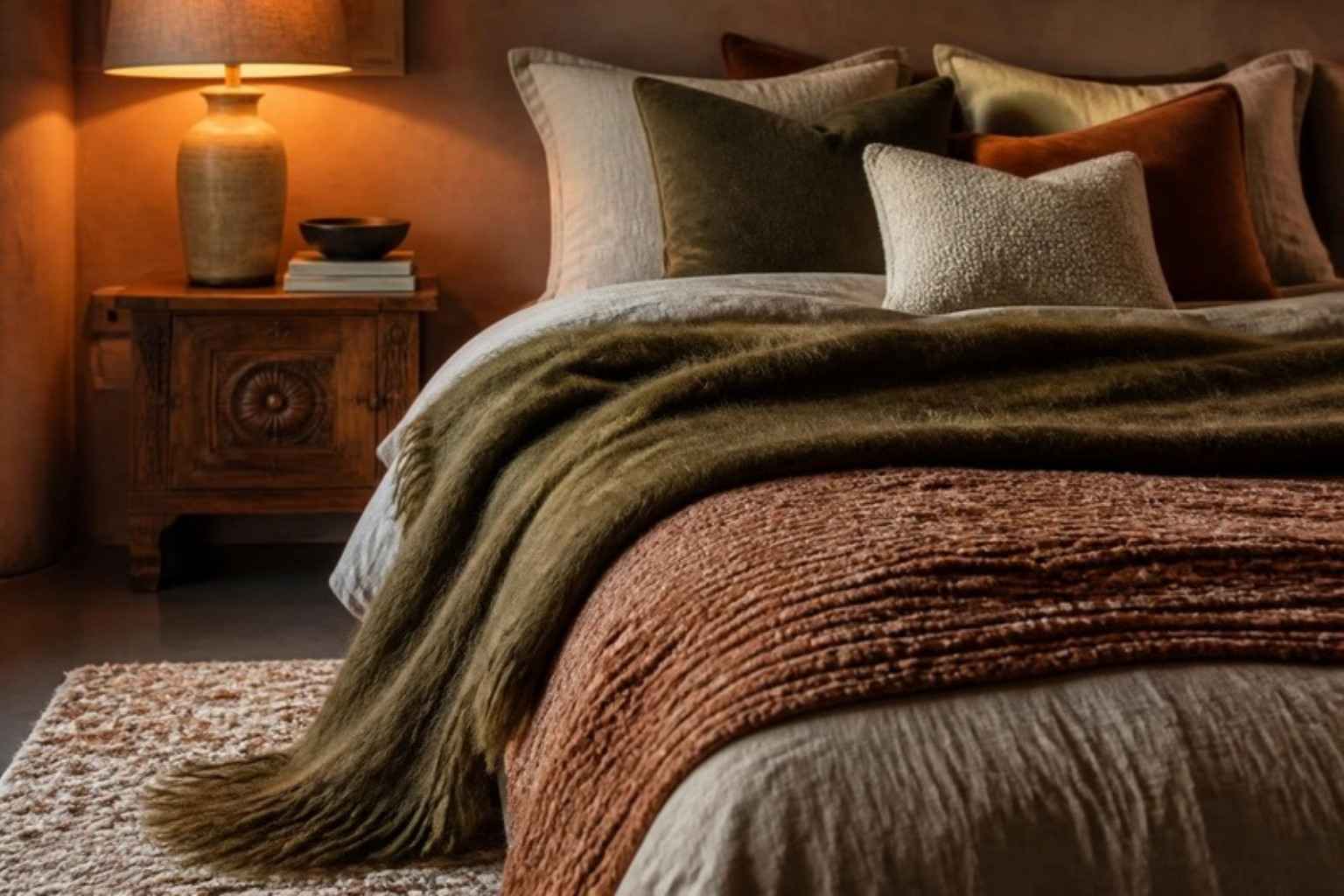
A room with a single texture feels flat and uninviting no matter what color it is. A room with multiple textures—even in a very limited palette—reads as rich, layered, and warm. For a bedroom, I aim for at least five distinct textures: the smoothness of a painted wall, the weight and drape of linen or cotton bedding, the pile of a rug underfoot, the grain of a wood nightstand, and something soft—a throw, an upholstered headboard, a fabric lampshade—that the eye can rest on.

You don’t need expensive materials. A rough-weave cotton duvet cover, a jute rug, a wooden bed frame, linen curtains, and a ceramic table lamp create the full texture spectrum at modest cost. The key is variety of surface—smooth to rough, soft to hard, matte to slightly shiny.

Bed layered with linen, a handwoven coverlet, a mohair throw and velvet and boucle pillows in olive and rust

Light temperature is everything

This is the single most impactful and most neglected variable in bedroom design. The color temperature of your light sources determines whether your room feels warm or clinical regardless of what’s on the walls. Most people have bulbs that are far too cool (4000K or above)—the light equivalent of a fluorescent office ceiling.

For a bedroom, every bulb should be 2700K or warmer—the color temperature of incandescent light, the warm amber light that humans have been falling asleep by for most of history. Switch every bulb in your bedroom to 2700K this week and watch the room change immediately. Beyond color temperature: overhead light is the enemy of cozy. Layer your bedroom lighting with bedside lamps at eye level, a low ambient source, and a focused reading light. The room should be lit from multiple low sources, not one high one.

Color that actually creates cozy

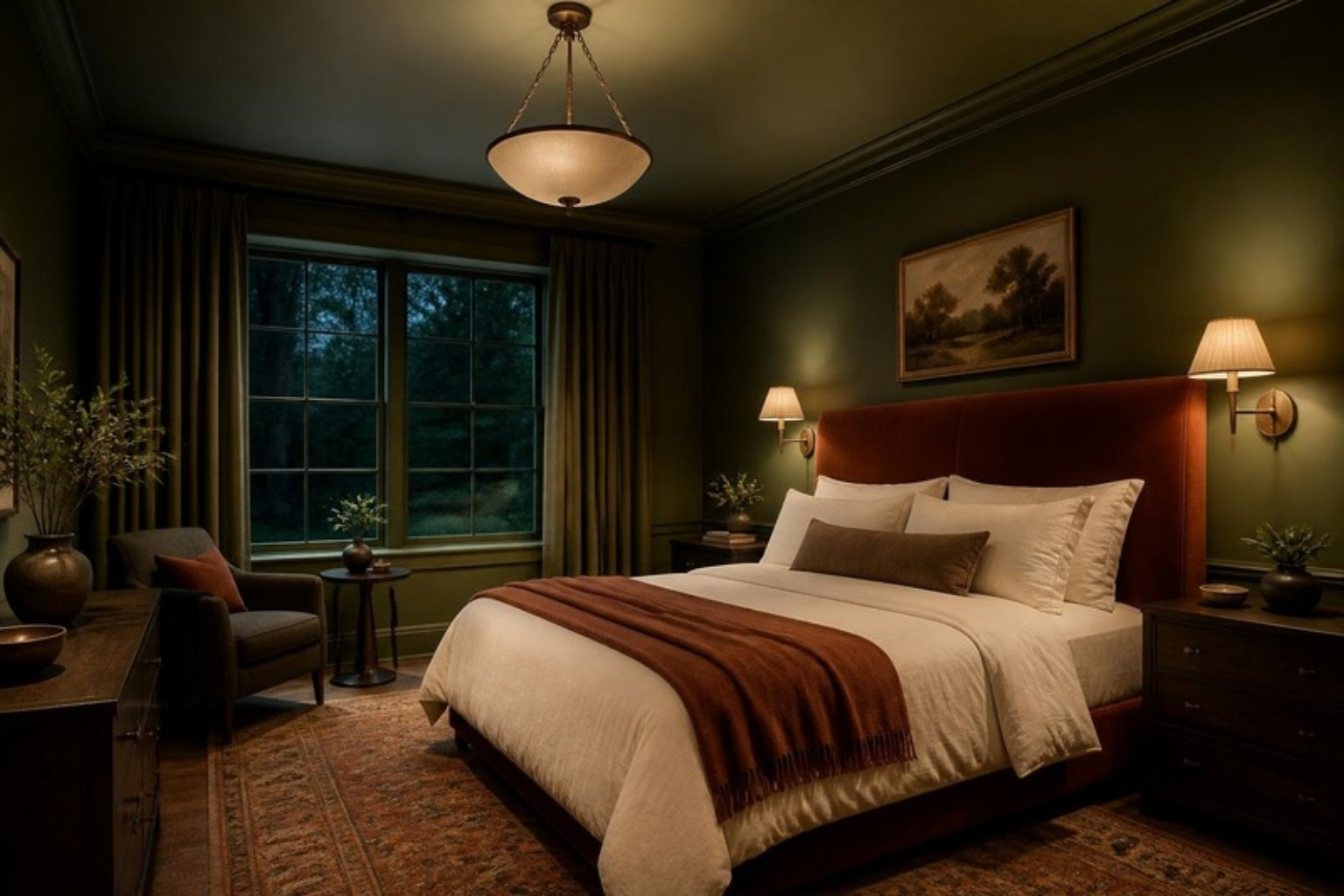
Beige is not cozy. Beige is neutral—it gets out of the way without adding much. Genuinely cozy bedroom colors are warm putty or plaster tones (Benjamin Moore’s Pale Oak, Farrow & Ball’s Elephant’s Breath), soft desaturated greens like sage or dusty olive that lower cortisol and feel organic, or deep enveloping tones—navy, forest green, deep plum—which, when paired with warm-temperature lighting, create a cave-like intimacy that is the most genuinely cozy effect in interior design. These colors feel radical until you’re inside them, at which point they feel inevitable.

The truly cozy bedroom is a considered space where every decision about scale, texture, light, and color has been made in service of how the body and mind feel inside it. Get those things right, and you won’t need the seasonal throw pillow.

Rachel Blindauer is an award-winning interior designer based in St. Louis. She offers 2-hour design consultations virtually and in person. Book at rachelblindauer.com.

Moss green color-drenched bedroom with a rust velvet headboard and warm brass sconces

Color Harmony — The Designer’s Guide, Free

Find Your Season.
Dress In It. Live In It.

Learn to read your own coloring, then carry your palette from your closet to your rooms — 16 pages of Rachel’s method. Not rules. Resonance.

No spam. Unsubscribe anytime.

2 Hour Interior Design Virtual or In Person Consultation
Textured Waffle Weave Pillow

Textured Waffle Weave Pillow
$127

Marais Chandelier

Marais Chandelier
$2,300

Winslow Round Side Table

Winslow Round Side Table
$2,224

SOMETHING FOR EVERYONE

THE PIECES RACHEL RETURNS TO, AGAIN AND AGAIN
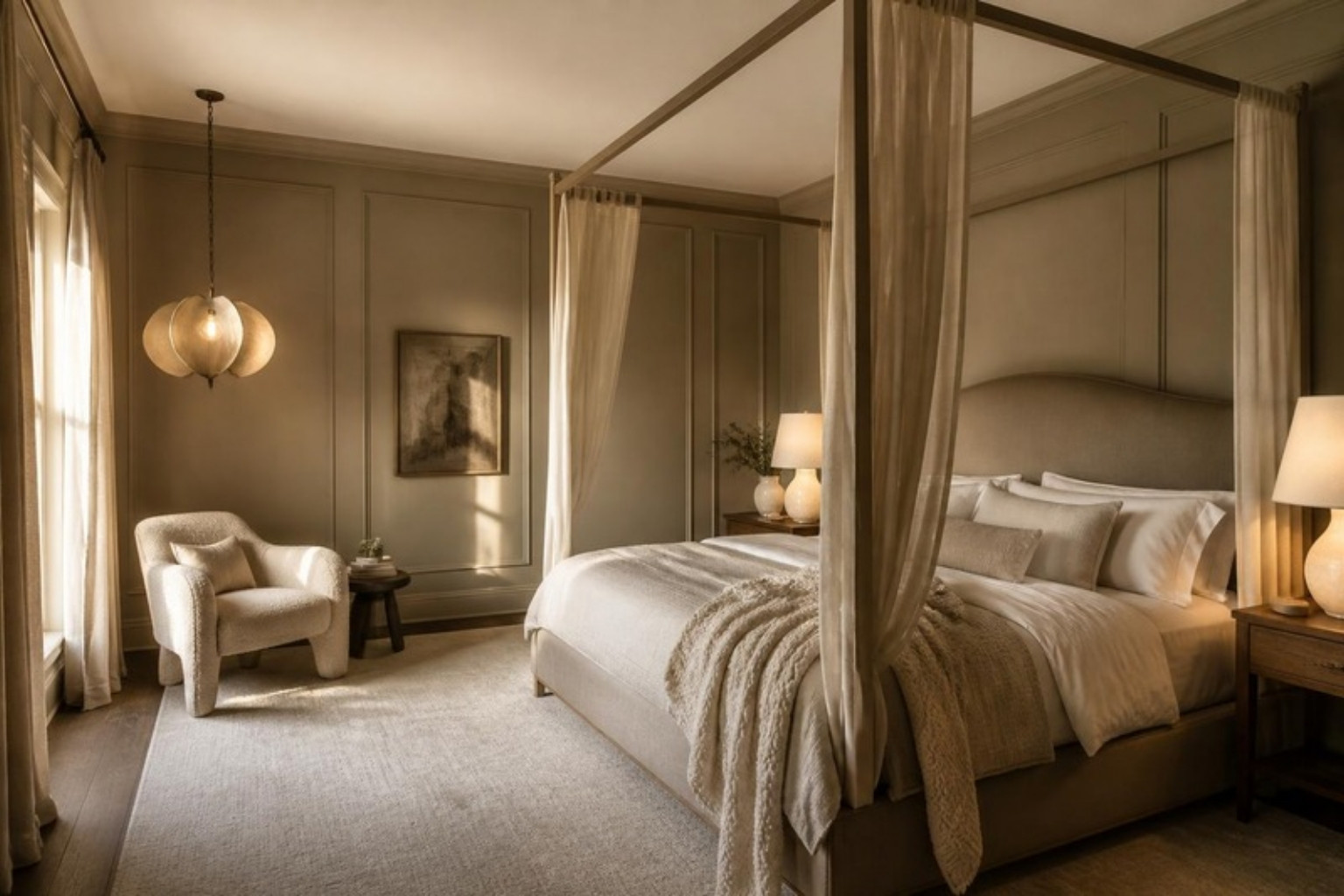
Best Indoor Window Treatments

Best Indoor Window Treatments

Windows play a vital role in interior design, as they allow natural light to filter into a space while providing a connection to the outside world. To maximize the impact of windows, choosing the right indoor window treatments is essential. Below we will explore some of the best options available that can elevate the aesthetics and functionality of any room.

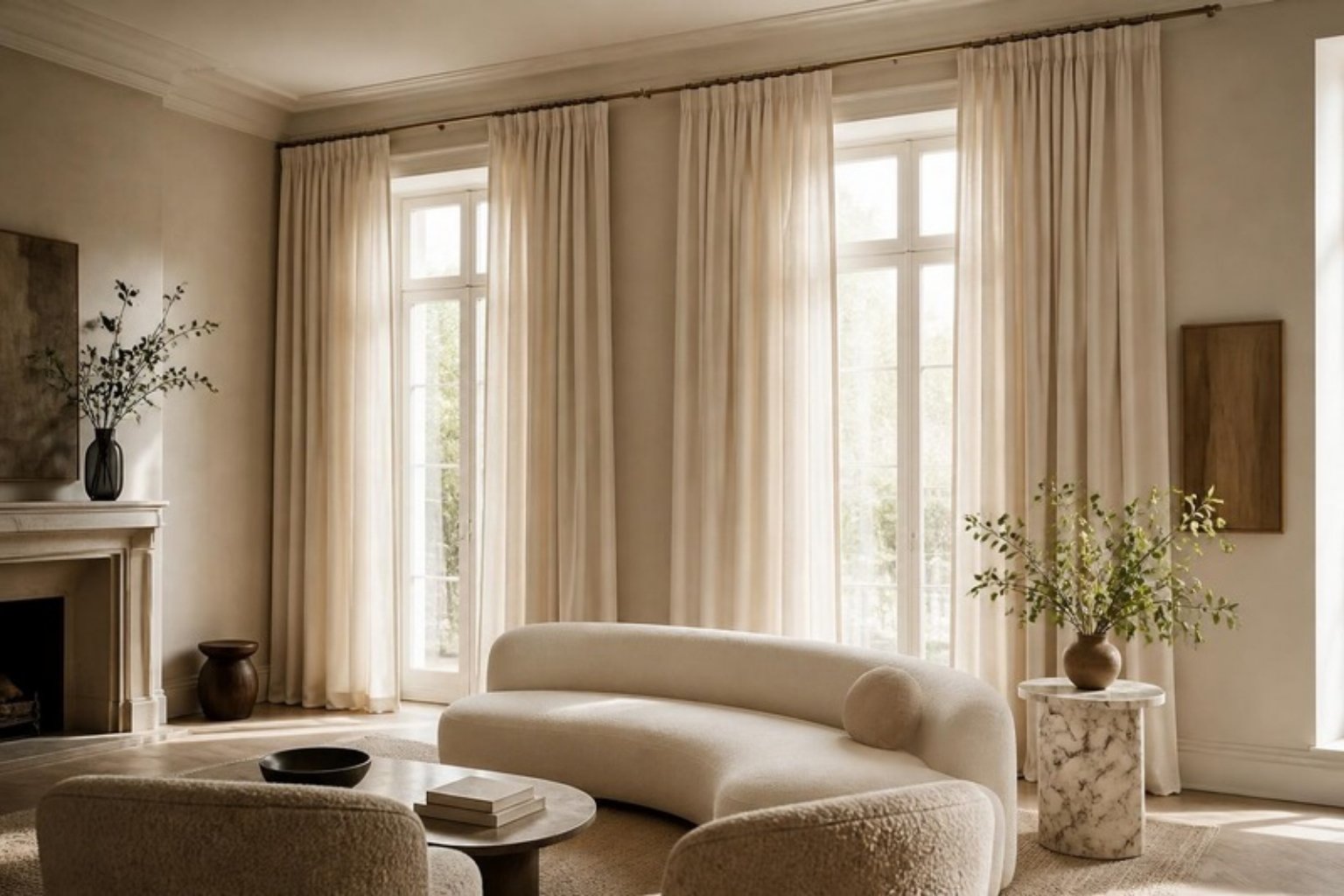
Ivory linen drapery panels on a brass rod framing tall living room windows

Curtains and Drapes

Curtains and drapes are classic window treatments that offer versatility and style. They come in a wide range of fabrics, patterns, and colors, allowing you to easily match them with your existing interior design. For a more formal and elegant look, consider using floor-length drapes with intricate patterns. Semi-sheer curtains, on the other hand, create a light and airy ambiance in a room while still providing privacy.

A designer finishing detail: hold drapery back with an oversized hand-knotted tassel instead of a standard tieback. It is the kind of craftsmanship that makes ready-made panels look custom.

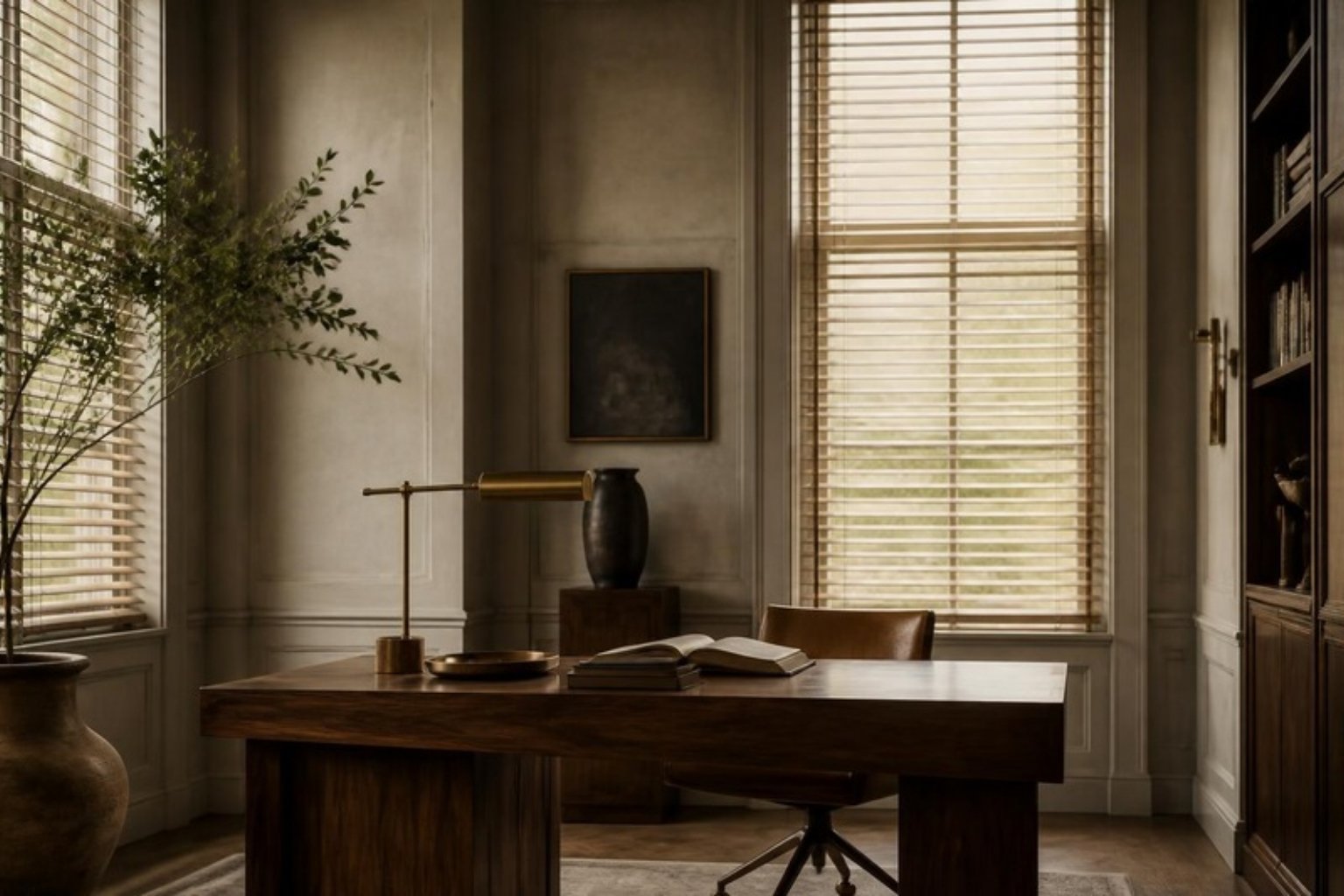
Warm white wooden blinds filtering light in an elegant study

Blinds

Blinds are a popular choice for window treatments due to their functionality and ability to control light. There are various types of blinds available, including vertical, horizontal, and roller blinds. Vertical blinds are ideal for large windows or sliding glass doors, as they can be easily adjusted to allow different levels of light and privacy. Horizontal blinds, such as Venetian blinds, offer a classic and timeless look, while roller blinds are sleek and modern.

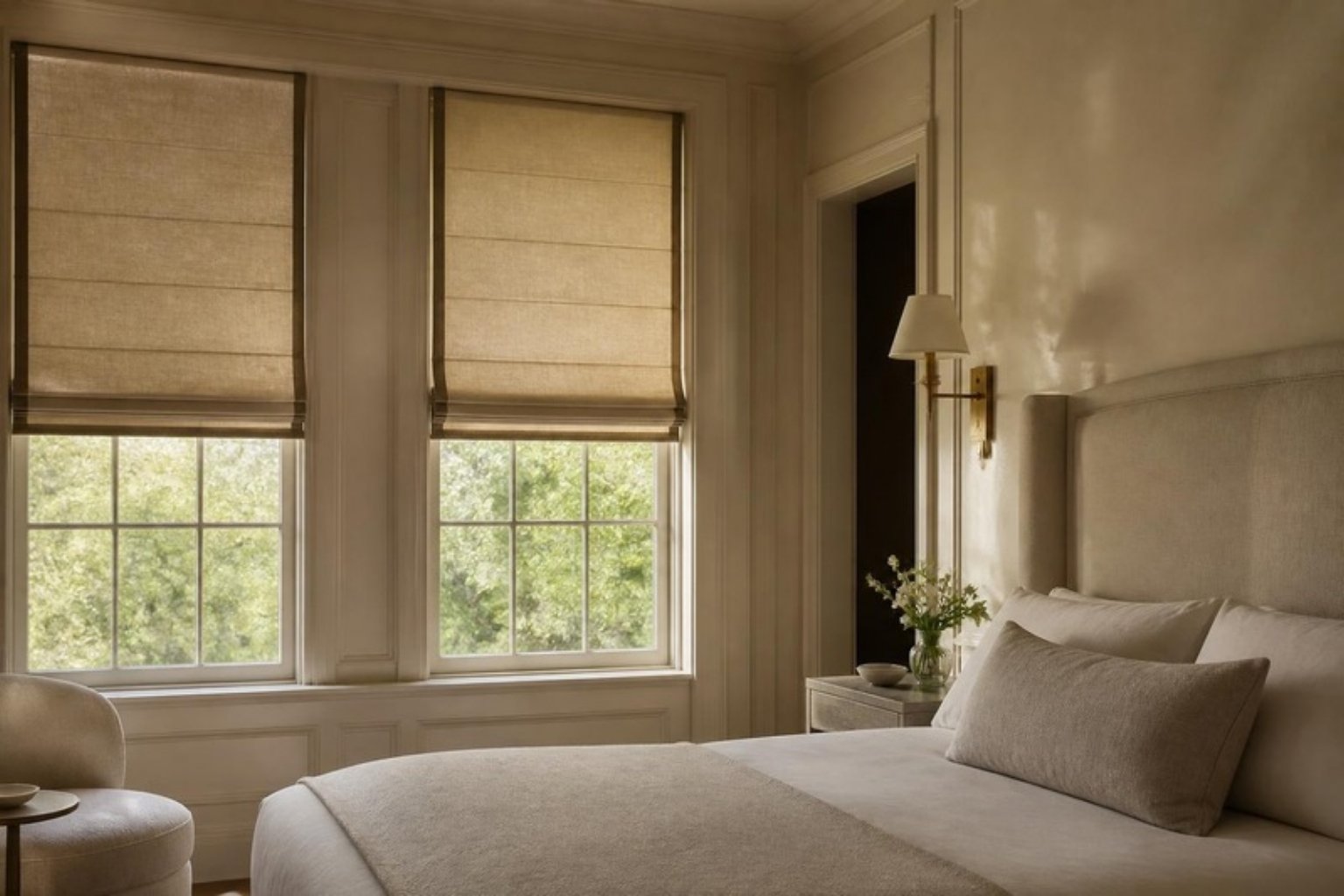
Tailored linen Roman shades in a serene bedroom

Shades

Window shades are a practical and elegant option for indoor window treatments. They come in different styles, such as Roman shades, honeycomb shades, and roller shades. Roman shades add a touch of sophistication and can be customized with various fabrics and patterns. Honeycomb shades provide excellent insulation, making them energy-efficient and suitable for both hot and cold climates. Roller shades offer simplicity and can be paired with curtains or drapes for added style.

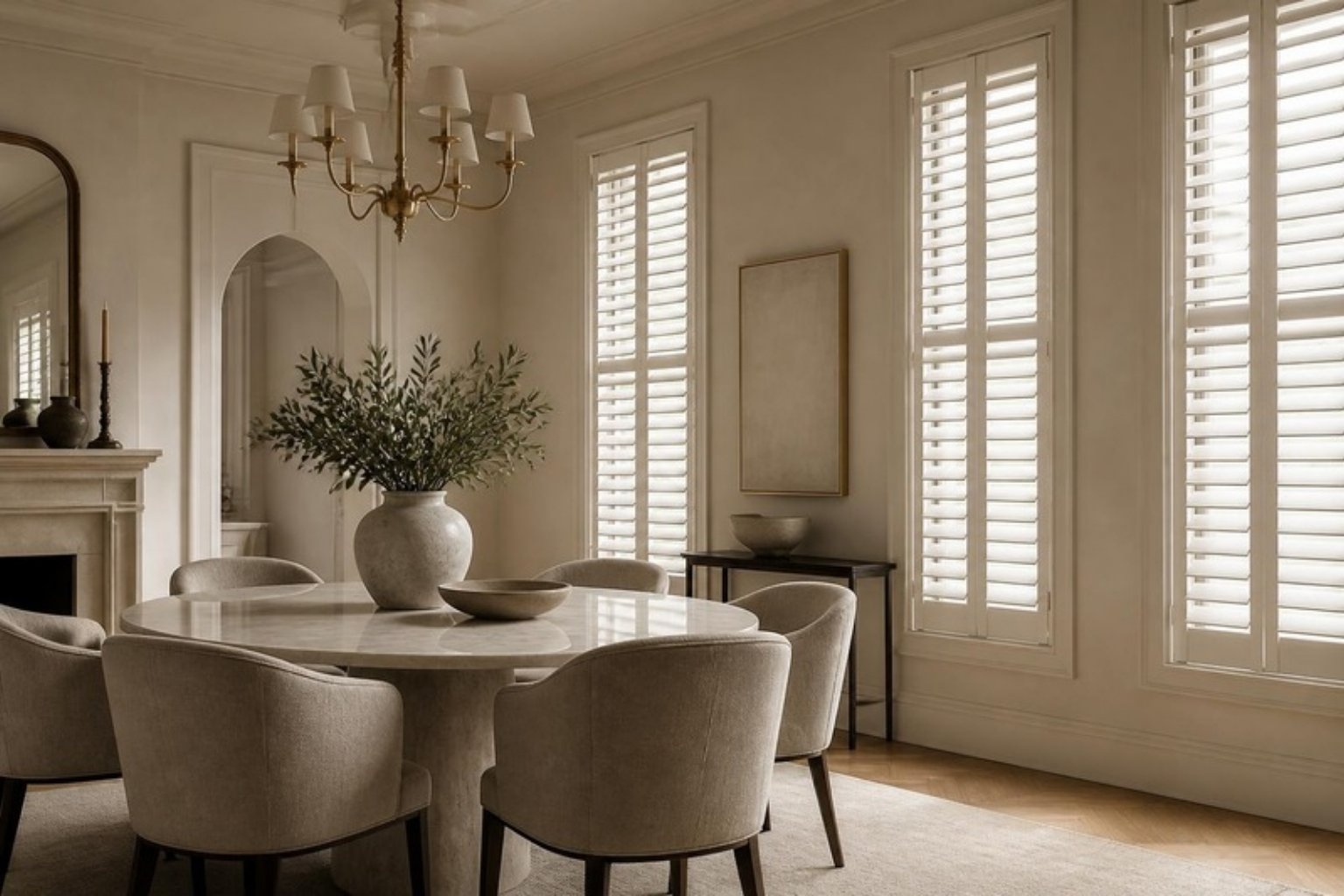
Warm white plantation shutters in an elegant dining room

Shutters

Interior shutters are a timeless and durable window treatment option. They come in various materials, including wood, vinyl, and composite materials. Wood shutters add warmth and natural beauty to a room and can be stained or painted to match your decor. Vinyl and composite shutters are more moisture-resistant, making them suitable for humid environments such as kitchens and bathrooms. Shutters provide excellent light control, privacy, and insulation.

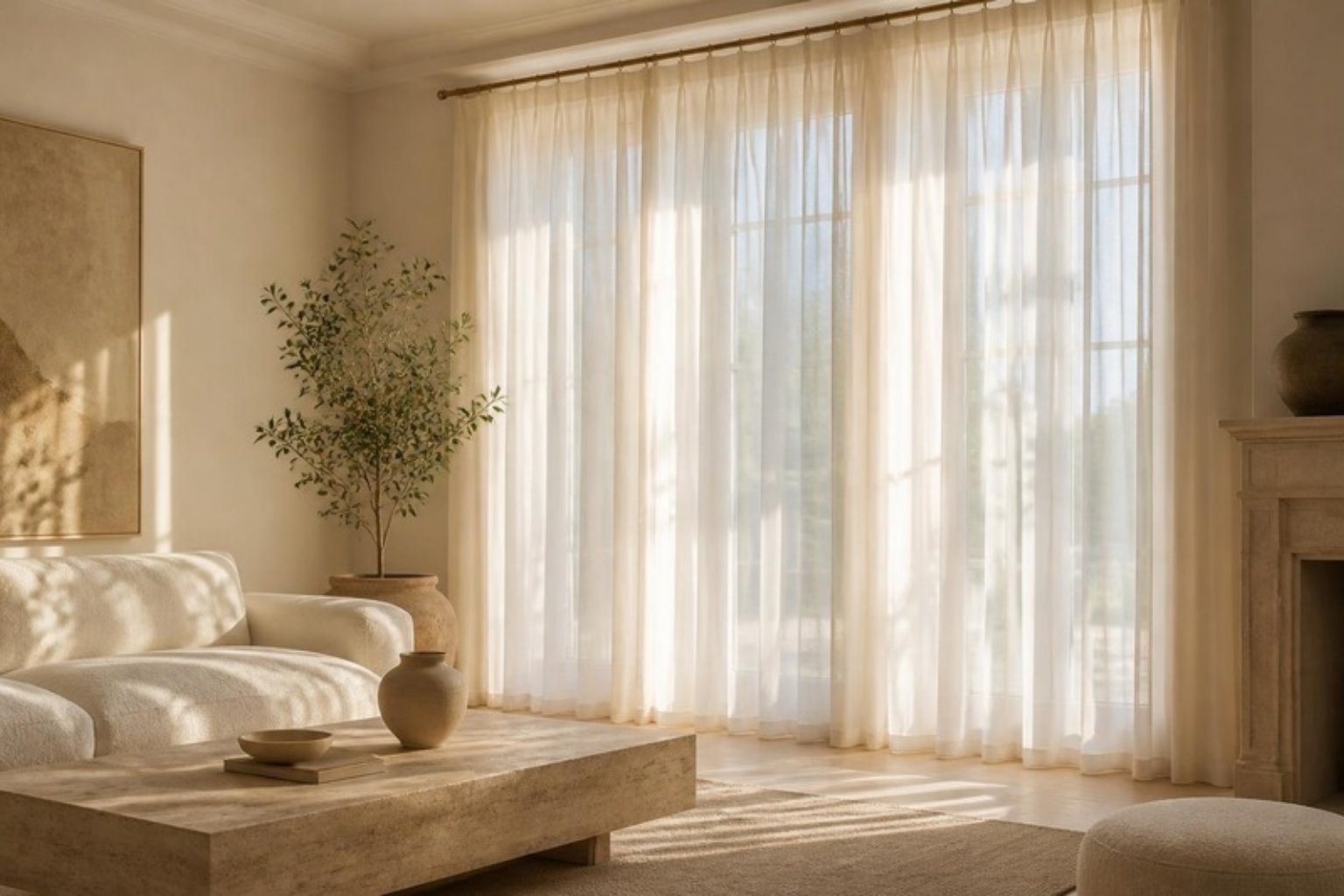
Sheer white linen curtains diffusing sunlight in a living room

Sheer Curtains

Sheer curtains are lightweight and translucent, allowing diffused light to enter a room while maintaining privacy. They create an ethereal and romantic atmosphere and work well in spaces where natural light is abundant. Sheer curtains are available in a variety of colors and patterns, allowing you to customize them to your desired aesthetic.

Finishing Touches Around the Window

Cascade Oversized Hand-Knotted Tassel

Cascade Oversized Hand-Knotted Tassel
$2,800

Marlowe Boucle Bench, Ivory/Natural

Marlowe Boucle Bench, Ivory/Natural
$700

Odette Marble Candelabra Floor Lamp

Odette Marble Candelabra Floor Lamp
$1,374

Choosing the best indoor window treatments is essential for enhancing the aesthetics and functionality of your space. Whether you opt for curtains and drapes, blinds, shades, or shutters, each option offers its own unique features and benefits. Consider your personal preferences, the style of your room, and the desired level of light control and privacy when making your decision. With the right window treatments, you can create a luxurious and inviting atmosphere in any room of your home.

2 Hour Interior Design Virtual or In Person Consultation
Foliate Plaster Table Lamp

Foliate Plaster Table Lamp
$870

Amara Block Print Lumbar Pillow

Amara Block Print Lumbar Pillow
$108

Positano Accent Chair

Positano Accent Chair
$455

SOMETHING FOR EVERYONE

THE PIECES RACHEL RETURNS TO, AGAIN AND AGAIN

Luxury Table Lamps: Designer Picks by Room, Style & Scale

Luxury Table Lamps: Designer Picks by Room, Style & Scale

WHY THE RIGHT TABLE LAMP CHANGES EVERYTHING

I get asked this question more than almost any other: What lamp should I buy? It sounds simple. It is not. A table lamp is not just a light source—it is a sculptural object, a mood-setter, and often the single piece that elevates a room from decorated to designed. After fifteen years of specifying lighting for luxury homes across the country, I can tell you that the right lamp does more work than most people realize.

The wrong lamp—too small, too generic, too bright—disappears into a room or, worse, cheapens it. The right one? It anchors a vignette. It gives a corner warmth and presence. It makes you want to stay.

Here are the luxury table lamps I return to again and again, organized by where they belong and why they work.

BEST LUXURY TABLE LAMPS FOR LIVING ROOMS AND GREAT ROOMS

Living rooms demand lamps with presence. This is where your lighting needs to hold its own alongside statement furniture and artwork. Scale matters enormously here—anything under 28 inches tends to get swallowed by the surrounding decor.

The Atelier Table Lamp is my go-to for formal living spaces. Carved from Arabescato marble with a linen shade and dark bronze dimmer, it stands 36 inches tall and commands attention without competing. The soft gray veining in the marble means it plays beautifully with both warm and cool palettes.

For rooms that lean more organic and textural, the Marais Table Lamp is worth every dollar. It brings a quiet, collected sophistication that works in transitional, modern, and even bohemian spaces.

Atelier Table Lamp

Atelier Table Lamp
$957

Marais Table Lamp

Marais Table Lamp
$2,125

Sorrento Alabaster Dome Table Lamp

Sorrento Alabaster Dome Table Lamp
$2,995

BEST TABLE LAMPS FOR CONSOLES AND SIDEBOARDS

Console lamps need verticality. When a lamp sits on a narrow surface in an entry or hallway, it needs to draw the eye upward and create a moment—especially when paired with art or a mirror above.

The Monolith Table Lamp in Travertine and Brass is the definition of quiet luxury. The travertine base has that warm, honeyed quality that photographs like a dream, and the brass detailing catches ambient light beautifully. I have specified this lamp in at least a dozen projects.

For a more sculptural option, the Laurel Quartz Buffet Lamp brings a collected, gallery-like quality to any console.

Monolith Table Lamp

Monolith Table Lamp
$1,164

Laurel Quartz Buffet Lamp

Laurel Quartz Buffet Lamp
$1,026

Cascata Marble Buffet Lamp

Cascata Marble Buffet Lamp
$1,200

BEST LUXURY TABLE LAMPS FOR BEDSIDE

Bedside lamps are intimate. They are the last thing you see before sleep and the first thing you reach for in the morning. They must be beautiful, yes, but also functional—a dimmer is non-negotiable.

The Marisol Table Lamp is an exceptional value for bedside use—organic form, soft presence, and a scale that does not overwhelm a nightstand. For those who read in bed, the Aurelia Table Lamp provides directed light without flooding the room, and its clean lines complement both modern and traditional bedrooms. If you prefer a softer, more diffused glow, the Gstaad Alabaster Table Lamp filters light through natural alabaster for a warm, candle-like effect at night.

Marisol Table Lamp

Marisol Table Lamp
$225

Aurelia Table Lamp

Aurelia Table Lamp
$185

Gstaad Alabaster Table Lamp

Gstaad Alabaster Table Lamp
$346

BEST TABLE LAMPS UNDER $300

Good design does not require unlimited budgets. These lamps prove that a considered, designer-selected piece can elevate a room without a four-figure price tag.

Both bedside picks above, the Marisol and the Aurelia, come in under $300. Two more I recommend constantly for guest bedrooms, home offices and reading nooks are the Sagaponack Marble Table Lamp and the Cortina Marble Table Lamp. Both bring real marble into a room for far less than stone lamps usually cost.

Sagaponack Marble Table Lamp

Sagaponack Marble Table Lamp
$238

Cortina Marble Table Lamp

Cortina Marble Table Lamp
$252

HOW TO CHOOSE THE RIGHT TABLE LAMP: A DESIGNER’S CHECKLIST

After years of sourcing and specifying lamps for clients, here is what I always consider:

  • Scale: The lamp should be roughly 1.5 times the height of the surface it sits on. A 30-inch console wants a lamp around 32–36 inches tall.
  • Shade proportion: The shade should be about two-thirds the total height of the lamp and roughly the same width as the base at its widest point.
  • Material harmony: Match your lamp materials to what is already in the room. Brass with brass. Stone with stone. Do not introduce a material that has no echo elsewhere.
  • Light quality: Always use dimmable, warm-white bulbs (2700K). Anything cooler reads institutional.
  • The dimmer test: If a lamp does not have an integrated dimmer, it needs to work with a plug-in dimmer. Non-negotiable for any room where ambiance matters.

More Lamps I Love

Positano Terrazzo Table Lamp

Positano Terrazzo Table Lamp
$960

Foliate Plaster Table Lamp

Foliate Plaster Table Lamp
$870

Westcott Arc Table Lamp in Aged Brass & Linen

Westcott Arc Table Lamp in Aged Brass & Linen
$769

EXPLORE THE FULL LIGHTING COLLECTION

Every lamp in the Rachel Blindauer lighting collection has been personally selected for its craftsmanship, scale, and ability to transform a space. These are not trend pieces—they are investments in how your home feels every single day.

Shop the full lighting collection here.

The Design Consultation with Rachel Blindauer — two hours on your project
Marais Chandelier

Marais Chandelier
$2,300

Anchor Coffee Table

Anchor Coffee Table
$3,464

Terra Travertine Box

Terra Travertine Box
$387

SOMETHING FOR EVERYONE

THE PIECES RACHEL RETURNS TO, AGAIN AND AGAIN

The Artists Whose Work Holds and Grows in Value: An Interior Designer’s Investment Guide

The Artists Whose Work Holds and Grows in Value: An Interior Designer’s Investment Guide

Art is the final layer in a room — the element that reveals whether the person living there has a genuine point of view or has simply assembled things that look right together. Over fifteen years of placing art in clients’ homes across Sarasota, Nantucket, and St. Louis, the artists I return to are not necessarily the ones with the most recognizable names. They are the ones whose work rewards sustained attention, holds its emotional power across years of daily living, and has an inherent quality that no amount of trend can replicate or erode.

These are the artists I love — and think about, and recommend — right now.

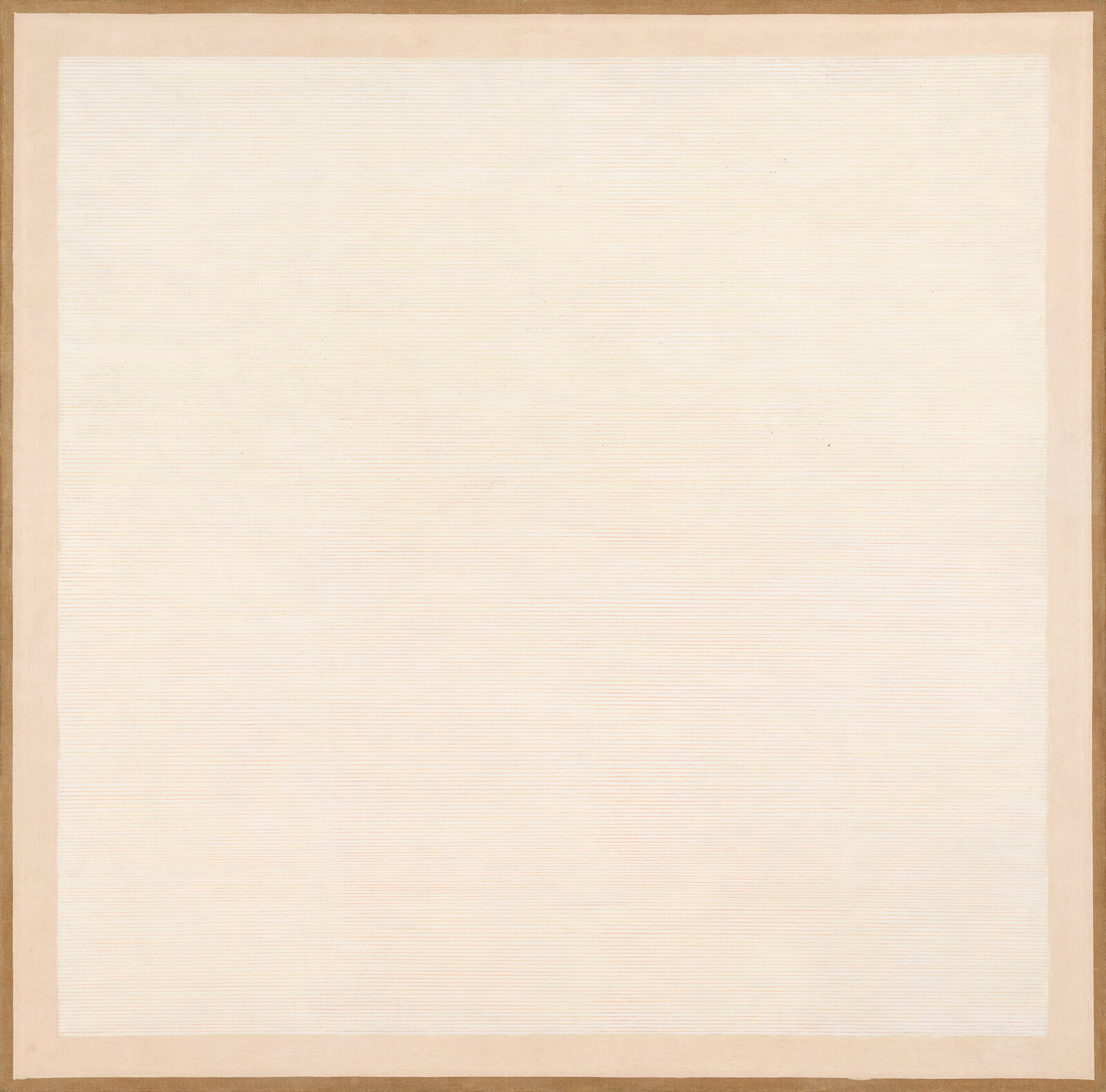
Agnes Martin

Martin’s paintings — grids and lines rendered in graphite and pale wash on linen, at large scale — are the visual equivalent of a long, quiet breath. They ask almost nothing of you at first glance and reveal everything over time. In a room that is already refined and still, a Martin is not decoration. It is atmosphere. Her work is at the permanent collections of MoMA, the Tate, and the Guggenheim, and it commands serious secondary market prices — but reproductions and prints also exist for clients who want to live with that particular quality of silence on a wall.

Agnes Martin work 3Agnes Martin work 4

Cy Twombly

Twombly’s scrawled, mythological canvases — chalk-white fields crossed with graffiti-like marks, classical references embedded in layers of paint — are among the most intellectually alive works in twentieth-century art. They are also, paradoxically, among the most domestic: they work beautifully in rooms with books, with stone, with the kind of collected interiors that feel lived-in and layered. His later petal paintings, in blazing rose and red, have an almost shocking beauty that can transform a quiet room into something unforgettable.

Cy Twombly work 1Cy Twombly work 2Cy Twombly work 3

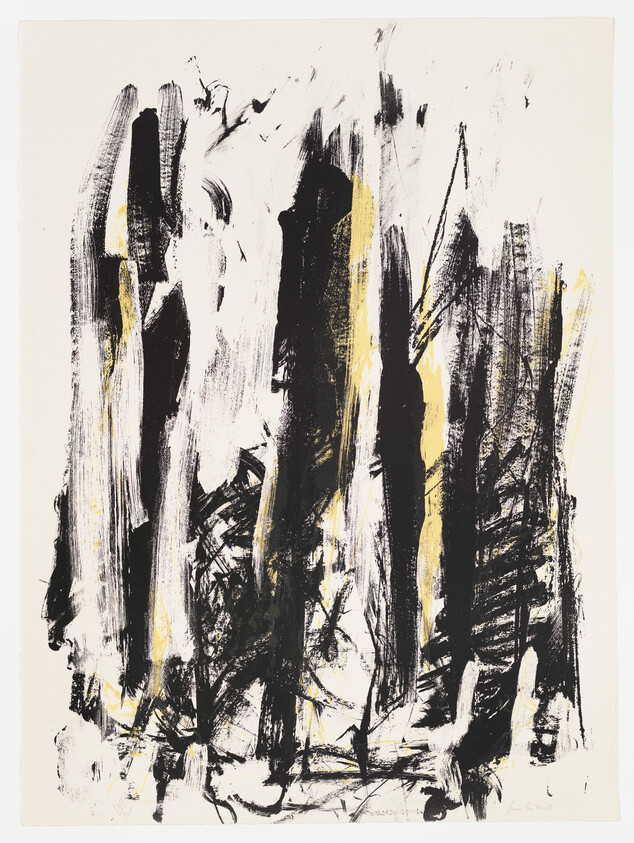
Joan Mitchell

Mitchell painted as if she was trying to capture the feeling of a landscape rather than its appearance — great sweeps of color, stormy and luminous at once, that seem to contain weather and light and emotional temperature simultaneously. Her canvases are best experienced large, and they are best placed where natural light can move across them throughout the day. She is the abstract expressionist I find myself recommending most often for clients who want something genuinely powerful without the institutional gravity of a Rothko or a de Kooning.

Joan Mitchell work 1Joan Mitchell work 2Joan Mitchell work 3

Wolf Kahn

Kahn painted the American landscape — barns, fields, tree lines at dusk — in pastels of almost hallucinatory softness: lavender meadows, violet shadows, fields that hover between gold and green. His work is figurative enough to be immediately accessible and abstract enough to be inexhaustible. In a coastal or country house, a Kahn feels inevitable rather than chosen. His estate continues to offer works, and prints are widely available for clients beginning to collect.

Wolf Kahn work 1Wolf Kahn work 2

Slim Aarons

Aarons photographed “attractive people doing attractive things in attractive places” — his own description — from the 1950s through the 1990s, producing an archive of poolside glamour, Mediterranean ease, and effortless aristocratic leisure that has become the defining visual language of aspirational living. His photographs are not nostalgia. They are a specific and still-unsurpassed vision of what a beautiful life looks like. In a bedroom, a dressing room, or a sunlit sitting room, an Aarons print is never wrong.

Slim Aarons work 1Slim Aarons work 2Slim Aarons work 3Slim Aarons work 4

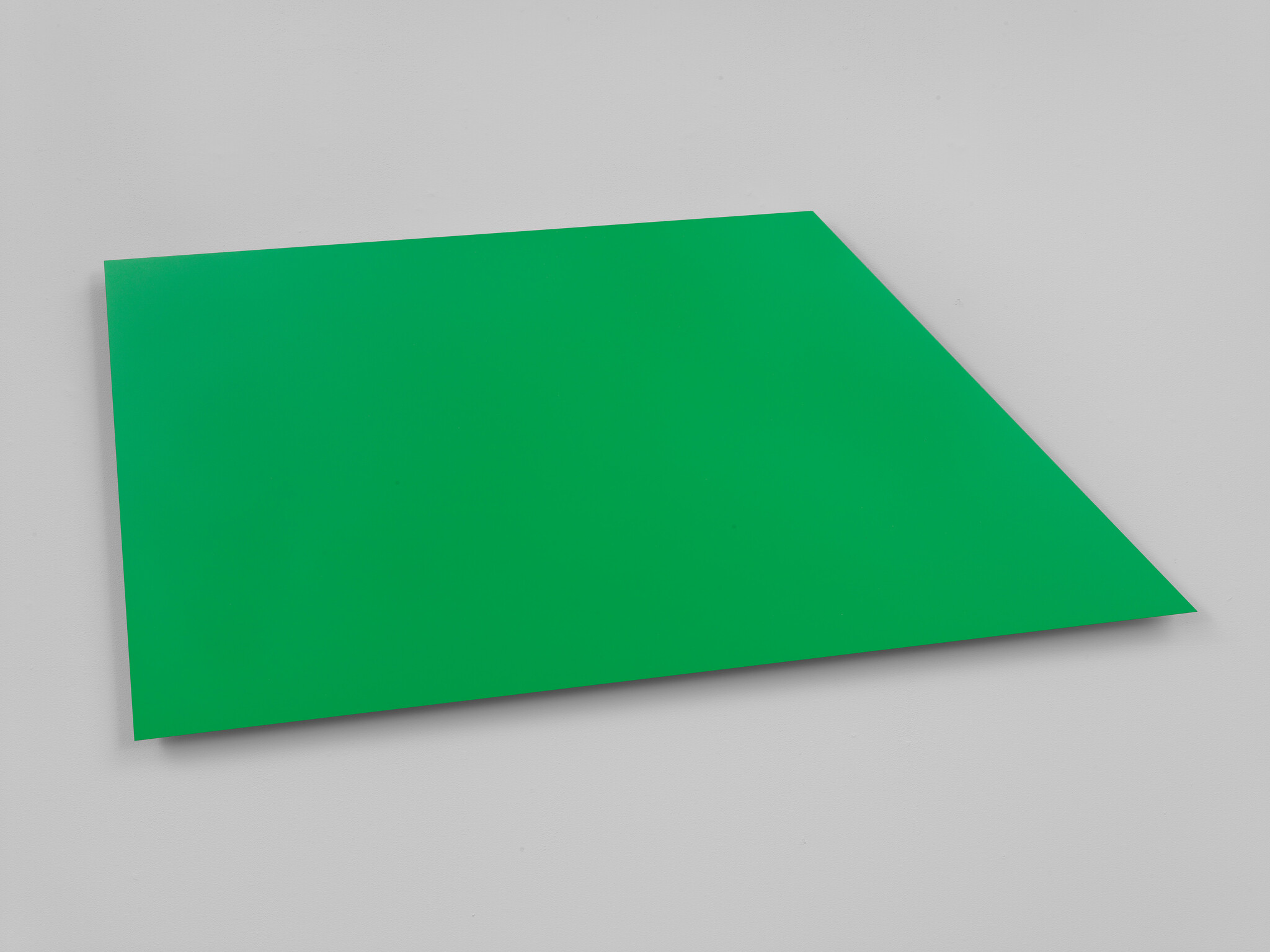
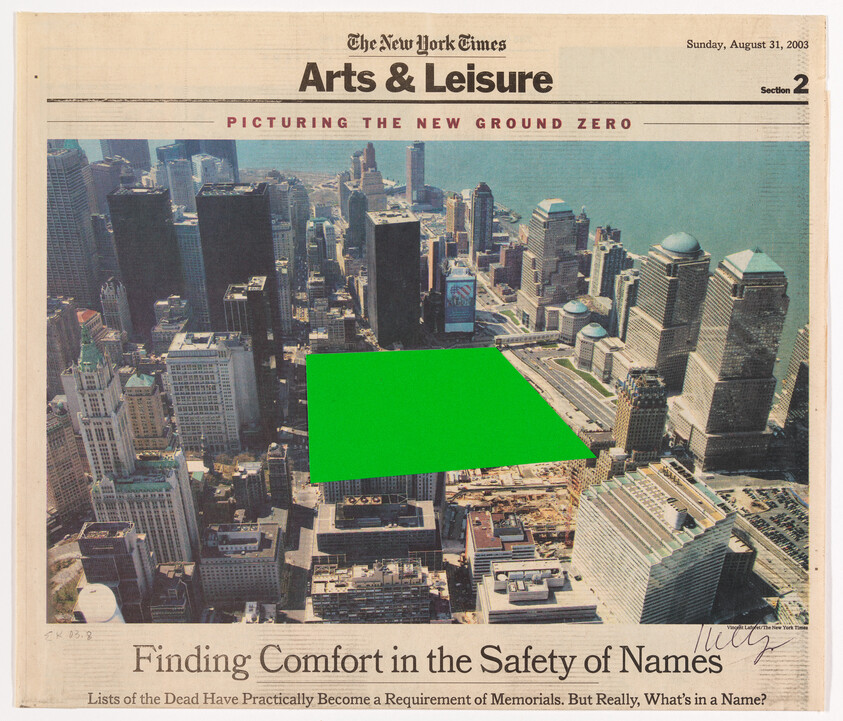
Ellsworth Kelly

Kelly reduced painting to its most essential elements — color, edge, shape — and in doing so created works of extraordinary architectural authority. A Kelly panel in a room with strong geometry and restrained palette is not a decoration; it is a structural decision. His shaped canvases, his plant drawings, and his prints are among the most reliable ways I know to give a contemporary room a backbone of genuine art historical seriousness without heaviness or pretension.

Ellsworth Kelly work 1Ellsworth Kelly work 2Ellsworth Kelly work 3Ellsworth Kelly work 4

Lucie Rie

The Austrian-British ceramist Lucie Rie produced vessels of such refined simplicity that they register as sculpture regardless of context. Her bowls and bottles — thin-walled, precisely thrown, in matte and sgraffito surfaces in white, bronze, and muted earth tones — have an authority in a room that few contemporary objects match. They are collected by museums and serious private collectors alike, and a single genuine Rie piece on a shelf can anchor an entire room’s aesthetic conversation. For clients who cannot access her originals, the studio ceramists who have emerged in her tradition — Rupert Spira, Gabrielle Koch — offer a similar quality of attention at more accessible price points.

Lucie Rie work 1Lucie Rie work 2

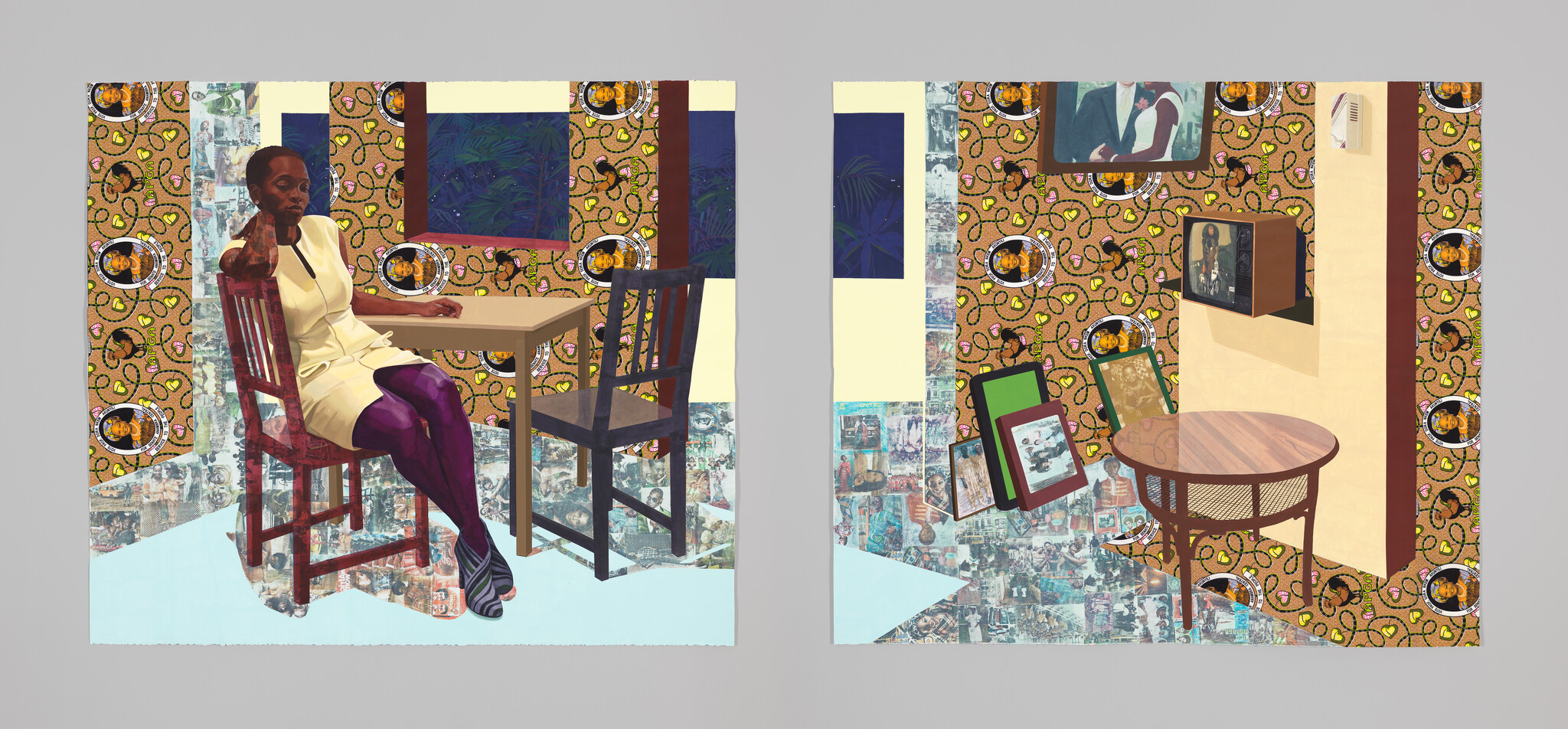
Njideka Akunyili Crosby

The most compelling figurative painter working today, in my view. Akunyili Crosby layers photo-transfer images of Nigerian domesticity with painted surfaces in a technique that makes her canvases feel simultaneously intimate and monumental. Her work is about identity, memory, belonging, and the complexity of living between cultures — and it is executed with a technical sophistication that rewards close, slow looking. She is in every major museum collection and on the secondary market at prices that reflect her standing. To own one is to own one of the defining artworks of this era.

Njideka Akunyili Crosby work 1Njideka Akunyili Crosby work 2Njideka Akunyili Crosby work 3

Cecily Brown

Brown’s neo-expressionist canvases — dense, sensuous, wildly energetic — operate somewhere between figuration and abstraction, with art historical references (Rubens, Fragonard, de Kooning) visible beneath surfaces of extraordinary painterly intelligence. Her work is explicitly physical: you feel it before you understand it. In a room with strong bones and restrained furnishings, a Brown painting provides everything the room needs by way of vitality and passion. She is among the most important painters of her generation.

Cecily Brown work 1Cecily Brown work 2Cecily Brown work 3

Peter Beard

Beard spent decades in Africa photographing wildlife and landscapes in a style that was part documentary, part diary, part obsession — overlaying his photographs with drawings, pressed plants, and handwritten text in a way that made each print a personal artifact rather than simply a photograph. His work is wild and beautiful and deeply particular. In a library, a study, or a room designed around a strong personality, a Beard is an immediate statement of serious, original collecting taste.

Peter Beard, Orphaned Cheetah Cubs, Mweiga National Park, Kenya, 1968Peter Beard, Lolindo Lion Charge, 1964Peter Beard, Gerenuk, Kenya, 1960

Donald Judd

Judd is most famous as a sculptor — his stacked steel boxes, his colored aluminum progressions — but he was also, crucially, a furniture designer who believed that the objects we live with should be as rigorously considered as the art we hang on walls. His furniture, produced in Marfa, Texas, and now available through the Judd Foundation, bridges the art world and the domestic world in a way that is still almost unique. Even if you never own a Judd work, understanding his thinking about objects, space, and the relationship between them will make you a better collector.

Donald Judd work 1Donald Judd work 2Donald Judd work 3Donald Judd work 4

How I Think About Art in a Room

The most important thing I’ve learned about placing art is that the room must be ready for it. Art placed too early, before the bones of the space are established, becomes decoration — one element among many competing for attention. Art placed into a room that has been carefully resolved becomes the room’s reason for existing. I always advise clients to live with their walls a little longer than feels comfortable before committing — because when the right piece arrives, you will know it immediately. And when it does, give it the wall it deserves.

If you’re building a collection, navigating the art market, or simply trying to find the right piece for a specific space, a design consultation is a natural place to start that conversation.

Art to Collect

Verdant Facet

Verdant Facet
$550

Emerald Nocturne

Emerald Nocturne
From $700

Azure Ascent

Azure Ascent
$1,400

2 Hour Interior Design Virtual or In Person Consultation
Cadence Wall Art

Cadence Wall Art
$126

Monteverde Marble Side Table

Monteverde Marble Side Table
$1,595

Sculptural Serenity Vase

Sculptural Serenity Vase
$452

SOMETHING FOR EVERYONE

THE PIECES RACHEL RETURNS TO, AGAIN AND AGAIN