Multigenerational Home: How 3 generations can thrive together
There is a quiet shift happening in American housing, and it’s driven less by trend than by math and meaning. As of 2021, nearly one in five Americans—about 18%—lived in a multigenerational household, up from just 7% in 1971. Over those five decades the number of people living this way more than quadrupled, from roughly 14.5 million to nearly 60 million. Behind the figures are rising housing costs, longer lifespans, and a cultural recalibration: families are discovering that isolation is expensive, and that togetherness, when it’s designed well, is an asset.
Here is the distinction most articles miss: multigenerational living rarely fails because of family dynamics. It fails because of floor plans. A three-generation household doesn’t need more square footage so much as it needs zoned square footage. The approach I use divides a home into three kinds of space—what I call the Autonomy, Connection, and Flex zones. Balance those three, and a full house stops feeling crowded and starts feeling layered.
The Financial Case: Run the Numbers First
Before we talk about thresholds and tile, it’s worth looking at the spreadsheet—because for many families the design decision is really a financial one. A few national reference points (2025 figures; your local numbers will vary):
- Assisted living: a national median around $6,200 a month ($74,400 a year)—often reduced or eliminated when a parent can age in place.
- Full-time childcare: roughly $1,200–$1,500 per child per month on average, and more for infants or in major metros—eased when a grandparent is close by.
- Mortgage and utilities: carried by one household, or split two and three ways.
A well-designed multigenerational renovation or addition often pays for itself within a few years when measured against the cost of separate households or institutional care. This isn’t financial advice, and every family’s situation is different—but the comparison is worth running honestly.
Reader action: Build a simple five-year comparison. Add up the real cost of your current setup—rent or mortgage, plus eldercare, plus childcare—and weigh it against a renovation or addition. More often than people expect, the renovation is the smaller number.
The Three-Zone Method: Privacy and Proximity, by Design
The goal is never to cram more people into a house. It’s to give each generation room to retreat and reasons to gather. Three zones do that work.
Zone 1 — The Autonomy Suite (Non-Negotiable Privacy)
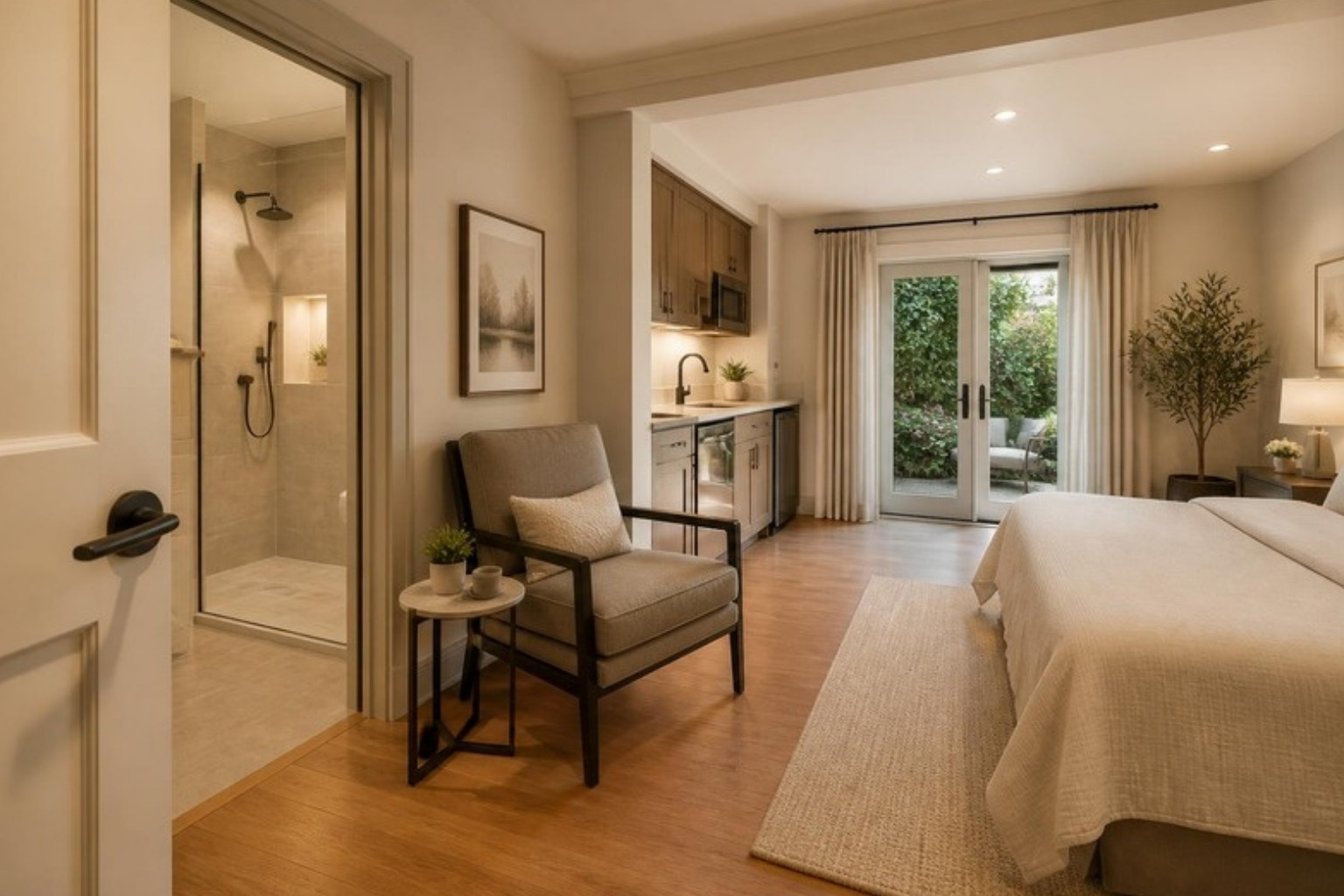
Every adult generation needs a door they can close—not just a bedroom, but a small suite. At minimum:
- A private bathroom with a 32-inch clear doorway (the “visitability” standard) and reinforced walls so grab bars can be added later at the right height.
- A kitchenette—a 24-inch under-counter fridge, a microwave drawer, a single-bowl sink. It’s what ends the 6:00 a.m. traffic jam in the main kitchen.
- A separate entrance where possible. Even a ground-floor patio door counts. It lets the suite function independently—or as a future rental—if circumstances change.
- Sound separation: insulated party walls, solid-core doors, and even a white-noise machine—a small investment that prevents an enormous amount of friction.
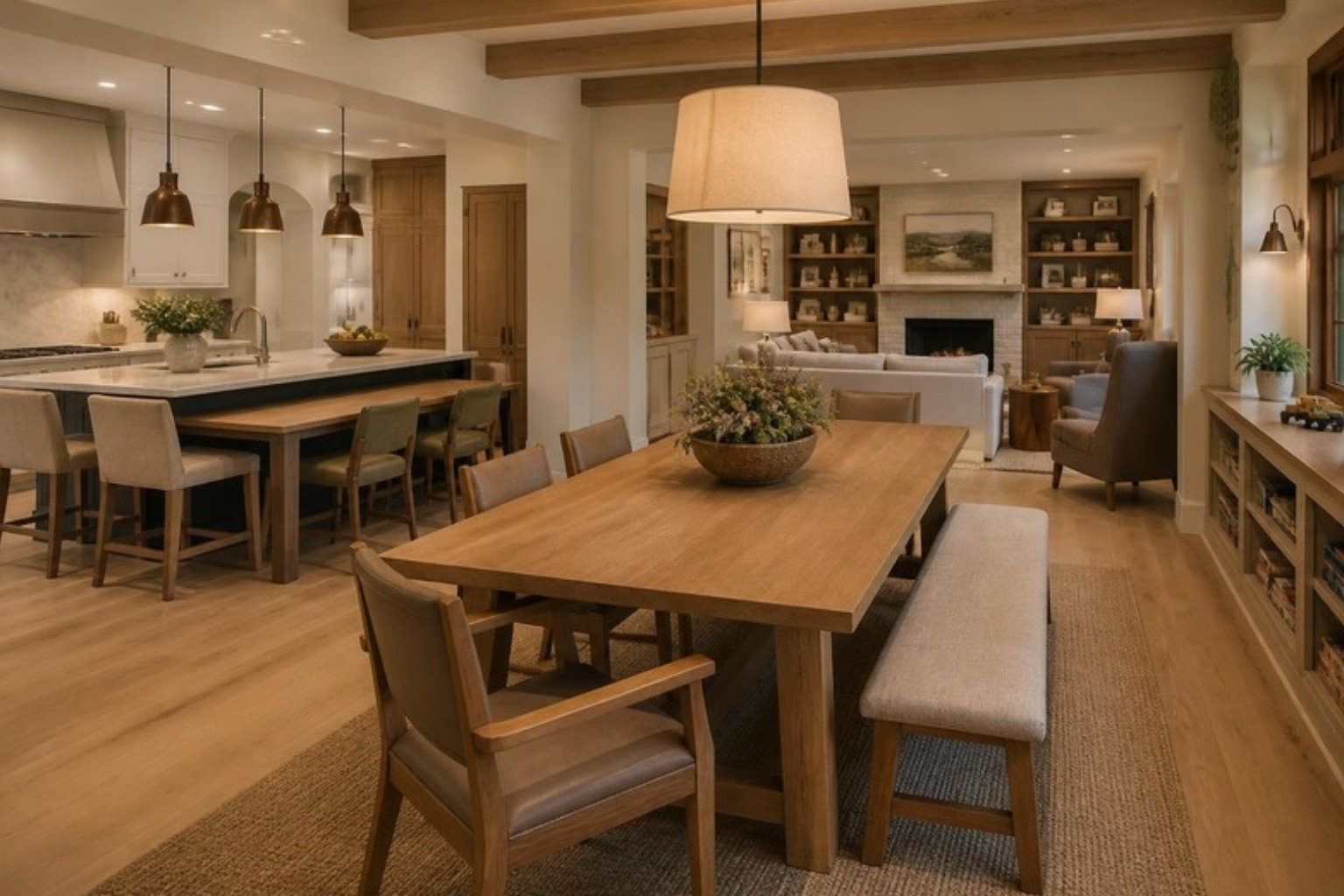
Zone 2 — The Connection Zone (Intentional Togetherness)
If the Autonomy Suite is about retreat, the Connection Zone is about ritual. These spaces are designed for the daily collisions you actually want:
- A longer table. A ten-foot table instead of a six-foot one creates proximity without crowding, and quietly signals that this is a place to linger.
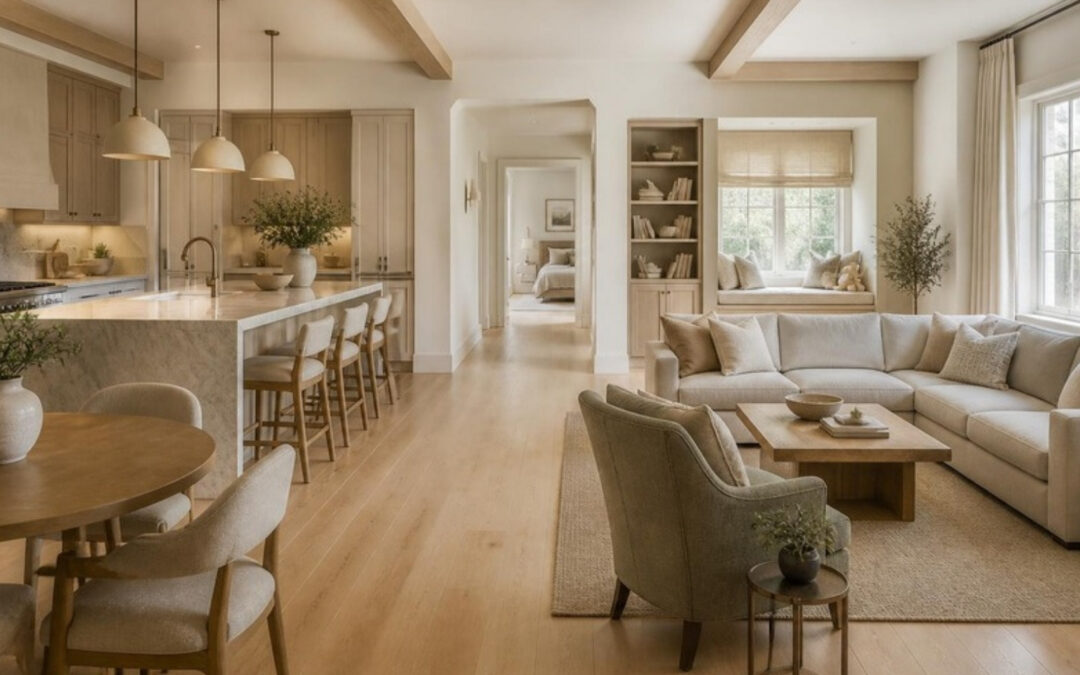
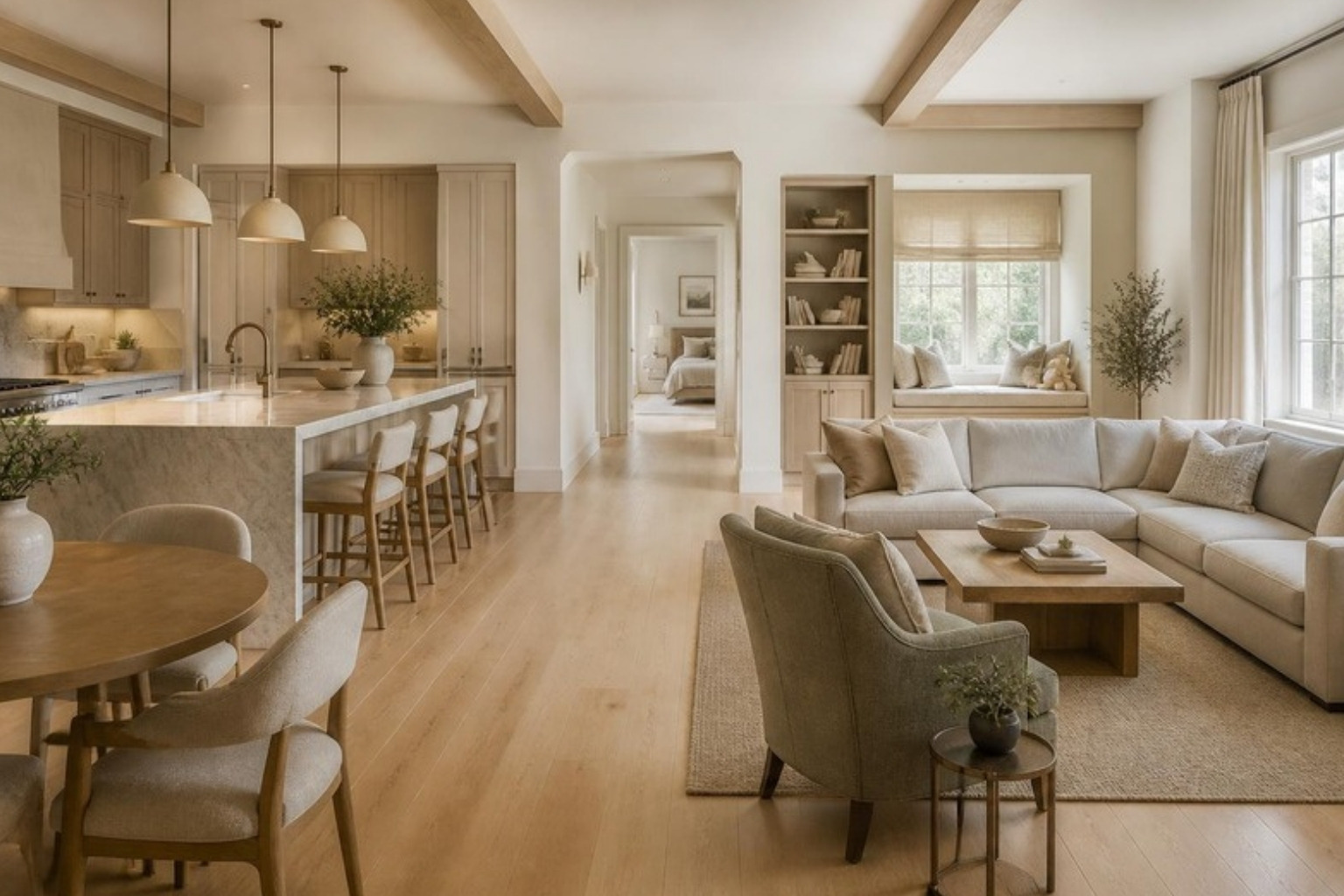
- Clear sightlines. An open view from the kitchen to the main living space lets a grandparent watch the children while seated, and a parent cook without feeling cut off.
- Single-level access. If reaching the gathering space means stairs, the generations won’t gather. A no-step path from the driveway to the kitchen is the most important thirty-six inches in the house.
Pieces for Every Generation

Vessel Form Lidded Jar
$1,658

Marisol Table Lamp
$225

21" Estes Aluminum Side Table
$1,260
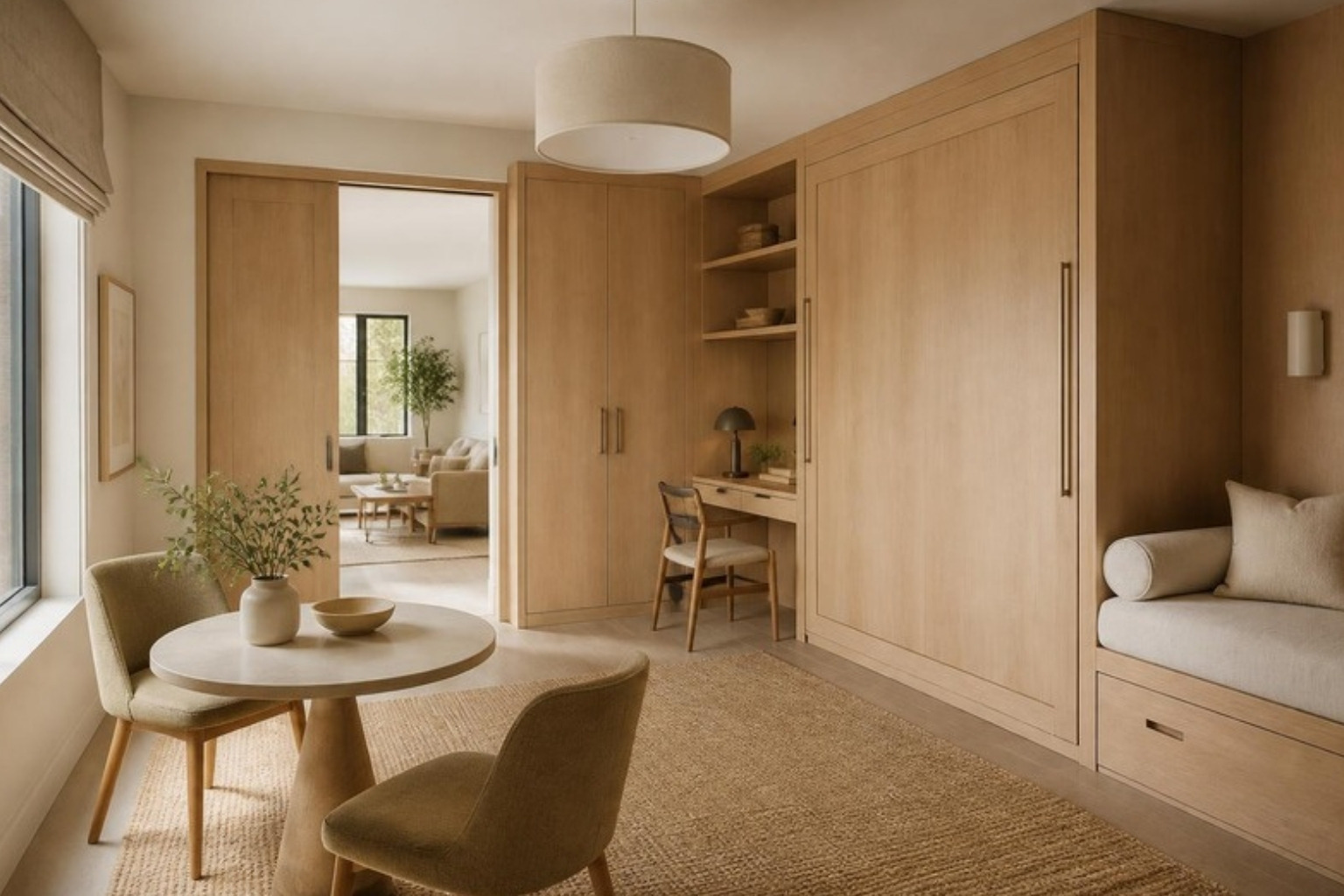
Zone 3 — The Flex Zone (Adaptability Over Time)
The nursery today becomes a caregiver’s room in ten years. Design for reversibility:
- Murphy beds with built-in desks—the room is an office 360 days a year and a guest room the other five.
- Blocking behind the walls. In every bath and bedroom, add solid blocking between the studs at 33–36 inches high. It costs a few dollars in lumber now and lets a grab bar go up in minutes later, instead of opening walls.
- Lever handles everywhere—on doors, faucets, and cabinets. A lever can be worked with an elbow when hands are full or arthritis sets in.
Universal Design by the Numbers
Print this and take it to your contractor. These reflect widely used visitability and accessibility standards; always confirm against your local building code.
| Element | Minimum | Ideal | Why it matters |
|---|---|---|---|
| Hallway width | 36″ | 42″ | Two people—or a walker—can pass |
| Doorway clear width | 32″ | 36″ | 32″ is visitability; 36″ clears a wheelchair |
| Entry threshold | 0″ | 0″ | A no-step entry is the goal |
| Kitchen counters | 36″ standard | Mix of 30″ + 36″ | A lower section allows seated prep |
| Outlets | 15″ above floor | 15–18″ | Easier reach from a seated position |
| Grab-bar blocking | 33–36″ high | 33–36″ high | Install in every bath, not just one |
| Shower | 36″×36″ | 60″×30″ zero-threshold | Allows a seat now, a roll-in later |
Solving the Real Friction Points
“We love each other, but we’re on different schedules.” Zoned HVAC. A separate mini-split in the Autonomy Suite lets an early-rising grandparent have heat at 5:00 a.m. without waking a teenager—a modest cost that quietly removes a daily irritation.
“Whose house is it, anyway?” Co-create a simple family agreement before the first box is unpacked. Not necessarily a legal document, but a shared understanding of quiet hours, shared versus personal groceries, guests, and an exit plan if someone needs to move on. Design follows the agreement, not the other way around.
“I don’t want it to feel like a hospital.” Aging-in-place features only look clinical when they’re chosen that way. A grab bar in polished brass reads as a towel bar; a zero-threshold shower behind frameless glass reads as a spa. The best universal design is simply invisible.
A Design Scenario: Garage to Autonomy Suite
The following is an illustrative scenario—a composite based on common floor plans, offered as a planning tool rather than a specific past project.
Picture a 1970s split-level with three generations and no bedroom on the ground floor. Converting the attached garage yields an Autonomy Suite of roughly 380 square feet: a bedroom, a kitchenette along one wall, and a zero-threshold bath with blocking already set for grab bars. The old garage-door opening becomes a covered patio entrance, giving the suite its own way in and out. In the main house, removing a single wall between the kitchen and living room opens a 24-by-16-foot Connection Zone with clear sightlines from stove to sofa.
The features a family like this tends to use most? The separate morning coffee zone that protects everyone’s routine, and the shared dinner table that brings them back together at night—Autonomy and Connection doing exactly what they’re designed to do.
The Takeaway: Home as Infrastructure
A multigenerational home isn’t a sentimental arrangement—it’s infrastructure for a longer, richer life. When you design for privacy, proximity, and flexibility, you’re not just making room for your family; you’re building a platform that lowers eldercare costs, enriches a child’s daily life, and protects the resources of the generation in the middle.
The question is no longer whether three generations should live together. It’s whether your floor plan is ready. If you’d like a room-by-room read on yours, book a design consultation—we’ll walk your home against the checklist above and map the path to a layout that works for everyone under your roof.


Winslow Round Side Table
$2,224

Cascais Brass & Glass Bath Shelf
$1,195

Palermo Rattan & Brass Catchall Tray
$380
SOMETHING FOR EVERYONE
THE PIECES RACHEL RETURNS TO, AGAIN AND AGAIN