A small kitchen has no room for anything that is not earning its place. That sounds like a limitation, but it is the reason small kitchens can be the most beautiful rooms in a house: every object is chosen, every drawer has a job, and nothing is left on the counter by default. The goal is not to hide everything. It is to decide where everything lives, so the few things you leave out can be beautiful.
Below is the exact order to work in: edit, zone, store, then style.
Edit Before You Organize
Organizing products cannot fix a kitchen that simply holds too much. Before buying a single bin, empty one cabinet at a time and sort everything into three piles: used weekly, used a few times a year, and not used in the last year.
- Used weekly stays in the kitchen, within reach.
- Used a few times a year (the roasting pan, holiday platters, the stand mixer if you bake twice a year) moves to the highest shelves, a hall closet or the garage.
- Not used in a year is donated.
Then count. Most households of two need eight dinner plates, eight glasses of each type, one good skillet, one stockpot and two cutting boards. Anything beyond that is storage you are paying for in counter space.
Zone the Kitchen by Task
Store things where they are used, not where they fit. Divide the kitchen into four small zones and keep each zone’s tools within one step of it:
- Prep zone (the longest stretch of counter): knives, cutting boards, mixing bowls, measuring cups.
- Cooking zone (beside the range): pots and pans in deep drawers below; oils, salt and spices in a slim pull-out or shallow drawer; utensils in a crock or the top drawer.
- Cleanup zone (at the sink): dish soap, towels and the trash pull-out, with dishes and glassware in the closest cabinet or drawer so unloading takes one step.
- Coffee or tea zone (at the end of a run, away from cooking traffic): machine, mugs, beans and sugar together, ideally behind doors that open to the counter.
When every zone is complete, the counters clear themselves, because nothing has to be left out for convenience.
Choose Drawers Over Doors
In a small kitchen, deep drawers below the counter hold far more than cabinets with doors, because you see and reach everything from above instead of kneeling to dig behind the front row.
- Deep drawers (10 to 12 inches) for pots, pans and lids. Add a pegboard insert so dinner plates can live low, where children and guests can reach them.
- Shallow drawers (3 to 4 inches) with fitted wood dividers for utensils, knives in an in-drawer block, and wraps.
- Pull-out shelves retrofitted into existing base cabinets if a renovation is not on the table. They cost little and double the usable space.

Use the Inches Most Kitchens Waste
Small kitchens gain the most from spaces that usually sit empty:
- The 6-inch gap beside the range or refrigerator fits a pull-out spice and oil rack.
- The toe kick under base cabinets can hold a shallow drawer for sheet pans, trays and placemats.
- The inside of cabinet doors takes slim rails for lids, cutting boards or measuring spoons.
- The wall between counter and upper cabinets holds a single brass or nickel rail for the three tools you use every day, with nothing else hung beside them.
- Above the upper cabinets, if they stop short of the ceiling, is the place for rarely used serving pieces in matching lidded baskets.
Decant the Pantry
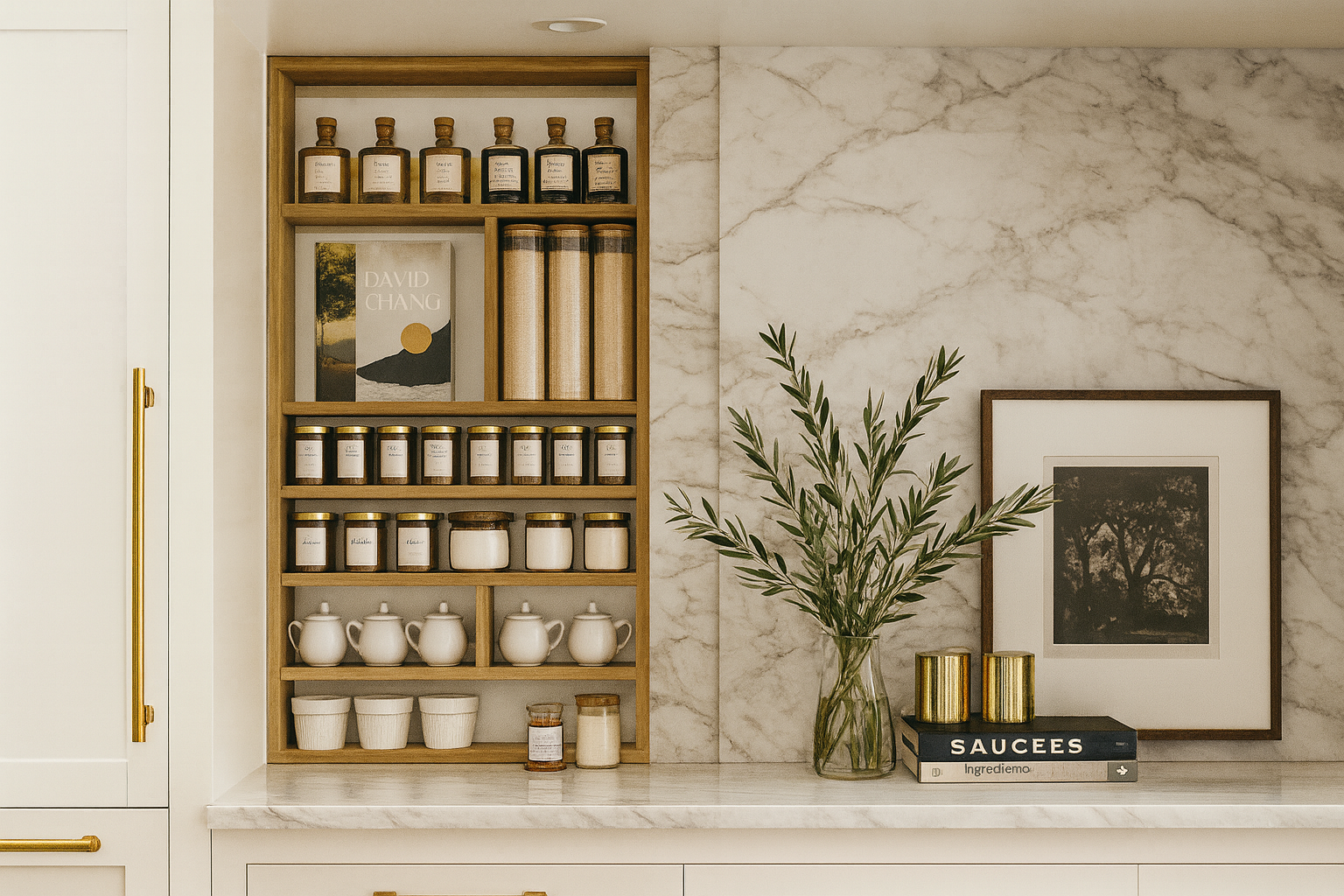
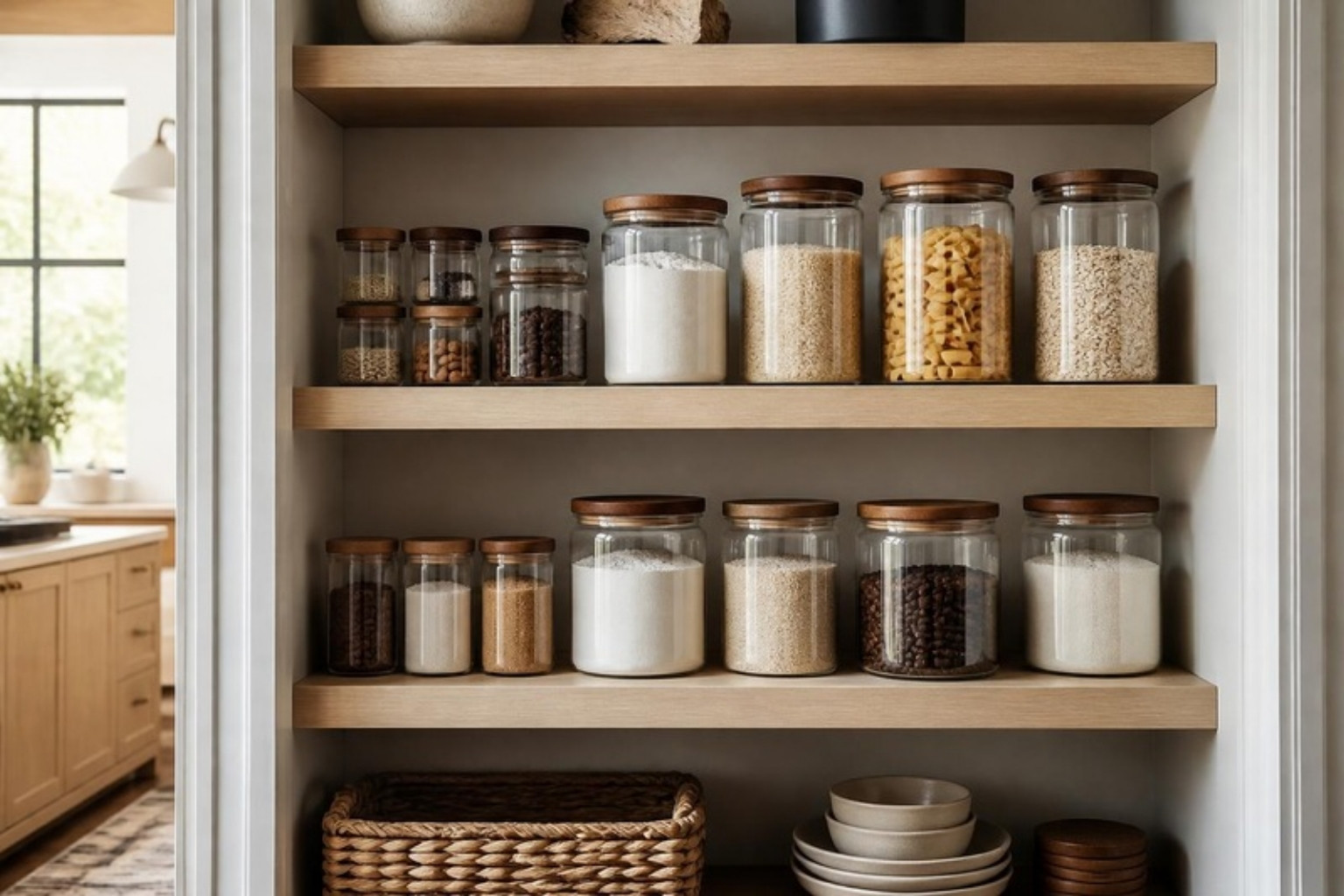
Mismatched packaging is the biggest source of visual clutter in a small kitchen. Move dry goods (flour, sugar, rice, pasta, oats, coffee) into clear glass containers in two or three sizes from the same line, and label the front in one simple font. Square and rectangular containers use about a quarter more of the shelf than round ones.
Keep a short row of the same containers on one open shelf or by the coffee zone, and everything else behind doors. Uniform glass reads as calm, and you can see at a glance what is running low.
Follow the Three-Item Counter Rule
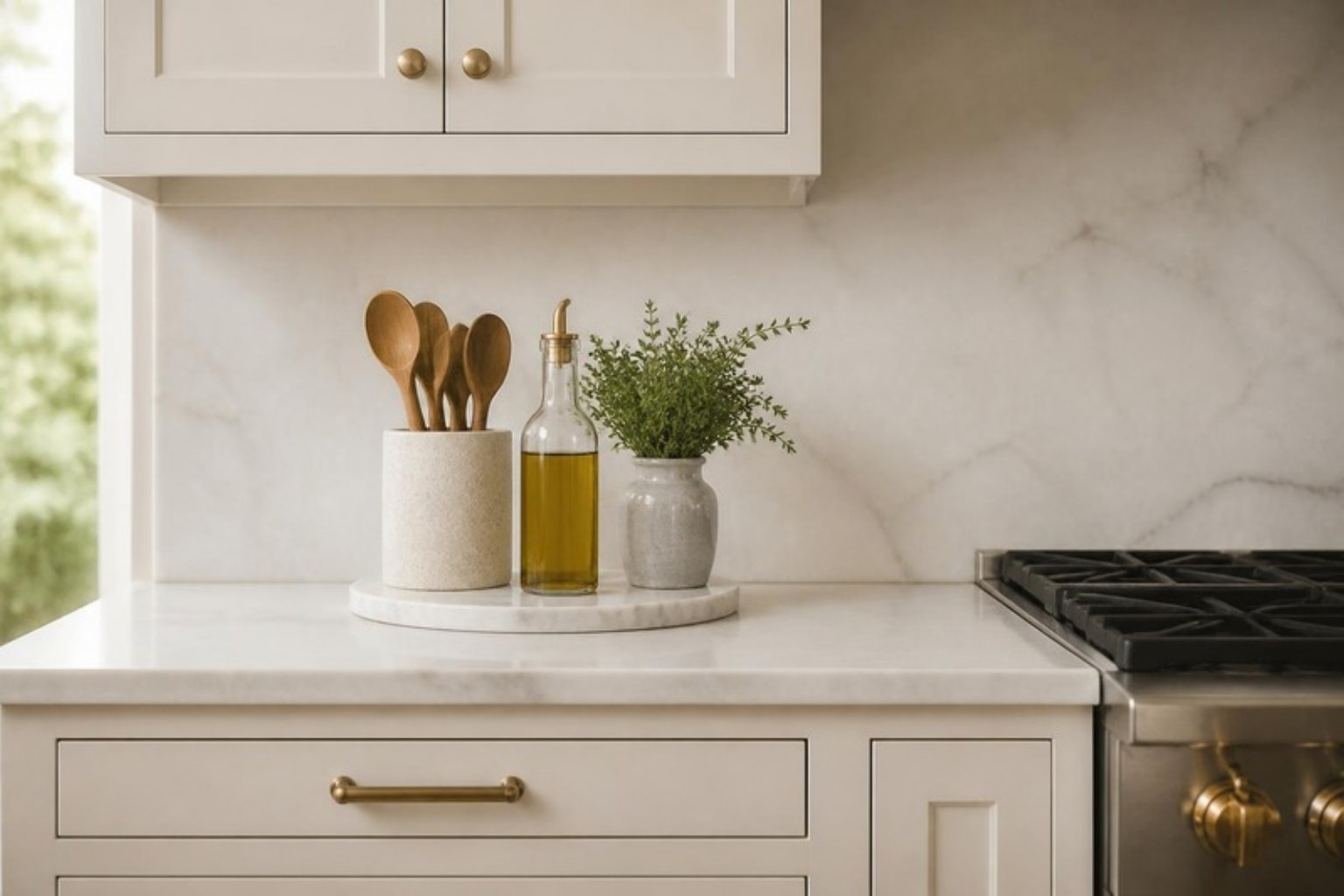
Limit each stretch of counter to three things, and group them on a tray so they read as one composed vignette instead of three loose objects: a stone crock of wooden utensils, a bottle of olive oil and a small vase of herbs beside the range, for example. A tray also makes the counter easy to wipe down: lift one thing, not five.
Appliances you use daily can stay out. Appliances you use weekly belong in an appliance garage or a lower cabinet near an outlet.
Making a Small Kitchen Feel Bigger, Not Just Work Better
Everything above is about organization — where things live. This next part is about perception: the choices that make the same square footage read as larger. Organization solves the drawer. These solve the room.
Start With Light—But Not Just White
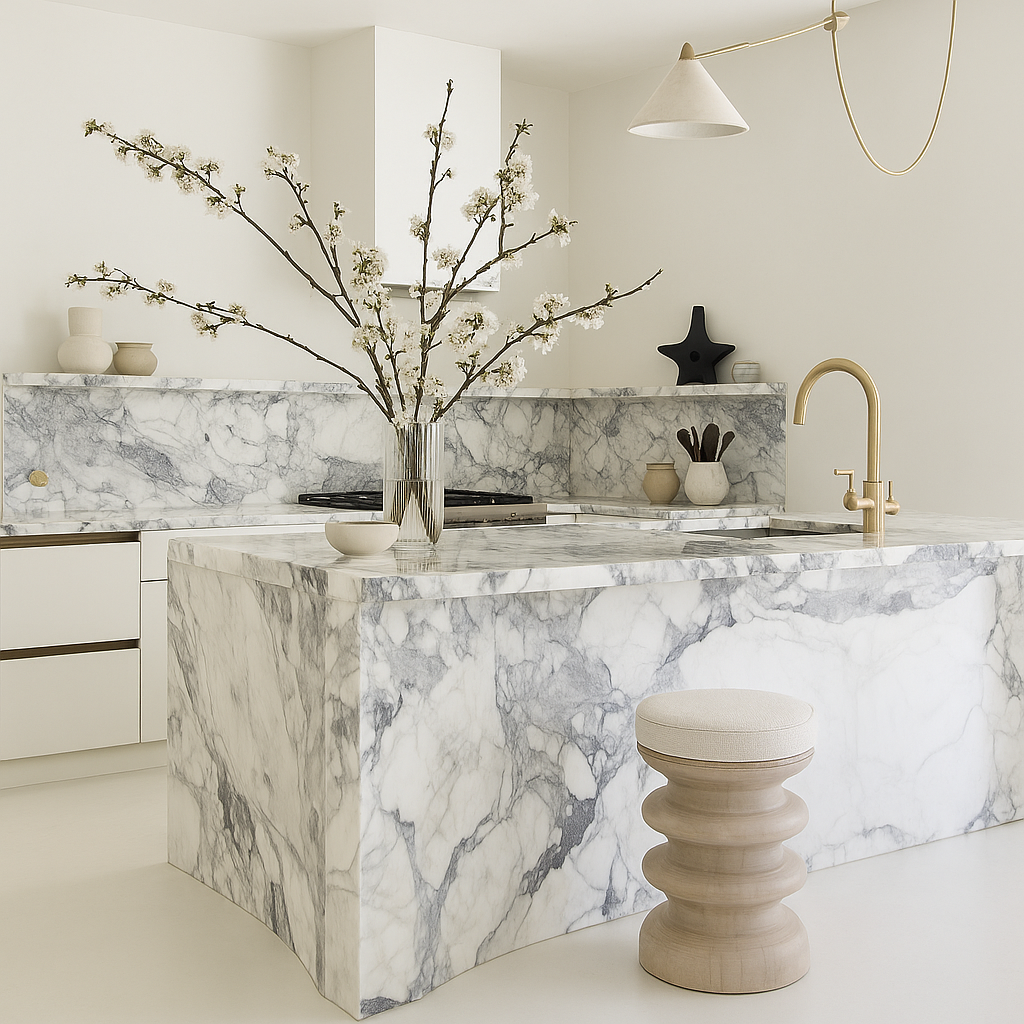
The default move for small kitchens has long been: paint everything white. And while white reflects light and opens up space visually, it can also flatten a room when overused. Instead, consider a palette of soft neutrals—putty, bone, mushroom, or even a chalky pale color.
In my design work, I love layering matte finishes to diffuse light naturally. For contrast, consider polished or high-gloss elements: a mirrored backsplash, lacquered cabinetry, or a glazed ceramic lamp. The play between sheen and softness adds dimension without adding visual weight.
Draw the Eye Up: Vertical Strategies That Work
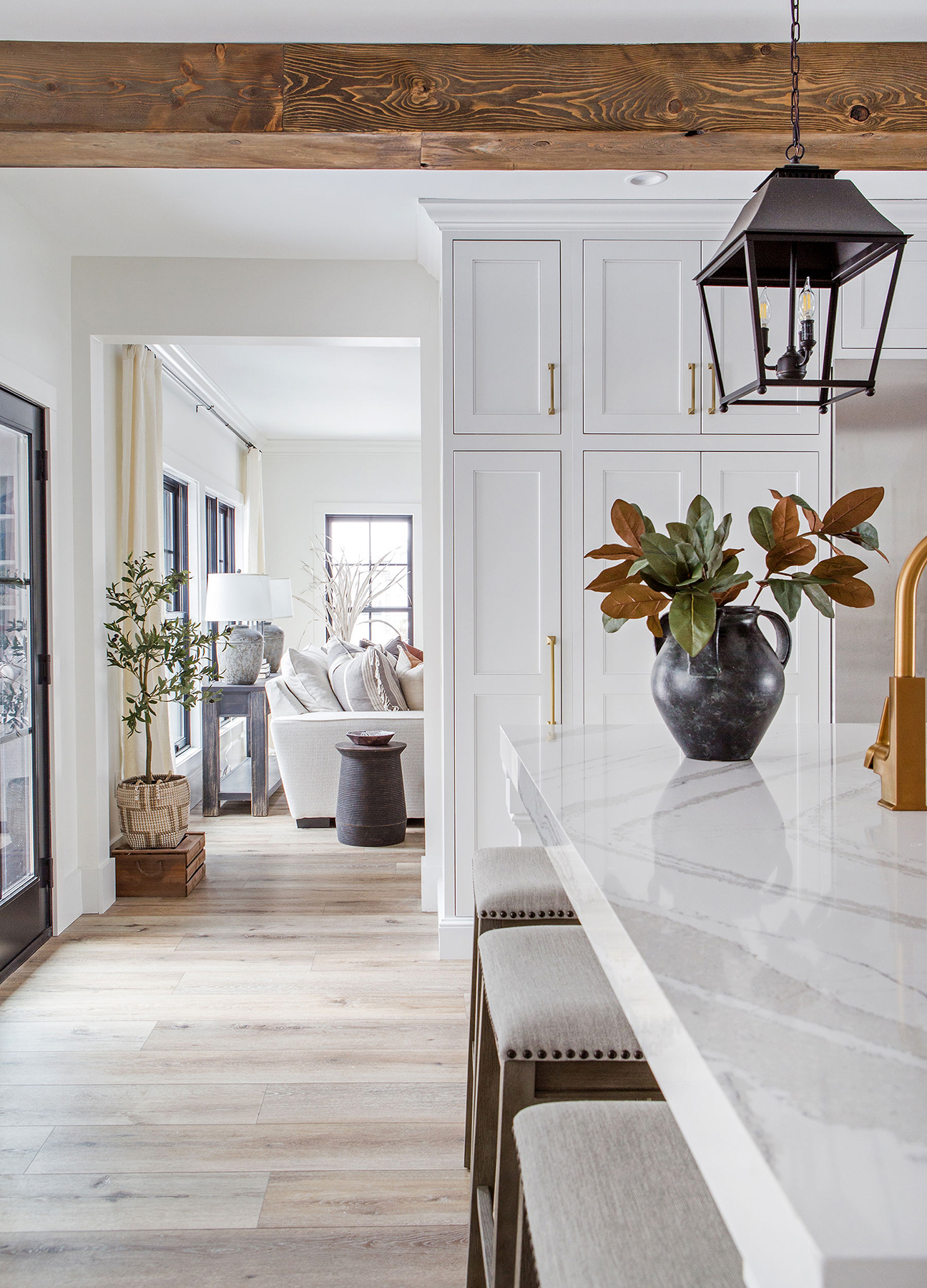
Verticality is a designer’s secret weapon in smaller kitchens. When space is limited side-to-side, build up.
Stacked tile that climbs to the ceiling, full-height cabinetry, or vertical paneling draws the eye upward, giving the illusion of height. For example use vintage milk glass pendants and custom floor-to-ceiling shelving to give an 8-foot ceiling surprising lift.
The Breathing Room of Glass and Open Shelving
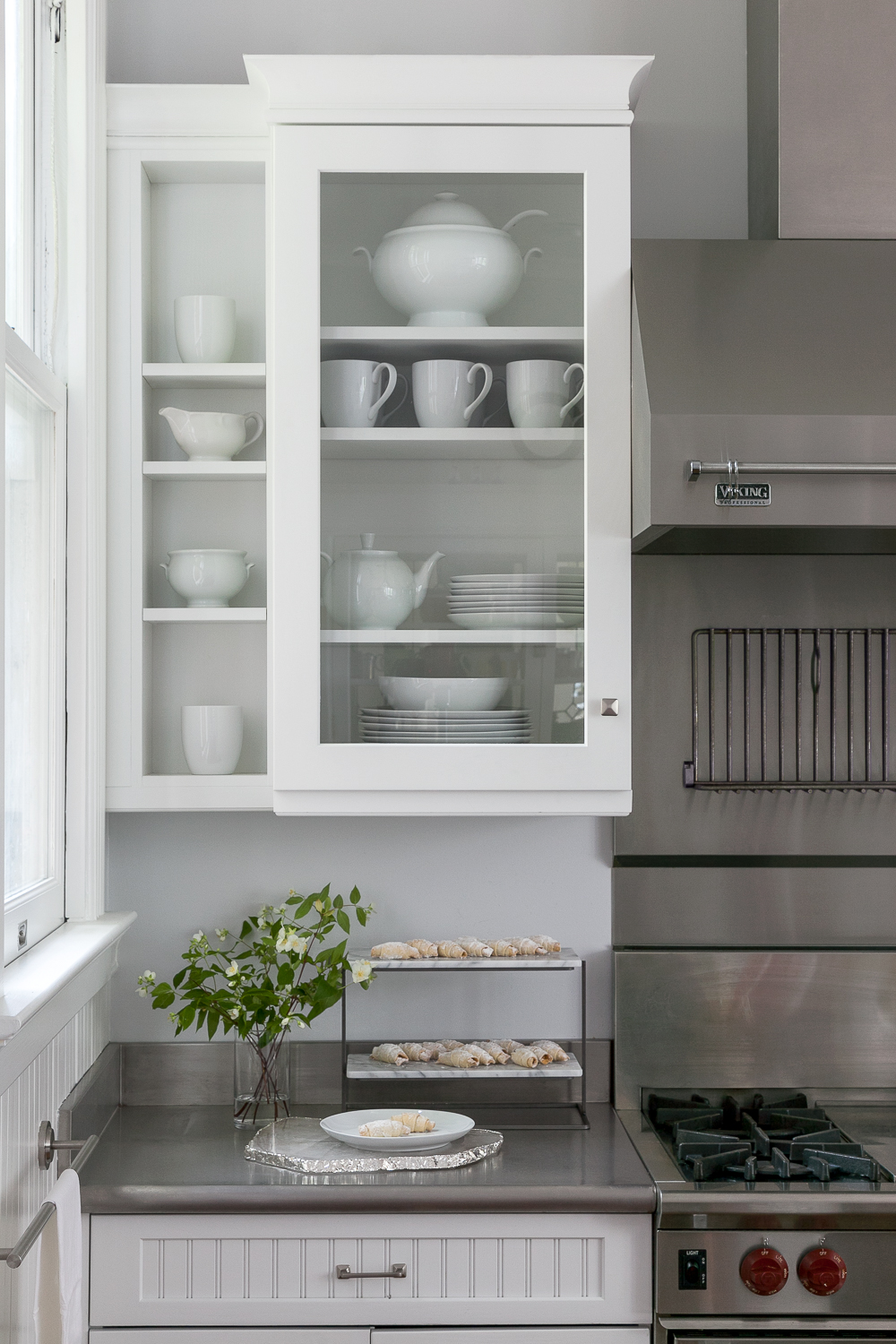
Open shelving has gotten a bad rap, but when done with restraint, it can be transformational.
Glass-front cabinets or neatly curated open shelves introduce “negative space”—an area where the eye can rest. I use these to highlight a stack of linen napkins, a few handmade vessels, or a woven tray from the Rachel Blindauer shop. Just don’t overcrowd. A few beautiful, functional pieces go further than a cluttered display.
“Clutter is the enemy of spaciousness—edit ruthlessly, and your kitchen will reward you.”
Beautiful Kitchen Organization

Palisade Beige Marble Catchall Tray
$105

Marisol Tray
$280

Kensington Brass & Glass Étagere
$7,995
Common Design Mistakes That Shrink a Kitchen
Many kitchens feel smaller than they are because of common, and easily avoidable, missteps:
-
Heavy, dark cabinetry: Deep espresso and cherry woods with ornate trim can feel oppressive in tight quarters.
-
Overly busy backsplashes or flooring: High-contrast grout lines and fussy patterns visually “chop” the space.
-
Mismatched finishes: While mixing metals is trending, doing so without intention creates visual chaos. Stick to one or two complementary tones.
-
Flat lighting: The biggest offender. Overhead-only lighting casts shadows and deadens the room. I recommend a mix of ambient, task, and accent lighting to create warmth and balance.

Small Changes, Big Visual Payoff
Not every kitchen needs a gut renovation. Some of the most effective changes are surprisingly simple:
-
Replace heavy blinds with straw Roman shades or let the natural light shine in if privacy allows.
-
Add a runner rug that leads the eye down the galley or across the kitchen floor.
-
Update your cabinet hardware with clean-lined, tone-on-tone pulls for a subtle modern refresh.
-
Install under-cabinet lighting to illuminate workspaces and add dimensional glow.
You can find several of my favorite lights for kitchen and runners in my curated collections.

The Real Secret to a Small Kitchen
Designing a kitchen that feels bigger is not about expansion—it’s about refinement. Thoughtful choices in palette, lighting, texture, and layout can create airiness and ease, no matter the square footage. The secret? Prioritize visual clarity, embrace restraint, and remember that every detail contributes to the whole.
If you’re ready to transform your kitchen or need guidance for a full-home redesign, I invite you to explore my interior design services or browse the Rachel Blindauer Shop for elevated essentials that turn utility into beauty.
THE PIECES RACHEL RETURNS TO, AGAIN AND AGAIN


Palermo Rattan & Brass Catchall Tray
$380

Vauclair Oak Sideboard
$6,825

Luna Travertine Table Lamp
$665
SOMETHING FOR EVERYONE
THE PIECES RACHEL RETURNS TO, AGAIN AND AGAIN
Before you go
Not sure what your style is? Take the two-minute Style Quiz and I’ll send you your look.