Every parent wants their child to thrive — to be curious, confident, focused, and resilient. What most don’t realize is that the physical environment where a child sleeps, plays, and learns plays a profound role in shaping those very qualities. As an interior designer who has spent over fifteen years crafting thoughtful spaces — from Nantucket beach houses to St. Louis family homes — I’ve seen firsthand how a well-designed child’s room can nurture concentration, spark creativity, and support the kind of deep, restorative sleep that growing minds require.
The research backs this up. Studies in environmental psychology consistently show that spatial organization, light quality, color saturation, and access to natural elements all measurably affect a child’s cognitive performance, emotional regulation, and sense of agency. Designing a child’s room isn’t just a decorating exercise. It is, in the most literal sense, an investment in your child’s future.

Light: The Most Powerful Design Tool in a Child’s Room
Before choosing a paint color or a bed frame, consider the light. Natural light governs a child’s circadian rhythm — the internal clock that regulates sleep, mood, hormones, and even immune function. A room flooded with morning light helps a child wake naturally and start the day energized. Blackout shades or drapery that can fully darken the room at nap and bedtime protect the quality of sleep that is essential for memory consolidation and growth.
For artificial lighting, layer your sources: overhead ambient light for general tasks, a warm-toned reading lamp that can be easily switched on and off by the child (fostering independence), and soft nightlights that don’t disrupt melatonin production. Avoid cool-blue LED bulbs in the hours before bed. The best children’s rooms I’ve designed treat lighting as an active, adjustable tool rather than a fixed overhead fixture.
Color Psychology: Calm Over Chaos
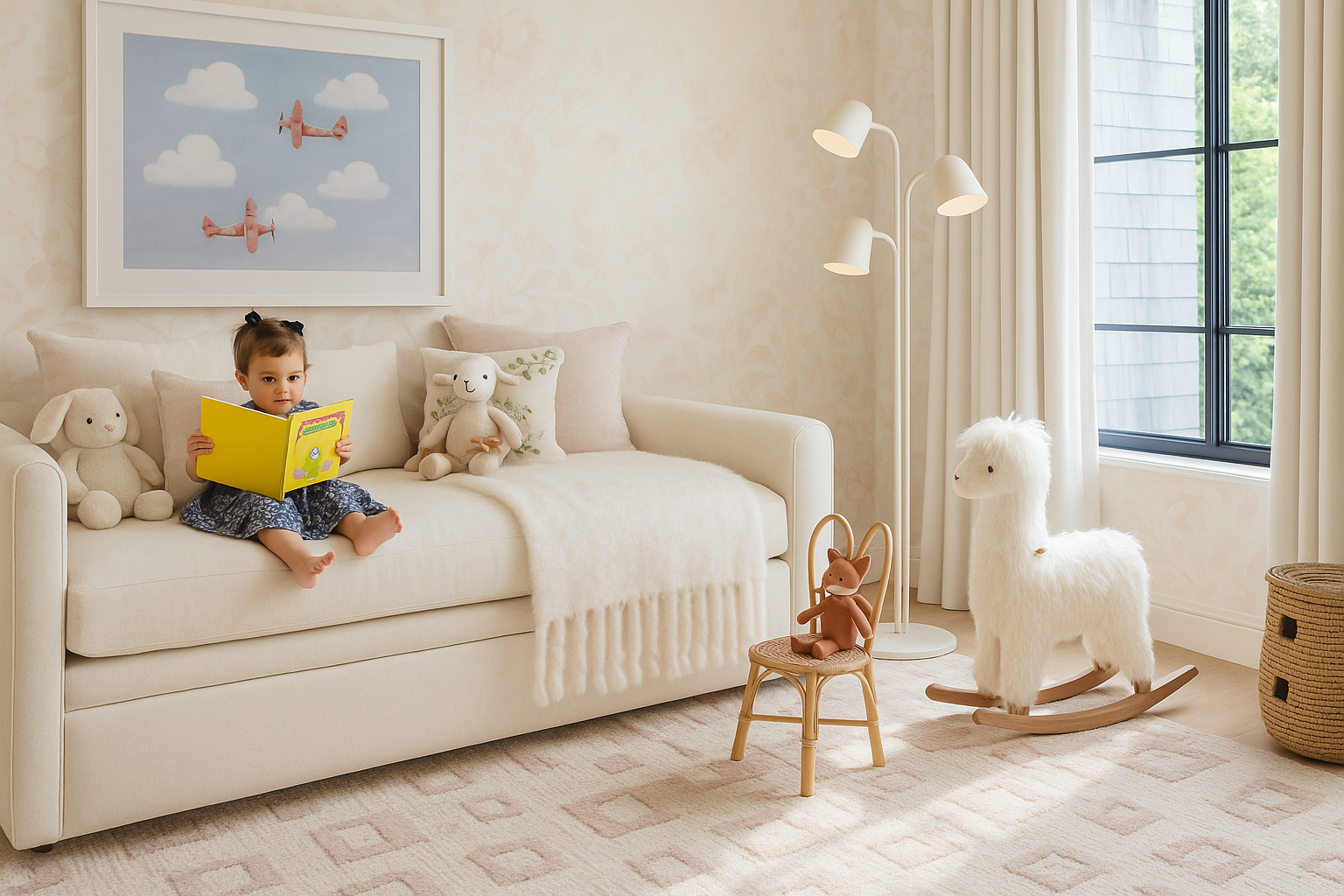
The instinct to fill a child’s room with primary reds and electric yellows is understandable — and almost always wrong. Highly saturated, high-contrast colors are visually stimulating and can increase cortisol levels, making it harder for children to settle and focus. The research points toward muted, complex hues: sage greens, soft terracottas, warm taupes, dusty blues, and broken whites with undertones that shift in natural light.
These are the same tones that appear in nature — in stone, in bark, in sea glass — and they carry an inherent calming frequency. A child surrounded by thoughtfully chosen color feels contained and secure rather than overstimulated. One caveat: a single wall in a deeper, richer tone — a moody indigo reading nook, a forest green closet interior — can add the sense of magic and wonder that children’s spaces deserve without overwhelming the whole room.
Organization That Builds Independence
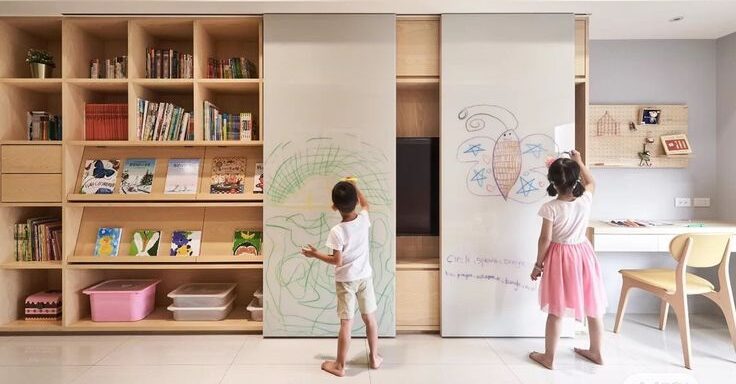
A high-performing child is, above all, a capable child — one who can make choices, solve problems, and take ownership of their environment. Storage systems designed for adult convenience — high shelving, opaque bins, closet rods the child can’t reach — undermine that autonomy without realizing it. When I design children’s rooms, I ask: can this child access, use, and put away everything they need without asking for help?
Open, labeled bins at floor level for toys. A low hanging rod in the closet for tomorrow’s clothes. A pegboard at child height for school bags and art supplies. Surfaces clear enough to spread out a project and a system simple enough to actually maintain. When children can manage their own space, they develop executive function — the capacity to plan, organize, and self-regulate — that pays dividends for decades.
A Dedicated Space for Deep Work
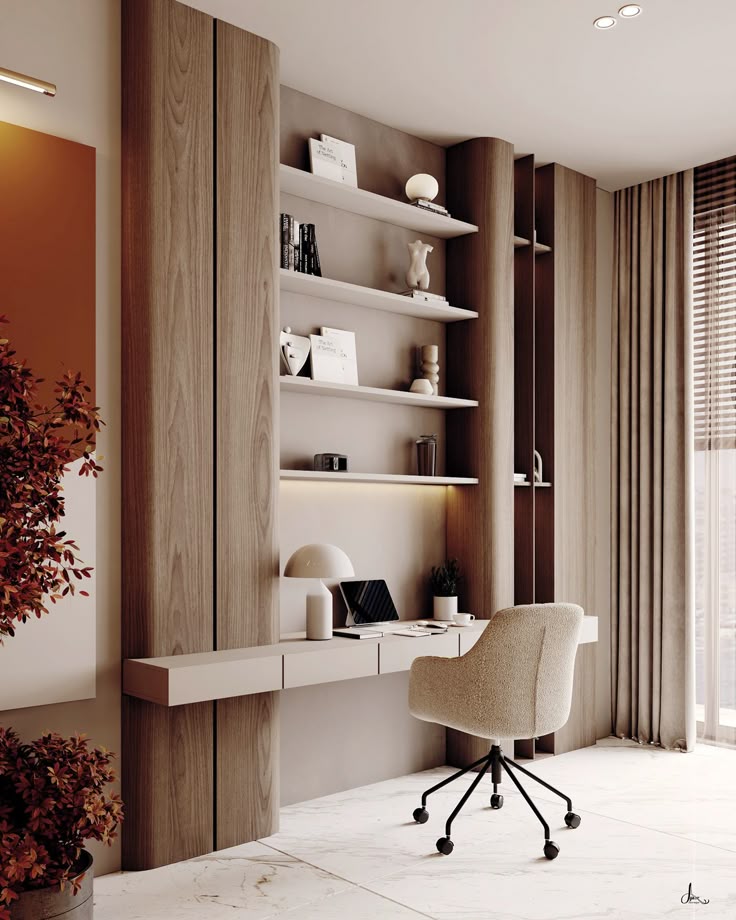
Long before the concept of a “home office” entered the adult lexicon, children needed what researchers now call a dedicated learning environment — a place that signals to the brain: this is where we focus. The homework desk pushed against the wall under a single bare bulb is not that. The ideal study area has good natural or task lighting, sits apart from the bed (to avoid the brain associating study with sleep), and is free of screens and visual clutter during work time.
Consider the orientation of the desk. Facing a wall limits distraction but can feel oppressive for extended periods. Facing a window offers visual rest between focus bursts — research shows that even a brief look at a natural scene resets attention. A window view with trees or sky is, neurologically speaking, a better study companion than a poster of a favorite sports team.

Biophilic Design: Nature as a Learning Partner
Children have an innate attraction to the natural world — what biologist E.O. Wilson called biophilia. When we incorporate natural materials and living elements into children’s rooms, we’re not just creating visual interest; we’re engaging an ancient neural pathway that reduces stress and enhances creativity. A small plant the child is responsible for watering. A collection of stones, shells, or feathers arranged on a shelf. Wood-grain surfaces rather than plastic laminate. Woven textures. Cotton and linen instead of synthetic blends.
Nature-connected children show higher levels of curiosity and lower rates of anxiety. In practical design terms, this means choosing natural material toys over plastic when possible, introducing a terrarium or a simple herb garden on the windowsill, and resisting the urge to make the room feel like a theme park. The most extraordinary children’s rooms I’ve ever designed feel, above all, like calm and natural places to be.

The Sleep Environment: Designing for Restoration
Sleep is not passive. During sleep, a child’s brain consolidates the day’s learning, repairs tissue, regulates emotion, and produces the growth hormone that drives physical development. Designing for optimal sleep is therefore the highest-leverage thing you can do in a child’s room. Beyond darkness and lighting, consider temperature (the ideal sleep environment is 65–68°F), sound (soft white noise or the quiet of a well-insulated room), and the bed itself.
The mattress and bedding are not places to cut corners. Natural fibers — organic cotton, linen, wool — breathe better than synthetic blends and regulate temperature more effectively. A bed frame that feels solid and grounding — rather than a loft configuration that leaves children sleeping suspended in air — provides a greater sense of security for anxious sleepers. The bed should be the undisputed focal point of the room: inviting, peaceful, and clearly associated with rest rather than play.
Designing a Room That Grows With Your Child
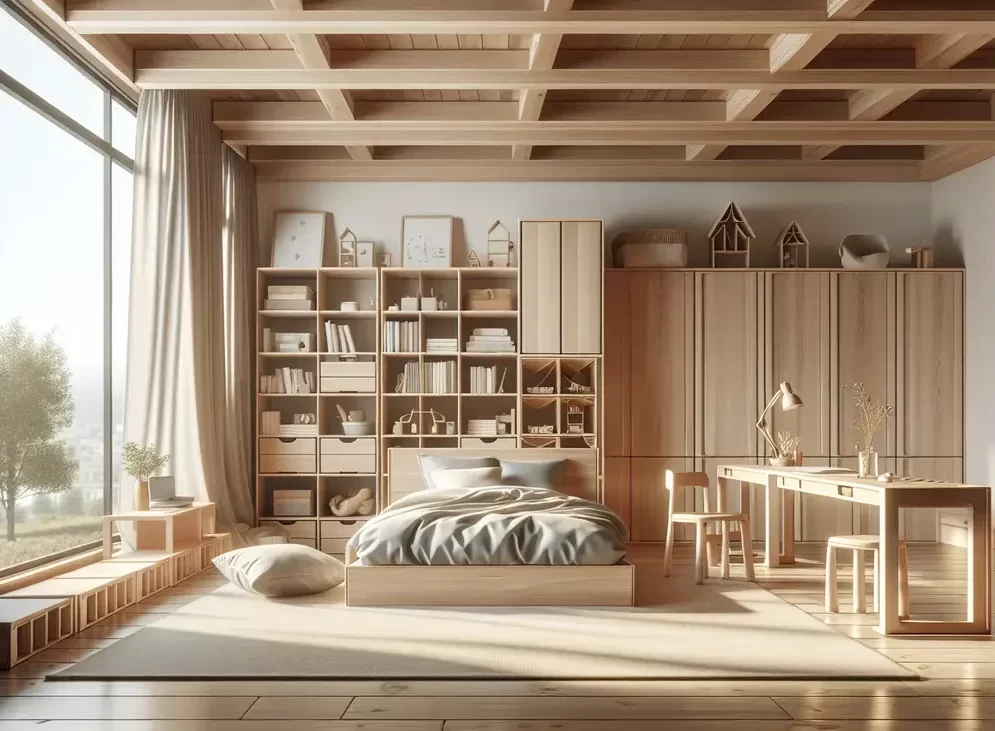
The most common mistake in children’s room design is creating a space that is perfect for one age and obsolete two years later. The child who loved dinosaurs at four will feel mortified by them at nine. Good design anticipates this by building in neutrality at the permanent layer — walls, flooring, furniture — and allowing personality to live at the changeable layer: bedding, art, accessories, and small accent pieces that can evolve without a renovation.
A classic white or natural wood bed frame, a well-made desk that works from age six to sixteen, quality storage that adapts as needs change — these are the investments that hold. The room’s personality can shift dramatically season to season just by changing the art, the throw, the lamp shade. Teaching a child that their room is theirs to curate — that their changing interests deserve a changing space — is one of the most powerful lessons you can deliver through design.
What Changes at Each Age
| Age | The one change that matters | What to skip |
|---|---|---|
| 0–12 months | Floor bed and a low mirror. Nothing above waist height. | The crib-plus-changing-table-plus-glider set. You will replace it within a year. |
| 1–3 years | Everything reachable: low hooks, low shelves, a step stool at the sink. | Toy boxes. Children do not retrieve from a pile. |
| 3–6 years | A real work surface at their height, and shelves that hold eight things rather than forty. | Themed furniture. It dates within eighteen months. |
| 6–9 years | A storage system they can maintain without you. | Open shelving above the desk. It becomes visual noise they stop seeing. |
| 9–12 years | Give over the wall. Let them choose the color. | Anything you chose for them at three. |
What to Do With the Space Between the Bed and the Bookshelf
In the most developmentally rich children’s rooms, the floor is treated as a room within the room. A generous, well-defined floor space for imaginative play — bounded by a good rug and filled with open-ended materials like blocks, drawing supplies, dress-up items, and books — is where some of the most important cognitive work of childhood happens. This isn’t playtime as indulgence. It is, by every measure developmental scientists apply, a child’s primary work.
Design the floor space intentionally: a rug that anchors the play area, low shelves along the perimeter that make materials visible and accessible, and enough open space in the center to spread out, build, pretend, and create. The most beautifully designed children’s rooms I’ve produced have been the ones where, years later, a parent tells me their child still wants to spend all their time in there. That’s the measure of a room done right.


Marais Chandelier
$2,300

Marais Woven Rattan Chest
$2,796

Sculptural Serenity Vase
$452
SOMETHING FOR EVERYONE
THE PIECES RACHEL RETURNS TO, AGAIN AND AGAIN
Before you go
Not sure what your style is? Take the two-minute Style Quiz and I’ll send you your look.