I designed in Sarasota for years before I understood it. The light is the thing everyone mentions, and the light is real; the Gulf throws it up under eaves and across ceilings in a way inland rooms never see. But the light is only half of the brief. The other half is what that light, and the salt air behind it, does to everything you put in a room.
So this is the practical version of Sarasota interior design: what I specify, what I have stopped specifying, and why a house on the Gulf Coast is a different design problem than the same floor plan in St. Louis.
At a glance
- Paint: the coolest of the warm whites, tested on two walls for a full day
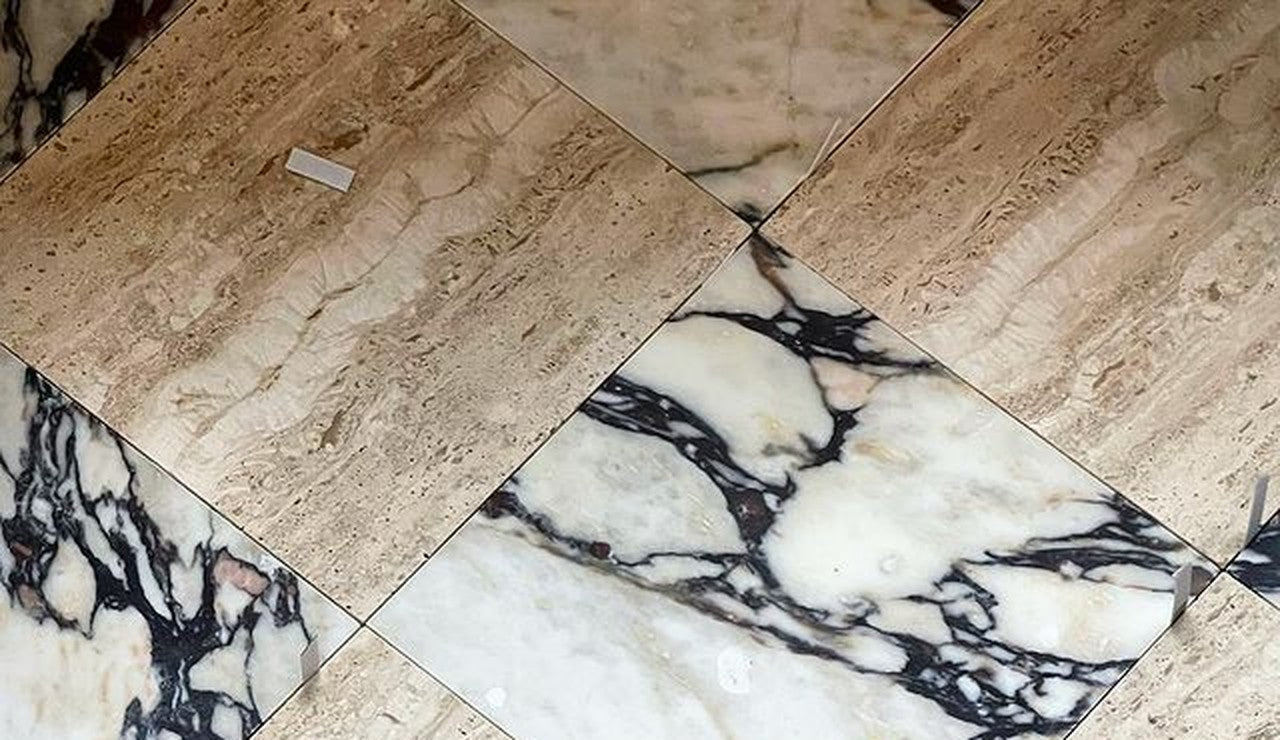
- Stone: travertine and honed marble
- Upholstery: indoor-outdoor performance weaves that feel like linen
- Metals: powder-coated, sealed or antique finishes; unlacquered brass if you like patina
- Skip: silk, jute by the lanai, lacquer in direct sun, anything nautical
Start with the light, not the palette
Gulf light is high, white and slightly blue at midday, then warm gold for a long hour before sunset. A color that looks perfect at noon can go chalky at four. This is why so many Sarasota houses that were meant to feel serene end up feeling washed out: the paint was chosen from a chip indoors and never tested against the window.
My rule is to sample every wall color in the actual room, on two walls, and to live with it for a full day. Warm whites with a drop of grey (not yellow) hold up best. Pale greens and blues read as air rather than color. Anything with a lot of yellow in it turns to butter by afternoon. I wrote about specific colors in my paint guide for Sarasota, San Francisco and Nantucket; the short version is that Sarasota wants the coolest of the warm whites.
Three I trust in Gulf light: Benjamin Moore White Dove (OC-17) for walls and trim, Benjamin Moore Classic Gray (OC-23) where a white looks too stark, and Benjamin Moore Palladian Blue (HC-144) when you want a room to read as air.
Materials that survive the coast
Stone. Travertine and honed marble were made for this climate. They stay cool underfoot, they do not fade, and they take the humidity without complaint. A travertine coffee table in a Sarasota living room is almost a cliché for a reason: it is the one piece that looks better after ten summers.
Performance fabric. Not the crunchy outdoor kind, the newer indoor-outdoor weaves that feel like linen and shrug off sunscreen. Every sofa and dining chair I specify near the water is in one of these. Sun through a sliding door will bleach a cotton velvet in a season.
Finishes. Unlacquered brass will patina fast in salt air, which I happen to love; if you do not, choose a sealed or antique finish and know that chrome will spot. Powder-coated metals over raw iron, always. Solid wood over veneer, because humidity lifts veneer at the edges.
What I have stopped using. Silk anything. Jute rugs in rooms that open to a lanai (they hold moisture and smell). Lacquered furniture in direct sun. Heavy drapery, which fights the whole point of the house.


The “coastal” trap
The fastest way to make a Sarasota house feel like a rental is to decorate it about the beach. Rope, driftwood, the word relax in cursive. The houses that feel expensive here do the opposite: they take the calm of the coast as a given and then furnish the rooms the way you would furnish a very good apartment anywhere. Real art, real wood, one strong piece per room, a lot of restraint.
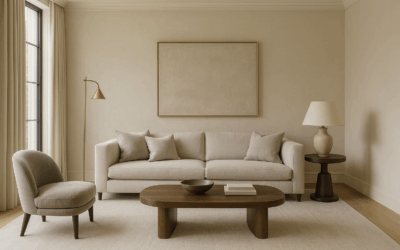
The version of this that works is white plaster, pale oak, travertine, and color used sparingly and with intent. Nothing nautical. It reads as coastal because the light does the work, not the objects.

Layout for how people actually live here
Sarasota houses are lived in sideways. People come in from the pool, the lanai is the real dining room half the year, and the front living room is often the least used space in the house. I plan for that. The best seating goes where the view is; the good lamp goes where you read after dark; the dining table sits close enough to the kitchen that carrying plates outside is not a project. A rechargeable lamp like the Nomad earns its keep on a lanai table.
Art, because it matters more here
White walls and big windows make a room feel unfinished faster than anywhere else. One large framed piece over the sofa does more for a Sarasota living room than a dozen small objects. I keep the palette in the family of the water outside: marine blues, sea-glass greens, bone and sand. The framed abstracts in the shop, in a curved walnut frame, were chosen with exactly these rooms in mind.
Sarasota interior design questions I hear most
What paint colors work best in Gulf Coast light?
Cool-leaning warm whites and soft blue-greens. Avoid anything with a lot of yellow in it; by late afternoon it turns to butter.
Is travertine a good choice in Florida?
Yes. It stays cool underfoot, does not fade in the sun and handles humidity well. Seal it, and choose honed over polished near the pool.
Which fabrics hold up in salt air and sun?
Indoor-outdoor performance weaves for anything near a window or a sliding door. Save silk and cotton velvet for rooms the sun never reaches.
How do I make a coastal home feel elevated instead of themed?
Leave the beach outside. Furnish with real art, real wood, stone and one strong piece per room, and let the light make it feel coastal.
Shop The Look

Working with me from Sarasota
I split my time between Greater St. Louis and the Gulf Coast, and I take on Sarasota projects both in person and virtually. If your house has the light and none of the calm, a design consultation is where I would start. And if you want to know which direction your rooms are already leaning, the two-minute Style Quiz will tell you.
Sarasota Style, Brought Home

Luna Travertine Table Lamp
$665

Ashbourne Cabinet in Natural Pine
$5,784

Ashcroft Hand-Loomed Wool Rug
From $50

SOMETHING FOR EVERYONE
THE PIECES RACHEL RETURNS TO, AGAIN AND AGAIN
Before you go
Not sure what your style is? Take the two-minute Style Quiz and I’ll send you your look.