Interior Designers Reveal the 10 Most Timeless Paint Colors of 2025

Interior Designers Reveal the 10 Most Timeless Paint Colors of 2025

Color is emotion made visible. And the most timeless hues don’t shout. They whisper, linger, and live well.

Each year brings its fleeting trends, but in 2025, the real conversation in design isn’t about what’s trending—it’s about what’s lasting. What makes a paint color timeless? It’s more than neutrality. It’s about resonance. Atmosphere. How a room feels in the morning light and long after the sun has dipped below the horizon.

These are the 10 most enduring shades of 2025—selected not by algorithms, but by designers who live with color, layer with purpose, and know that the right hue is never just paint.

The 10 Most Timeless Paint Colors of 2025

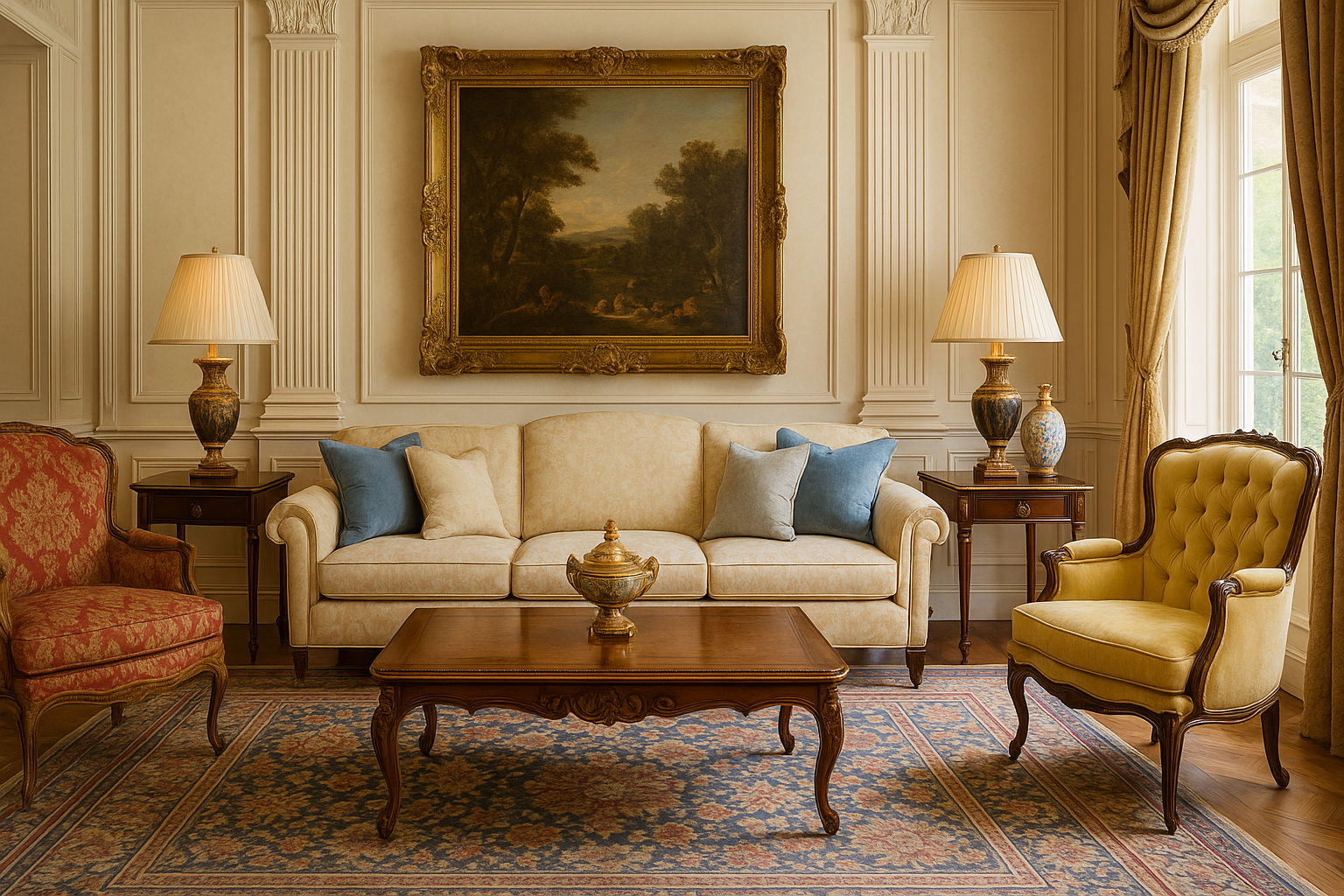
Pointing by Farrow & Ball by @roseywoodinteriors

1. Pointing by Farrow & Ball

A soft, warm white with just enough soul to stand alone.

Named after the lime pointing used in traditional brickwork, this white reads like bone in daylight and candlelit cream at night. It’s not a blank canvas—it’s a backdrop that breathes.

Style Pairing: Quiet Luxury, Classic European
Tactile Note: Looks exquisite against unlacquered brass, warm wood, and travertine.
Chantilly Lace by Benjamin Moore

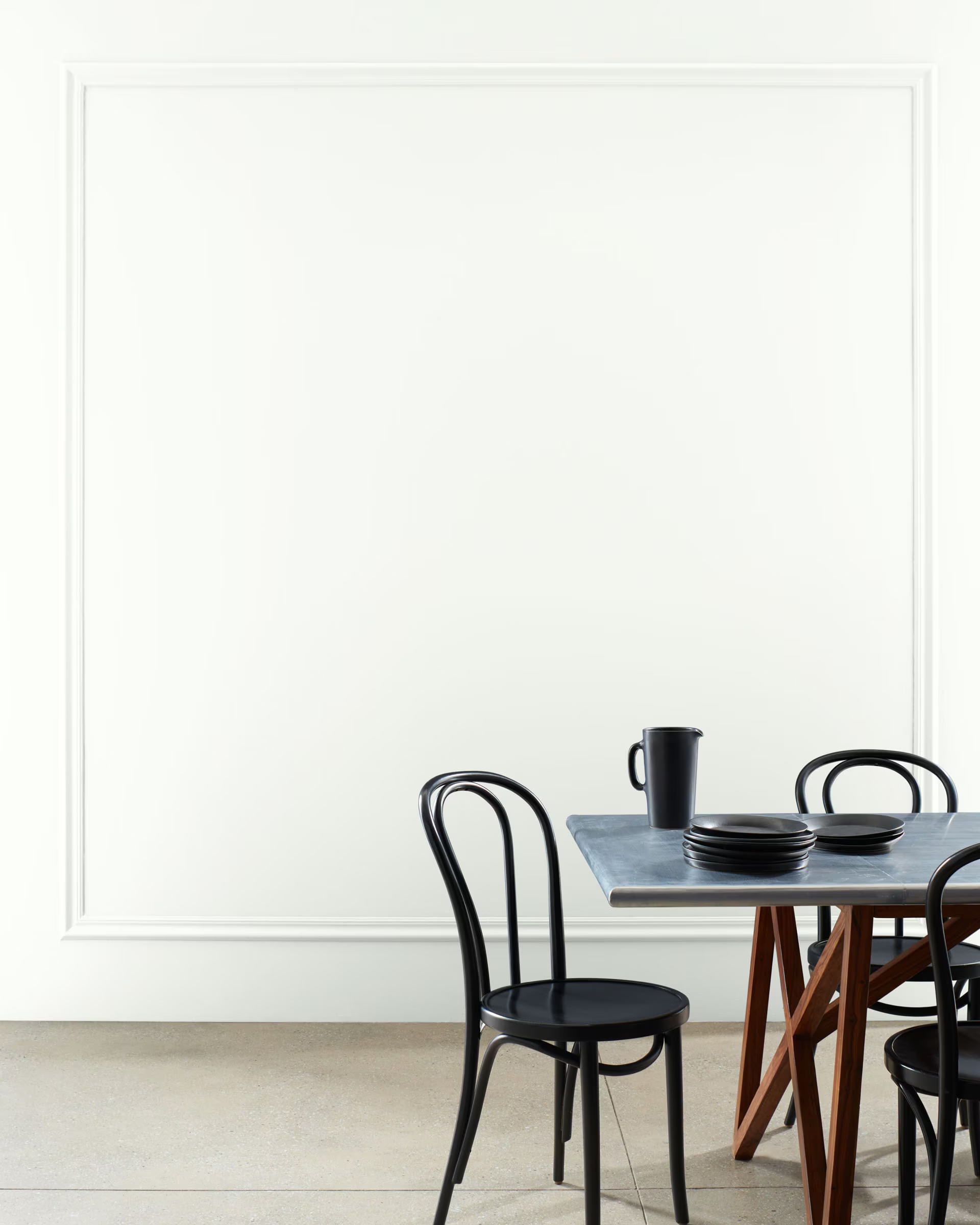
2. Chantilly Lace by Benjamin Moore

As crisp and classic as its namesake, this is the go-to for a gallery-white look.

Pure, unadulterated, and elegant. Chantilly Lace is the cleanest white on the list, perfect for modern traditional interiors where molding and millwork shine.

Style Pairing: Modern Traditional, California Casual
Design Tip: Use this to freshen ceilings and cabinetry without skewing cold.
Jitney by Farrow & Ball by Jackie Hoyte

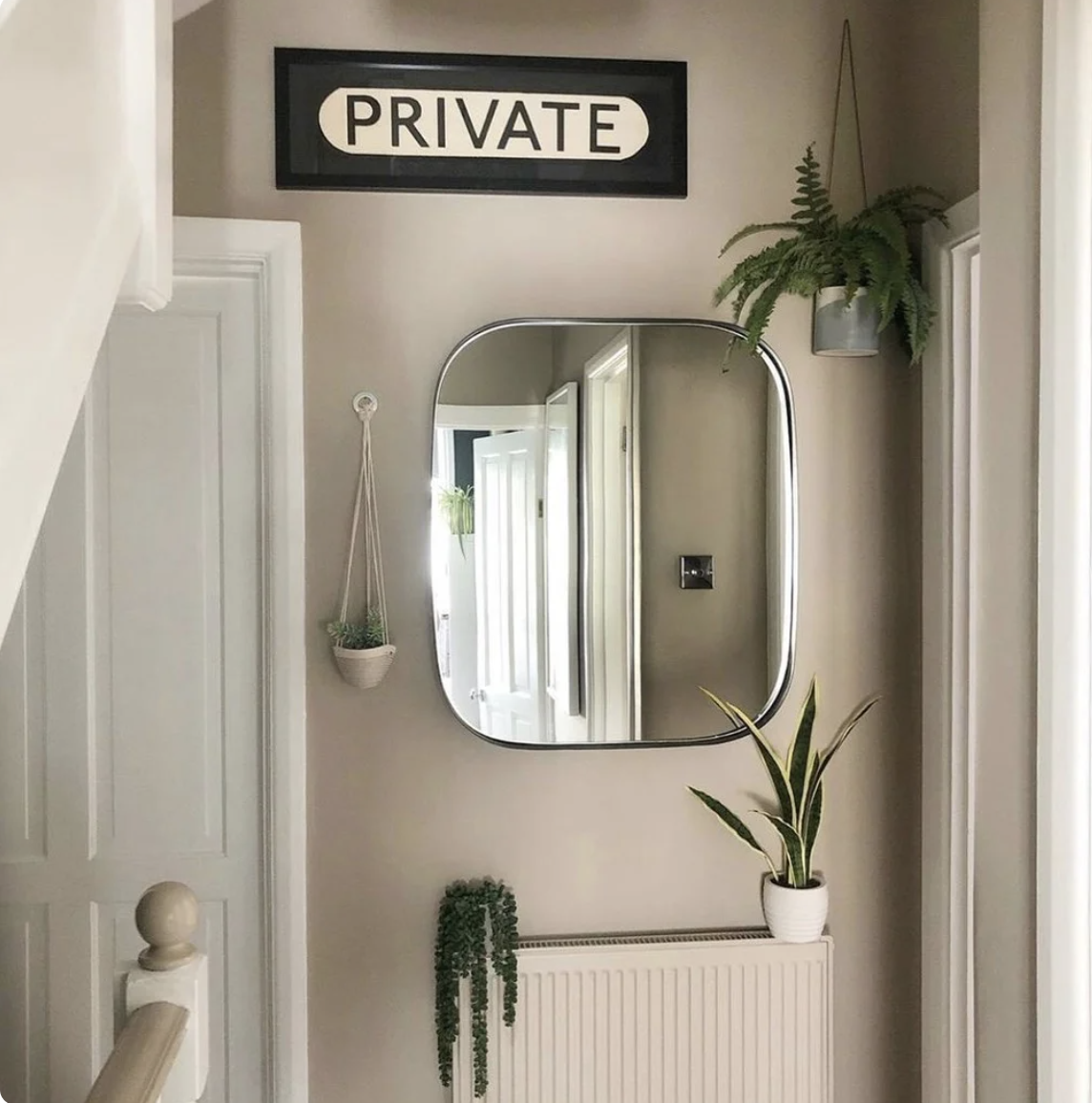
3. Jitney by Farrow & Ball

A sophisticated neutral with a coastal undertone. Think sand after the tide recedes.

It’s warm without being beige, soft without being saccharine. Jitney has a way of grounding a room without darkening it.

Style Pairing: Modern Coastal, European Farmhouse
In Context: See how we styled it in The Best Paint Colors for Each Seasonal Type.
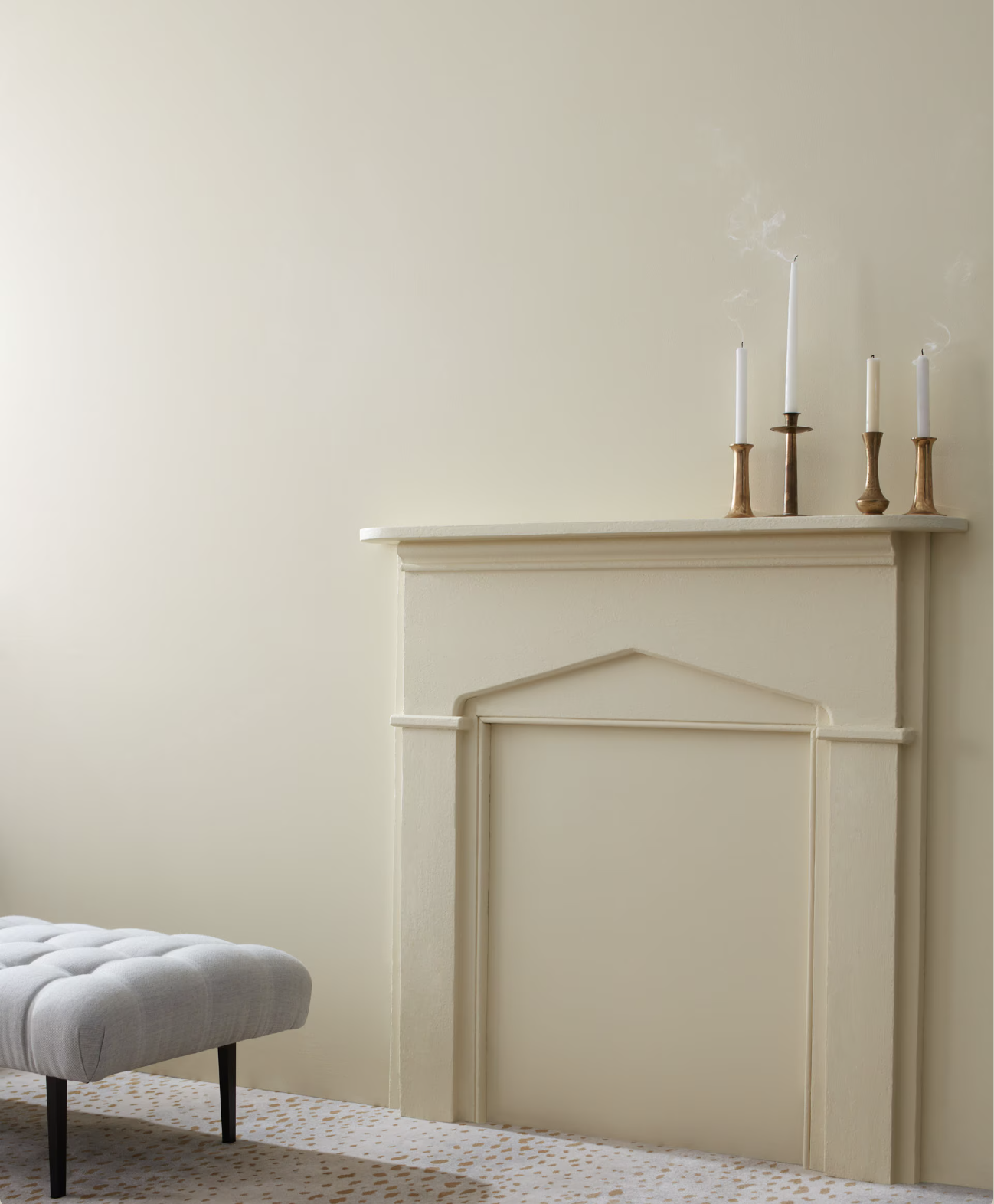
Revere Pewter by Benjamin Moore

4. Revere Pewter by Benjamin Moore

A designer favorite that balances gray and beige like a seasoned diplomat.

This color refuses to be trendy, yet never looks dated. It’s the answer to clients asking for ‘a warm gray that doesn’t feel cold.’

Style Pairing: Modern Traditional, Transitional Spaces
Aspirational Prompt: Want timeless without committing to white? This is your middle ground.
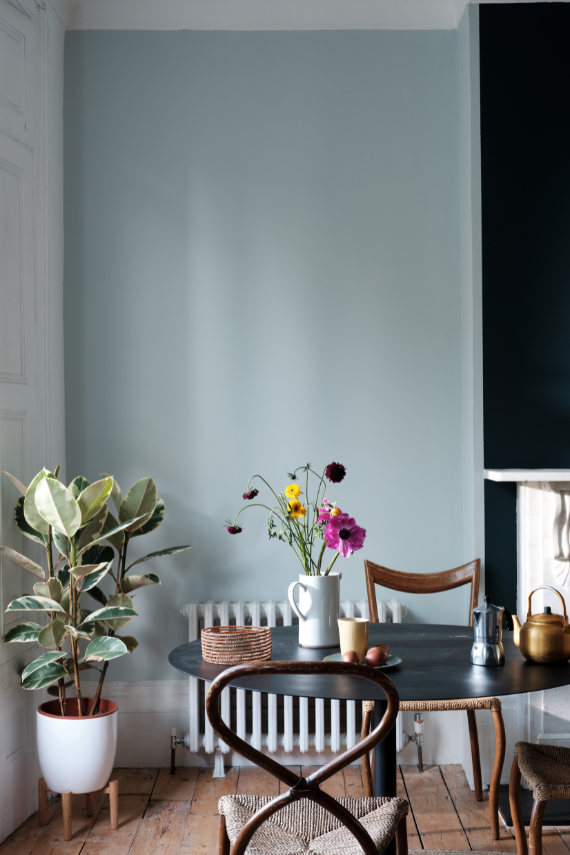
Borrowed Light by Farrow & Ball

5. Borrowed Light by Farrow & Ball

The pale blue of old French shutters and summer skies. Ethereal but never icy.

It feels like a breeze in paint form. Ideal for bedrooms or any space craving airiness and ease.

Style Pairing: Classic European, Modern Organic
Materials Match: Soft linen, white oak, and creamy ceramics
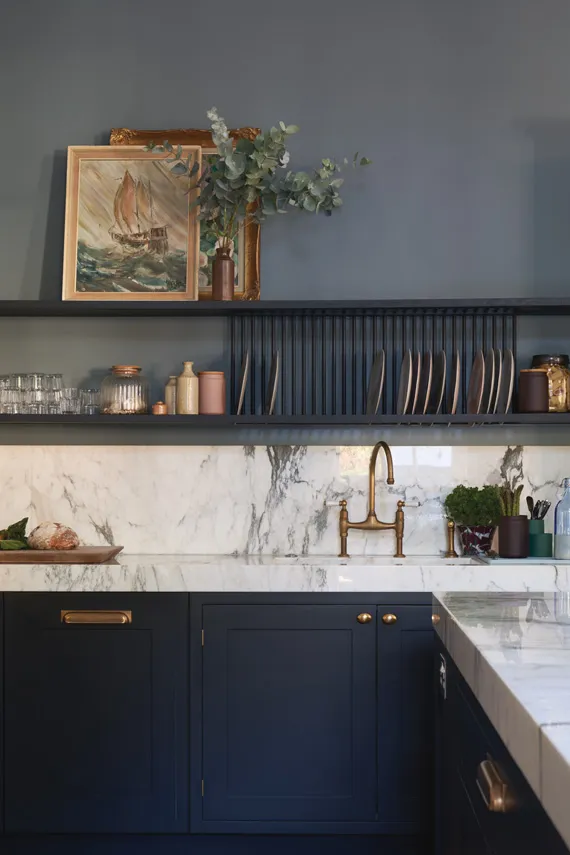
Railings by Farrow & Ball

6. Railings by Farrow & Ball

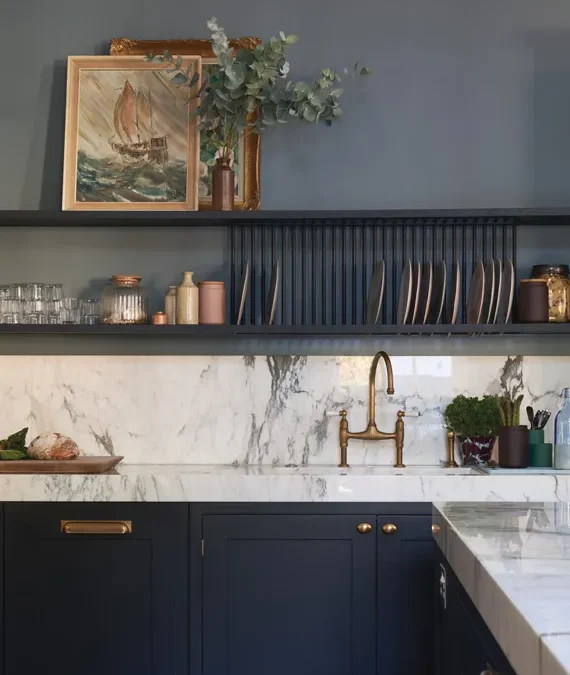
An inky off-black with blue undertones that adds instant architecture to any space.

Dramatic without being gothic, this color acts as a neutral when styled well. Use it on trim, cabinetry, or an unexpected powder room.

Style Pairing: Parisian Eclectic, Quiet Luxury
Design Tip: Pair with antique gold mirrors or marble for moodier depth.
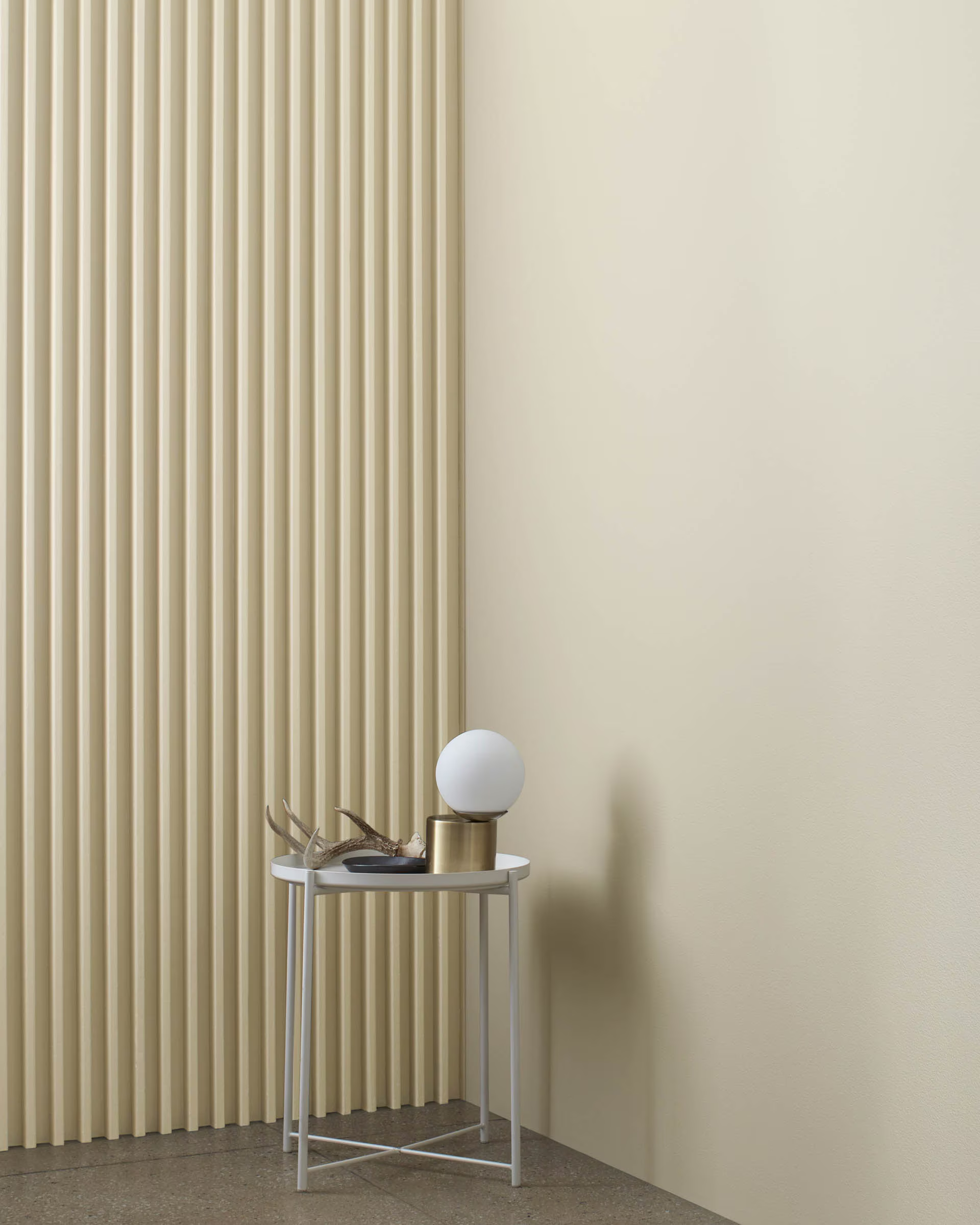
Natural Cream by Benjamin Moore

7. Natural Cream by Benjamin Moore

Not too yellow, not too gray—this is the color of soft-focus elegance.

It wraps a space in warmth without turning beige. A favorite for open-plan living rooms or bedrooms.

Style Pairing: European Farmhouse, California Casual
Pro Insight: Especially flattering in low-light rooms or northern exposures.
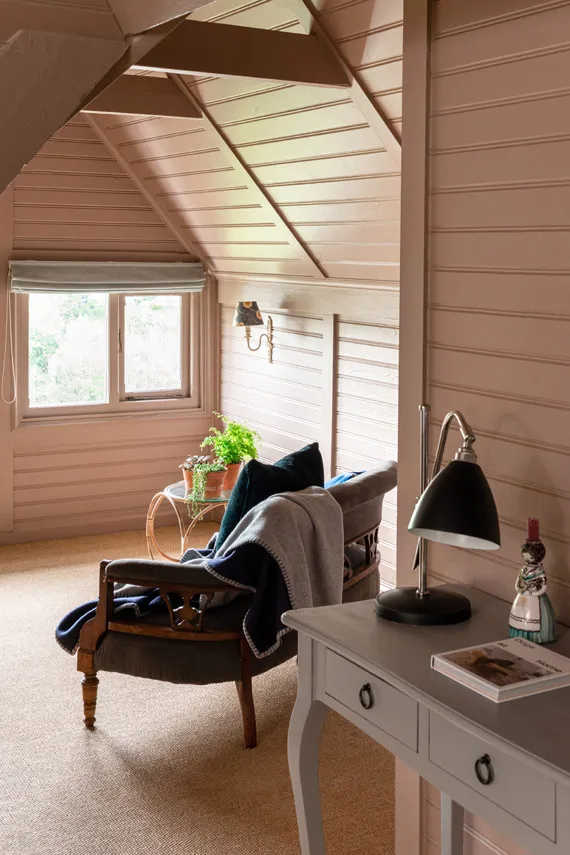
Dead Salmon by Farrow & Ball

8. Dead Salmon by Farrow & Ball

Don’t let the name fool you. This dusty pink-brown is rich, refined, and deeply livable.

Historically inspired and inherently romantic. A bold but timeless choice for libraries, entryways, or primary bedrooms.

Style Pairing: Classic European, Mediterranean Minimalism
Aspirational Prompt: Want to make your home feel like a Parisian apartment? Start here.
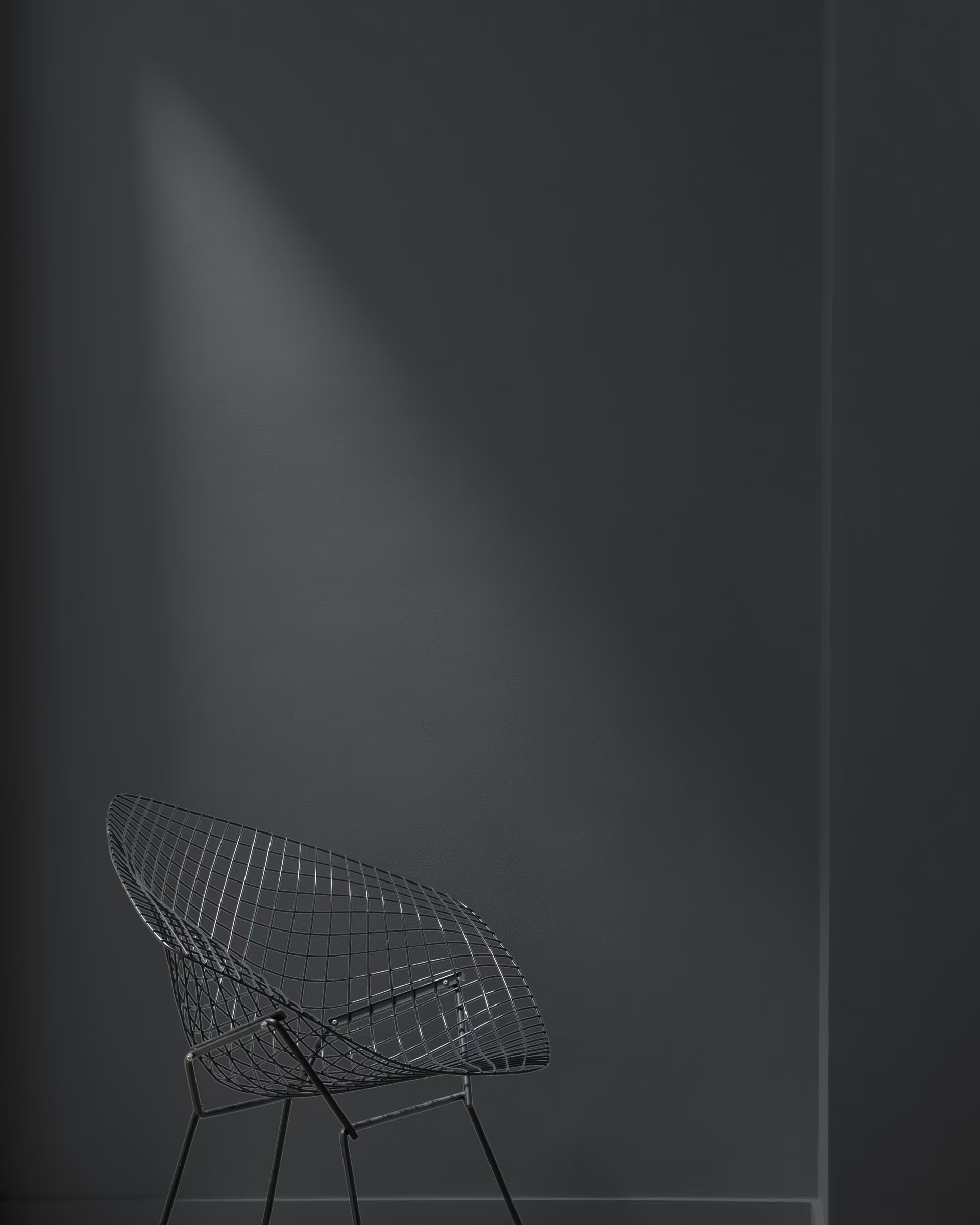
Wrought Iron by Benjamin Moore

9. Wrought Iron by Benjamin Moore

A deep, warm charcoal that reads like armor but lives like velvet.

More forgiving than black but equally dramatic. Use it for exterior trim, interior built-ins, or even doors.

Style Pairing: Modern Organic, Quiet Luxury
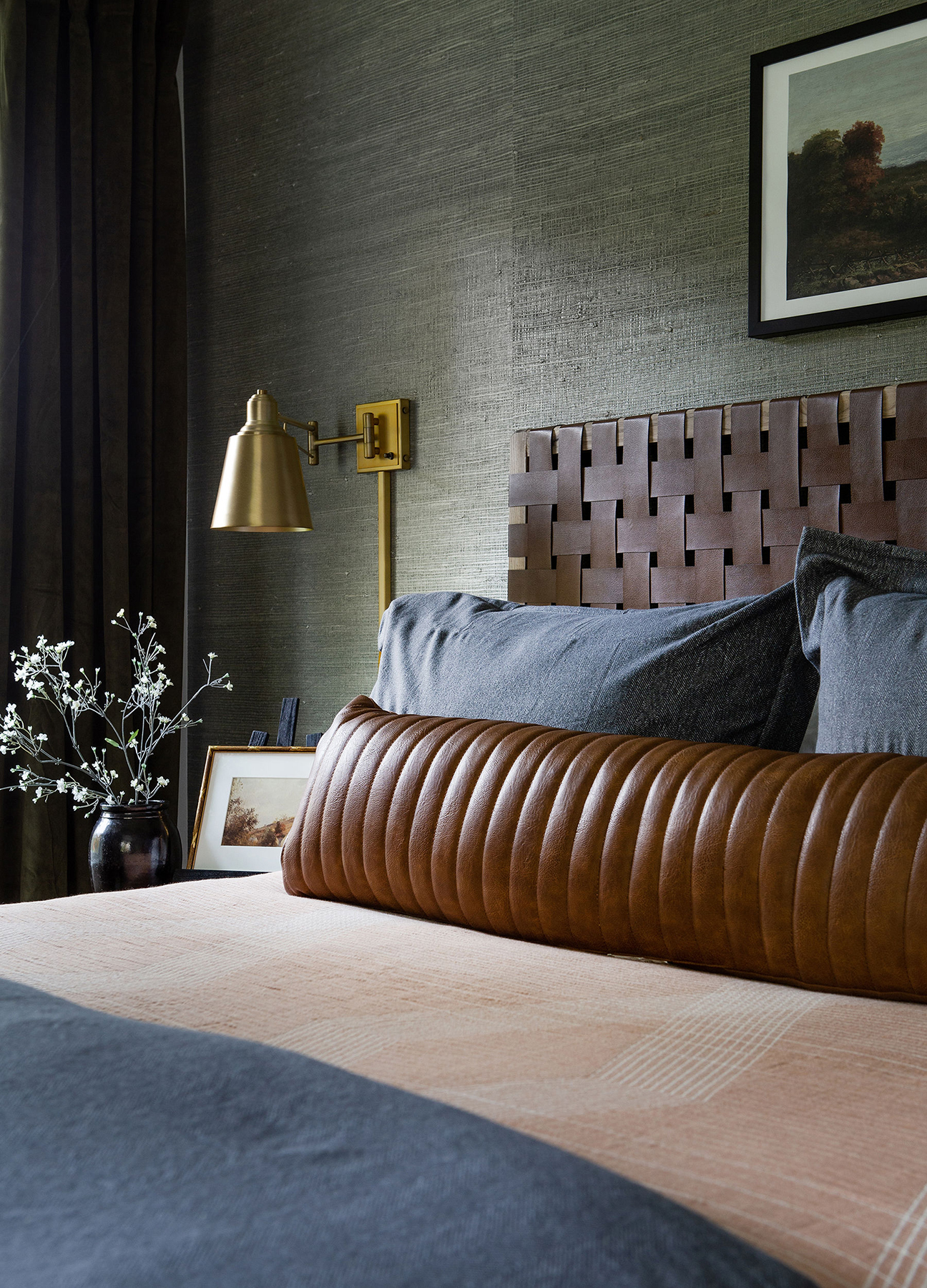
Material Match: Brass hardware, textured wallpaper, matte wood
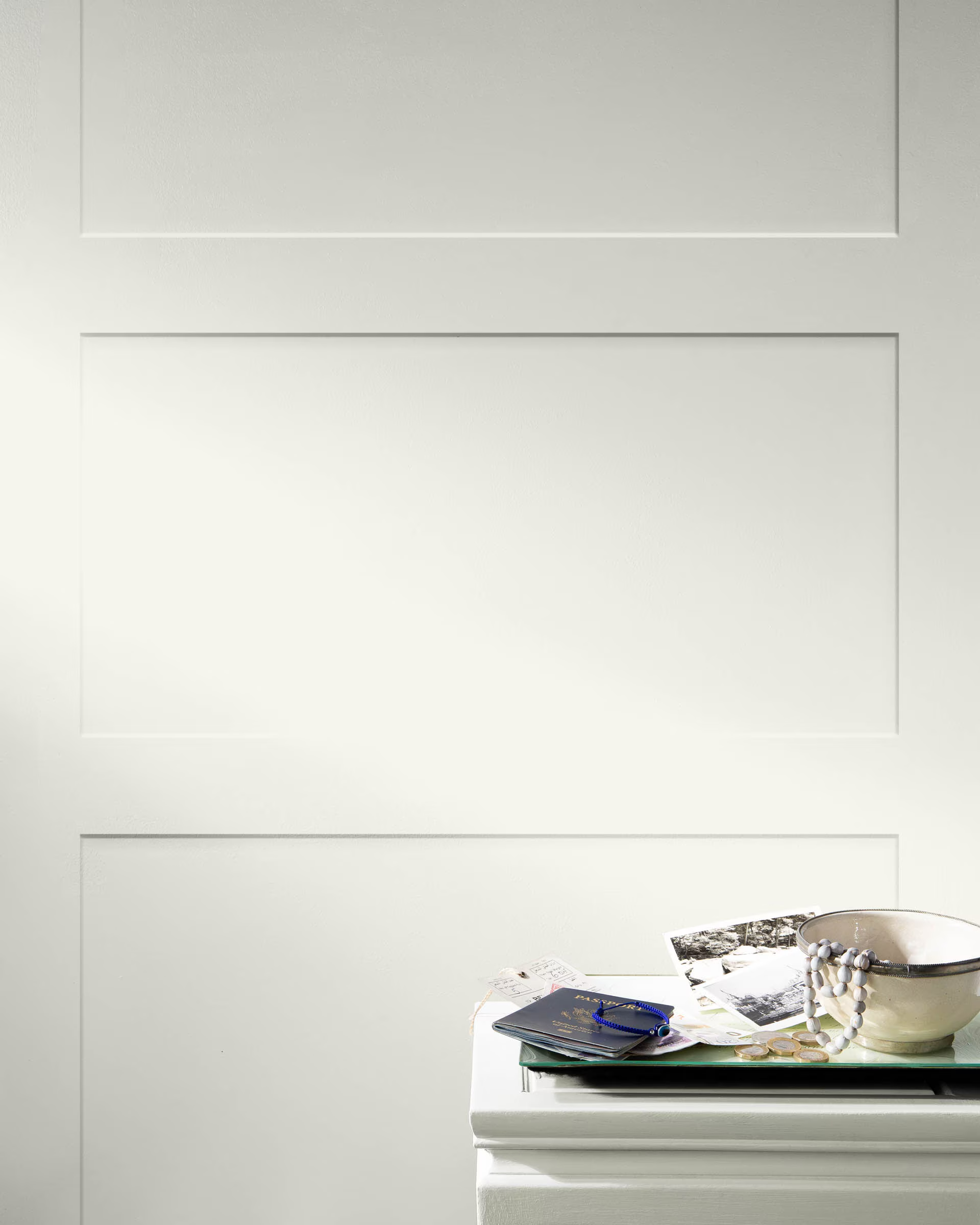
White Dove by Benjamin Moore

10. White Dove by Benjamin Moore

The designer’s default white—creamy, warm, and always flattering.

It complements every style, softens sharp lines, and makes wood tones glow. White Dove is a quiet classic that lets other elements lead.

Style Pairing: Every single one.
Linked Resource: Learn how it compares to other designer favorites in Paint or Furnishings First?

At-a-Glance: Designer Comparison Table

Paint Color Brand Undertone Best For Works With
Pointing Farrow & Ball Warm white Walls, trim, ceilings Travertine, brass, warm wood
Chantilly Lace Benjamin Moore Clean, true white Cabinets, ceilings, millwork Crisp fabrics, white oak
Jitney Farrow & Ball Sandy beige Whole-home, bedrooms Rattan, linen, coastal woods
Revere Pewter Benjamin Moore Greige Living rooms, hallways Brushed nickel, taupe upholstery
Borrowed Light Farrow & Ball Pale blue Bedrooms, libraries Linen, oak, creamy ceramics
Railings Farrow & Ball Off-black, navy Accent walls, cabinetry, trim Gold accents, marble, velvet
Natural Cream Benjamin Moore Warm cream Bedrooms, dens, transitional spaces Leather, cane, warm lighting
Dead Salmon Farrow & Ball Dusty pink-brown Entryways, primary bedrooms Antique mirrors, stone, burgundy
Wrought Iron Benjamin Moore Charcoal gray Exterior trim, bookshelves Brass, matte black, moody textures
White Dove Benjamin Moore Soft warm white Everywhere Natural woods, textiles, classic art


Most Popular by Region

Choosing a timeless paint color also means choosing what resonates with your light, lifestyle, and location. Here are regionally tailored picks from my design projects across the country:

  • Sarasota, FL: White Dove and Jitney glow beautifully in sun-drenched interiors with coastal breezes.
    → See more in The Best Paint Colors for Sarasota
  • San Francisco, CA: Revere Pewter and Borrowed Light balance cool daylight and fog-filtered views.
    → Explore San Francisco Paint Colors
  • Nantucket, MA: Dead Salmon and Pointing evoke the patina of historic homes and overcast skies.
    → Discover Nantucket Paint Colors

Timeless paint colors aren’t just background noise. They’re part of the narrative. In my work with high-end residential and hospitality clients, these hues are the ones I return to again and again—not because they play it safe, but because they elevate a space without dominating it.

If you’re ready to transform your space with more than color, book a 2-Hour Design Consultation and let’s paint the picture of what’s possible.

Because the most timeless spaces don’t chase trends. They set them.
2 Hour Interior Design Virtual or In Person Consultation

SOMETHING FOR EVERYONE

THE PIECES RACHEL RETURNS TO, AGAIN AND AGAIN
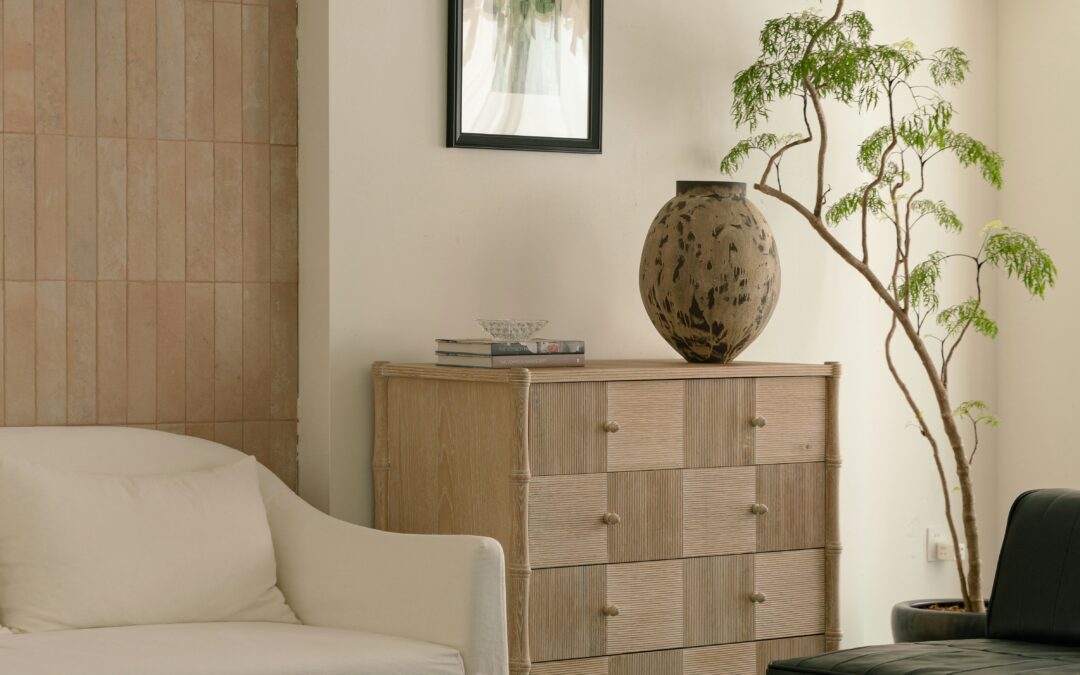
The Psychology of Beige: Why This ‘Boring’ Color is a Design Power Move

The Psychology of Beige: Why This ‘Boring’ Color is a Design Power Move

Beige isn’t bland. It’s brave in its restraint.

Once dismissed as the safe choice, beige is staging one of the quietest, most powerful comebacks in design history. But its resurgence isn’t about nostalgia or neutrality—it’s about emotional intelligence.

In a world of overstimulation, beige is the visual equivalent of a deep breath. A reset. A reminder that clarity doesn’t always come in color. Sometimes, it comes in the space between.

Where Beige Went Wrong (and Why It’s Back)

For years, beige suffered from a reputation problem. Brushed onto countless builder-grade walls, it became shorthand for indecision. The absence of color. The default.

But beige isn’t indecisive—it’s nuanced. Its power lies in undertone, context, and materiality. The right beige doesn’t disappear. It grounds. It supports boldness, highlights texture, and invites stillness.

And in today’s world, stillness is a luxury.

From the Kelly Wearstler rebrand of the Santa Monica Proper Hotel to the tonal mastery seen in Bottega Veneta’s latest runway—beige isn’t just having a moment. It’s leading the quiet luxury movement. No logos, no noise—just presence.

“Beige is the pause between two loud thoughts. The margin where good design breathes.” —Rachel Blindauer

Neutral Beige Interior Design

The Psychology of Beige: Calm, Comfort, and Control

Beige tones evoke safety, warmth, and trust. Unlike stark white—which can feel clinical—beige is relational. It flatters skin tones, plays well with light, and transitions gracefully from morning to evening.

In color psychology, beige is linked to:

  • Stability: It’s the color of sand, stone, and woven natural fibers.

  • Elegance: When layered with texture and tone, it feels quietly refined.

  • Mental clarity: Less contrast means fewer visual demands—creating a restorative visual field.

This makes beige particularly effective in:

  • Bedrooms (paired with soft lighting and plush textiles)

  • Living rooms (as a backdrop for collected layers)

  • Entryways and transitional spaces (where it calms the pace)

Curious how other colors affect behavior and energy? Explore the Psychology of Color guide.

Beige by Mood & Undertone: A Quick Guide

Undertone Vibe Best With
Warm Beige Cozy, grounded Walnut, brass, terracotta
Cool Beige Minimal, composed Marble, steel, soft blue
Rosy Beige Romantic, feminine Mauve, dusty rose, antique gold

Beige isn’t beige without intention. Undertone is everything.

Designing with Beige: It’s All in the Layers

Beige isn’t one note—it’s a scale. From pale oat to rich fawn, what you choose matters.

Key undertones to consider:

  • Warm Beige: Think creamy cashew or camel—best with brass, walnut, or terracotta.

  • Cool Beige: Think putty or greige—perfect with marble, steel, and muted blues.

  • Rosy Beige: Works beautifully with mauve, dusty rose, or soft plum.

Styling Advice from Rachel:

“Beige doesn’t compete. It completes. I use it to pull focus where I want it—to an heirloom table, a hand-thrown ceramic, the shadow play of afternoon light on linen.”

Texture is the secret: Combine matte finishes, open weaves, and natural materials.
Think abaca placemats, linen napkins, raw oak, and woven lighting.

Beige Neutral Interior Design

Is Beige the New White? (Yes—But Smarter)

Where white can feel sterile, beige adds depth. It’s a better backdrop for art, photography, and people. It warms cool daylight and softens harsh shadows.

If you’ve ever stood in a perfectly beige room and felt…relieved—that’s no accident. It’s color psychology doing its quiet work.

Try this: Replace bright whites with soft beiges in your next space refresh. Walls, slipcovers, even cabinetry. The result? Timeless, tranquil, and quietly confident.

Rachel’s Favorite Beiges for Interiors

  • Farrow & Ball “Skimming Stone” – Elegant and barely-there

  • Benjamin Moore “Muslin” – A warm, flexible beige that flatters every room

  • C2 “Bone” – Complex and grounding, ideal for cabinetry or trim

  • Little Greene “Joanna” – A cool-leaning beige that feels polished, not cold

Subtle, Not Subdued: Shopping in the Beige Spectrum

Design-forward beige doesn’t mean “boring.” Here are a few pieces that embrace the palette without losing personality:

Paloma Scallop Placemat – Woven abaca that adds natural texture to a neutral table
Capri Marble Catchall Tray – Beige heirloom tray that turns a quiet surface into a curated still life.
Marais Woven Rattan Chest – A quiet standout in any room it brings artisanal texture and everyday grace to the art of storage.
Solaire Upholstered Dining Chair – Textured upholstery meets soft-spoken sophistication

3 Reasons Beige Is a Design Power Move

It reflects light more softly than white, flattering skin tones and furnishings.

It highlights texture—wood, linen, rattan—without competing for attention.

It creates a calming, restorative atmosphere that adapts to any mood or season.

Final Thought: Beige Is an Intentional Blank Canvas

Beige is what makes everything else make sense. It’s not a filler—it’s a frame. A color that doesn’t need to shout to be heard.

Because when a space feels right—but you can’t quite explain why—there’s a good chance beige had something to do with it.

Book a 2-Hour Color & Design Consultation
Discover the tones that restore you—and build a palette that’s quietly powerful.

Designing a hotel, model home, or branded space?
Inquire about partnerships to bring this intentional aesthetic to your next project.

2 Hour Interior Design Virtual or In Person Consultation

SOMETHING FOR EVERYONE

THE PIECES RACHEL RETURNS TO, AGAIN AND AGAIN
“Interior Designers Near Me” vs. The One Who Gets You: How to Hire the Right Fit in 2025

“Interior Designers Near Me” vs. The One Who Gets You: How to Hire the Right Fit in 2025

Because your home deserves more than proximity—it deserves clarity.

You’ve typed it in—“interior designers near me”—and Google delivered a stack of smiling headshots, star ratings, and slogans that all blur together.

But here’s what Google doesn’t show:
Who can actually make your space feel like you.

Rachel Blindauer Interior Design, Interior Designer Near Me

After 15 years designing homes across Nantucket, Sarasota, and now St. Louis, I’ve learned this:
Most people don’t need more design options. They need a framework.

Because design isn’t decoration—it’s decision-making. It’s who you let guide your most personal spaces. And it matters more than a five-star review.

What “Interior Designer Near Me” Really Gets You

Search engines are built for logistics. But hiring a designer isn’t a logistical decision—it’s an emotional one. Design touches your daily routines, your stress levels, even your sleep. A list of who’s nearby won’t tell you:

  • Who listens more than they pitch

  • Who sees your style even when you can’t articulate it

  • Who brings both artistic restraint and architectural logic

“A good designer brings taste. A great one brings alignment.”

How to Choose the Right Interior Designer—Even If They’re Not Local

Instead of asking “Who’s closest?”—ask this:

  • Can they show restraint where others add clutter?

  • Do they have a point of view—or just Pinterest boards?

  • Do they consider your life—not just your floorplan?

  • Can they hold space for couples, conflicting ideas, or decision fatigue?

Design is not just style. It’s psychology with a floorplan.

When Local Does Matter

If you’re remodeling, coordinating trades, or sourcing custom furnishings, local access matters. I personally serve clients in:

But many of my clients start with a virtual consultation—and find it offers more clarity than weeks of back-and-forth with a designer down the road.

Book a Session That Brings Instant Direction

I designed the 2-Hour Design Consultation for clients who want expert clarity—not sales pressure. It’s ideal for:

  • A single room you can’t figure out

  • A full home you want to align

  • Couples who want a neutral third-party perspective

  • Renovation guidance before expensive decisions are made

And if we move into full-service design afterward? The $300 fee is fully credited.

“Design that just looks good isn’t enough. It has to live well.”

You Don’t Need Just Any Interior Designer Near You

You need a partner who listens like a therapist, plans like an architect, and edits like a stylist.
One who sees more than square footage—who sees you.

That’s how good design becomes lasting peace of mind.

Start With a 2-Hour Design Consultation →

Rachel Blindauer is an award-winning interior and product designer known for crafting spaces that feel as good as they look. With 15+ years of experience and projects across Florida, Missouri, and Massachusetts, her studio specializes in calm, colorful interiors and boutique hospitality design

2 Hour Interior Design Virtual or In Person Consultation

SOMETHING FOR EVERYONE THE PIECES

RACHEL RETURNS TO, AGAIN AND AGAIN
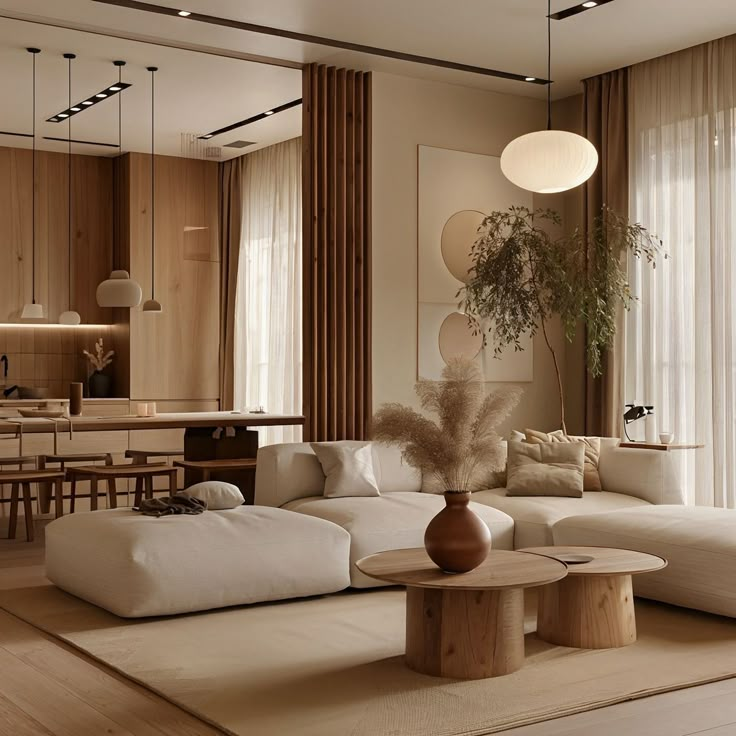
What Color Is Navy? A Deep Dive into Design’s Most Enduring Hue

What Color Is Navy? A Deep Dive into Design’s Most Enduring Hue

It’s not just blue—it’s navy. And in the world of design, that distinction matters.

What Color Season is Navy Blue? A Deep Dive into Design’s Most Enduring Hue

Navy blue is one of those rare shades that feels timeless, yet endlessly adaptable. It can ground a room like a neutral, or it can command attention like a jewel tone. But when it comes to personal style and interiors, many ask the same question: what color season is navy blue?

The answer is both simple and nuanced. Navy’s versatility allows it to sit comfortably across multiple palettes—its exact character depends on the undertones, the finish, and how it’s paired.

A Brief History of Navy Blue

The name “navy blue” dates back to 1748, when it was first worn by officers in the British Royal Navy. Since then, it has carried connotations of strength, dignity, and formality. In design, navy emerged as an anchor shade in the late 19th century, a counterpoint to softer Victorian pastels. By the mid-20th century, it became synonymous with authority—think uniforms, boardrooms, and traditional libraries lined with leather-bound books.

Today, navy blue has been reimagined. It’s no longer confined to preppy stripes or nautical motifs. Instead, it’s embraced by interior designers for its depth, its mood-setting quality, and its ability to bridge modern minimalism with classic tradition.

What Color Season is Navy Blue?

Color seasons help us understand how hues interact with light, undertones, and personal coloring. Navy blue is unique because it flexes across multiple seasons:

  • Winter Palette: True navy, with its crisp, inky depth, belongs here. Pair it with cool jewel tones—emerald, fuchsia, or icy gray—for a dramatic effect.

  • Summer Palette: Soft navy, with muted undertones, works beautifully for those who shine in cool but lighter tones. It feels less severe than black but equally refined.

  • Autumn Palette: Navy with a hint of warmth (think midnight with a drop of brown) pairs seamlessly with earthy tones—camel, rust, and olive.

  • Spring Palette: Rare, but possible. A brighter, more vibrant navy leans toward cobalt and pairs with fresh, clear hues like coral or aqua.

Tip: If you’re unsure where your navy belongs, hold it against pure white. If it looks sharp and high-contrast, it’s Winter. If it softens into a dusty pairing, it’s Summer.

Using Navy in Interiors

Navy is often called “the new black” in design—and for good reason. Unlike black, which can feel stark, navy carries depth without overwhelming warmth. It’s endlessly versatile:

  • Walls: A navy-painted room feels cocooning yet elegant. (Explore my blog Best Paint Colors for Each Seasonal Type for shade recommendations tailored to light conditions.)

  • Cabinetry: Navy kitchens have become modern classics, pairing beautifully with marble, brass, or pale oak.

  • Textiles: Upholstered in velvet, navy reads as luxurious. In linen, it feels relaxed.

  • Accents: A single navy vase, lamp, or rug can anchor an otherwise neutral space.

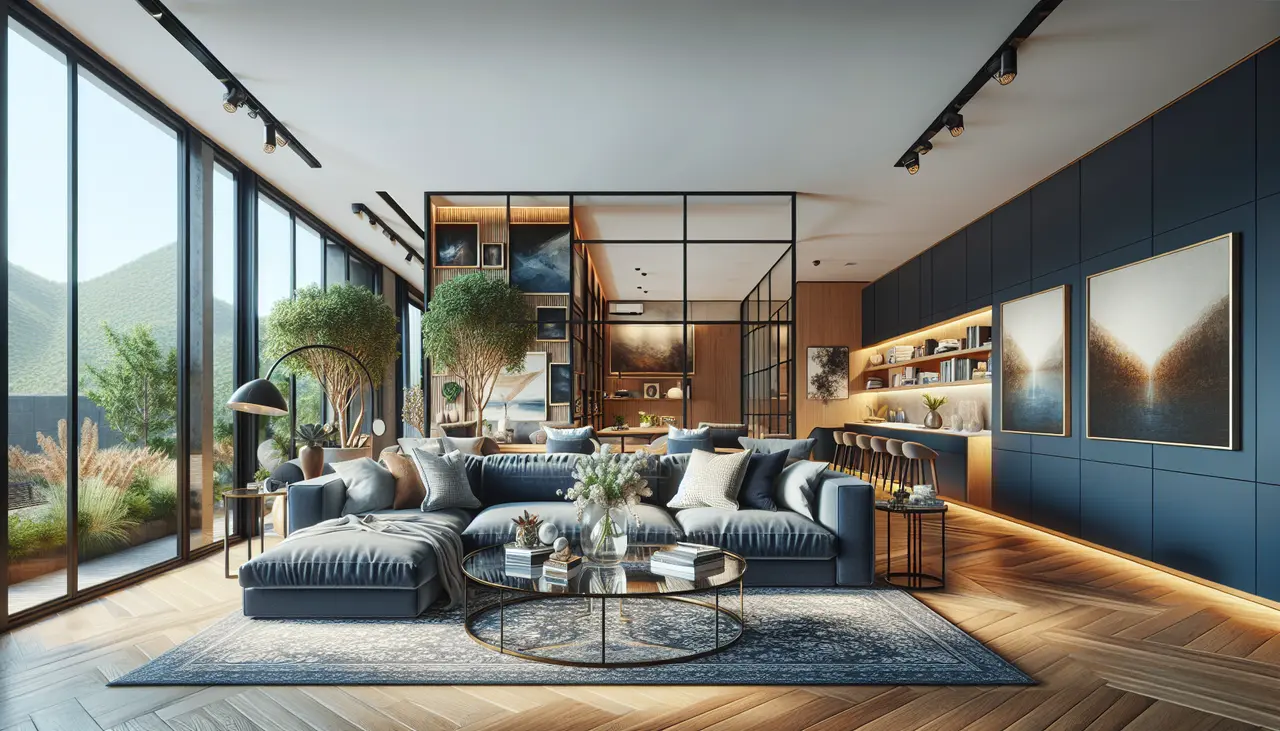
Technically speaking, navy blue is a dark shade of blue with undertones of black or gray. In digital design, it hovers around #000080, though in interiors it can vary widely based on lighting, material, and context. It’s the difference between a room that recedes and a room that envelops. A navy wall absorbs light—and with it, distraction. A navy sofa feels grounded, sculptural. The color’s inherent seriousness makes every object it touches feel more considered.

The Psychology of Navy

Where cobalt energizes and turquoise soothes, navy centers. It is the color of confidence and control, often associated with trustworthiness and intelligence. Psychologically, it behaves like black—lending weight to a space—but without the harshness. It tempers emotion while inviting contemplation. Studies show deep blues foster trust, calm, and focus. It’s why corporations favor it in branding, and why homeowners turn to it for spaces meant to feel serene but strong.

In bedrooms, navy can induce calm and deepen rest. In dining rooms, it creates intimacy. And in powder rooms or libraries, it becomes a dramatic gesture of restraint—where richness doesn’t require ornamentation.

“I often use navy the way a writer uses punctuation,” says Rachel Blindauer. “It breaks up a space and gives it rhythm. A navy wall isn’t just a backdrop—it’s a pause that heightens everything else.”

The Best Navy Paint Colors

Not all navies are created equal. A few designer favorites:

  • Benjamin Moore Hale Navy: A true, balanced navy that flatters almost every palette.

  • Farrow & Ball Hague Blue: A moody, green-leaning navy perfect for atmospheric rooms.

  • Sherwin-Williams Naval: Crisp, classic, and versatile—ideal for cabinetry.

  • Little Greene Basalt: A rich navy with subtle complexity, perfect for traditional-meets-modern interiors.

Materials Matter: Navy in Texture

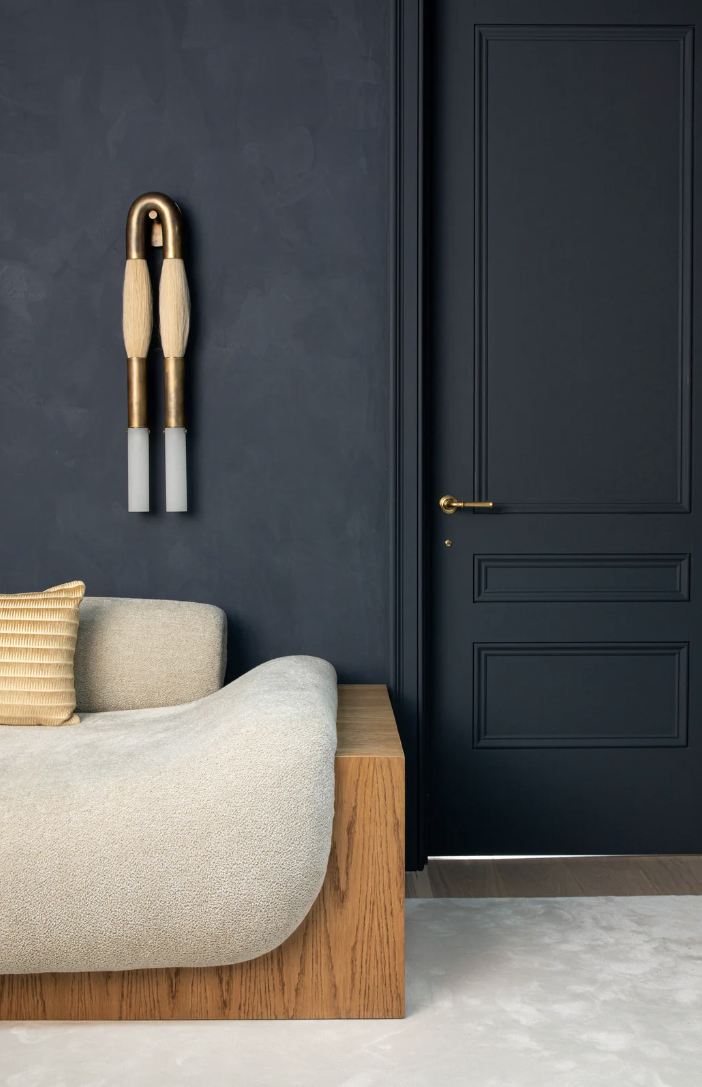
Navy is never just navy. In matte limewash, it reads like shadow. In lacquer, it glows like obsidian. Velvet makes it royal; linen makes it relaxed. Paint navy on plaster, and it feels aged and architectural. Use it in tile or enamel, and it skews nautical.

This versatility makes it a favorite for interior designers who love nuance. At shop.rachelblindauer.com, pieces like the Matte Indigo Ceramic Bowl or the Navy Bouclé Bench channel this shade in tactile, intentional ways—turning color into a design material of its own.

Navy vs. Other Blues: A Comparison

Color Undertone Mood Best Use
Navy Blue Black, Gray Grounded, Sophisticated Walls, Upholstery, Accent Pieces
Cobalt Blue Bright, Cool Energetic, Bold Art, Lacquered Finishes
Slate Blue Gray, Muted Calm, Transitional Cabinetry, Bedrooms
Midnight Blue Nearly Black Dramatic, Mysterious Powder Rooms, Formal Spaces
Bedroom Bedding Interior Design

How to Use Navy in Interior Design

Here’s where to start:

  • Walls: For a moody backdrop, try Benjamin Moore’s Hale Navy or Farrow & Ball’s Hague Blue. In sunlit spaces, it reads vibrant. In low light, it cocoons.

  • Furniture: Choose navy when black feels too severe but white too expected. A navy velvet sofa feels intentional, not trendy.

  • Accents: Pair navy with brass, walnut, ivory, or even olive for a rich, layered palette. Avoid pairing it with high-contrast neon or stark whites—it dilutes navy’s elegance.

  • Rooms: Navy thrives in transitional spaces like hallways, powder rooms, or entry vestibules where its drama can be contained and savored.

Need guidance bringing navy into your home? Book a 2 Hour Design Consultation for tailored advice and expert color strategy that goes far beyond the paint chip.

2 Hour Interior Design Virtual or In Person Consultation

SOMETHING FOR EVERYONE

THE PIECES RACHEL RETURNS TO, AGAIN AND AGAIN

12 Most Popular Interior Design Styles in 2025 – Rachel Blindauer

12 Most Popular Interior Design Styles in 2025 – Rachel Blindauer

Interior Design Styles: A Guide to the Most Timeless—and Searched—Looks

“Most people don’t need more furniture. They need a framework.” —Rachel Blindauer

From sun-drenched villas in the Mediterranean to the edited restraint of a Parisian apartment, design styles do more than shape spaces—they shape the lives lived inside them. They’re not just aesthetic decisions; they’re psychological ones. And with Pinterest boards, magazine spreads, and algorithms offering endless inspiration, clarity is more valuable than ever.

This guide cuts through the visual noise to highlight the most enduring and most-searched-for interior design styles of 2025. What follows isn’t just a list—it’s a lens, giving you the cultural, historical, and tactile insight to define your aesthetic and live beautifully within it.

Start Here: Which Style Fits You?

Still unsure of your style? Start with Rachel’s Interior Style Quiz or submit a project inquiry for personalized design guidance.

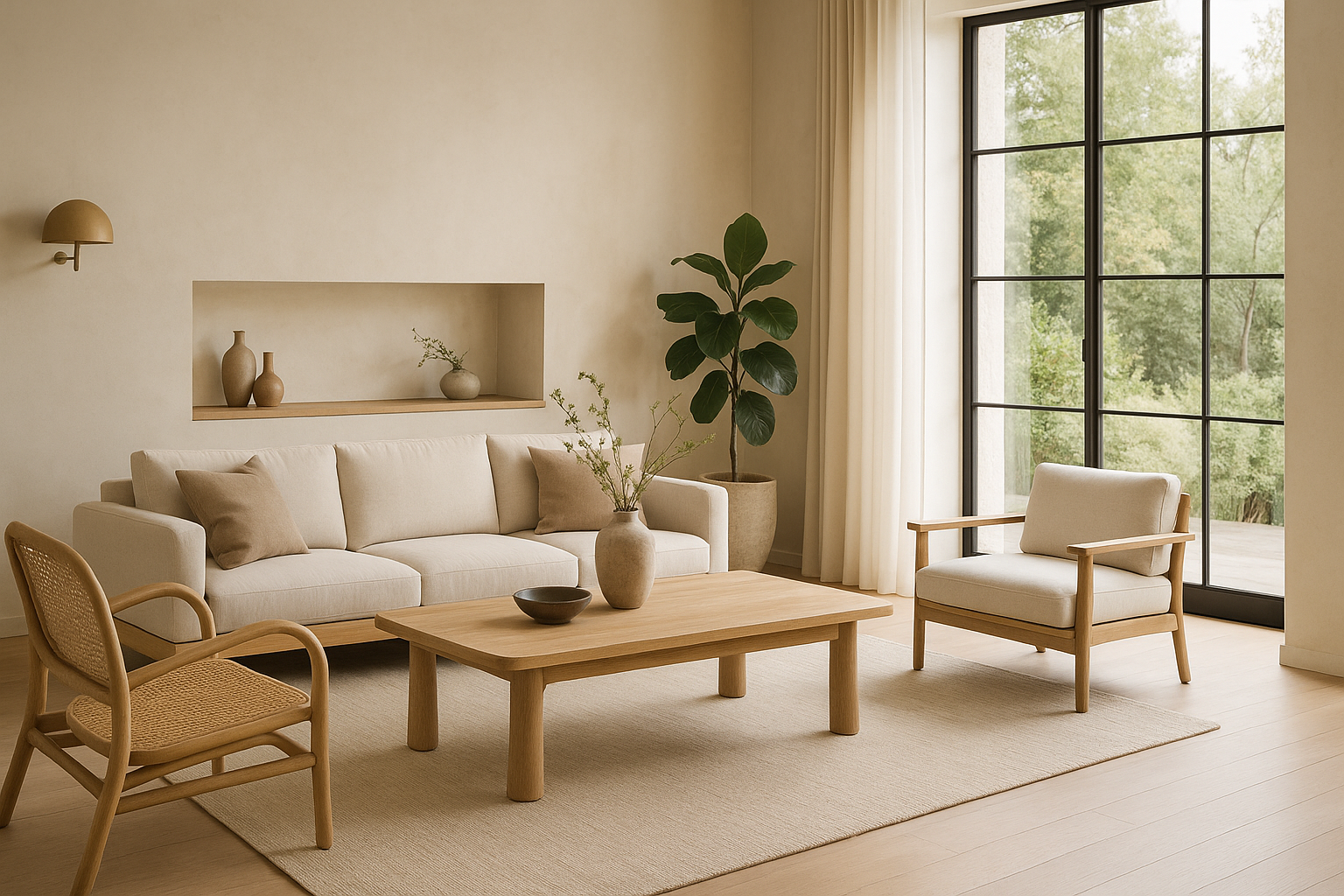
Modern Organic Style

Modern Organic

Top search terms: “organic modern living room,” “natural home decor”

Clean lines meet natural textures. Modern Organic emerged as a soft rebellion against sterile minimalism—inviting the outside in with plaster walls, unfinished wood, and tactile linens.

Its roots stretch from California’s early modernist homes to Japan’s reverence for imperfection. Today, it evokes grounded serenity through a palette of stone, sand, and soft white.

“Modern Organic is where I begin when someone says, ‘I want calm, but not cold.’” —Rachel Blindauer

Materials to Lean Into: Raw oak, matte ceramics, tumbled travertine, textural boucle.

Try This: Anchor your entryway with the Ravena Marble Bowl—an object that feels found, not purchased.

Quiet Luxury Style

Quiet Luxury

Top search terms: “quiet luxury home,” “luxury without labels”

Born of the same ethos as The Row or Succession’s set design, Quiet Luxury is more about discernment than display. It’s the feeling of unlacquered brass, the weight of a handmade bowl, the presence of negative space.

“True luxury is confidence without spectacle.” —Rachel Blindauer

Cultural Touchpoint: It harks back to Axel Vervoordt’s Belgian minimalism and the kind of restraint that suggests generational knowledge, not trend-following.

Materials That Matter: Limestone, bronze, velvet, handmade tile, unlacquered fixtures.

Try This: Combine the Johanna Table Lamp with sculptural stoneware and clean-lined upholstery. Let the materials speak.

Coastal Grandmillennial Style

Coastal Grandmillennial

Top search terms: “coastal grandmother aesthetic,” “modern coastal decor”

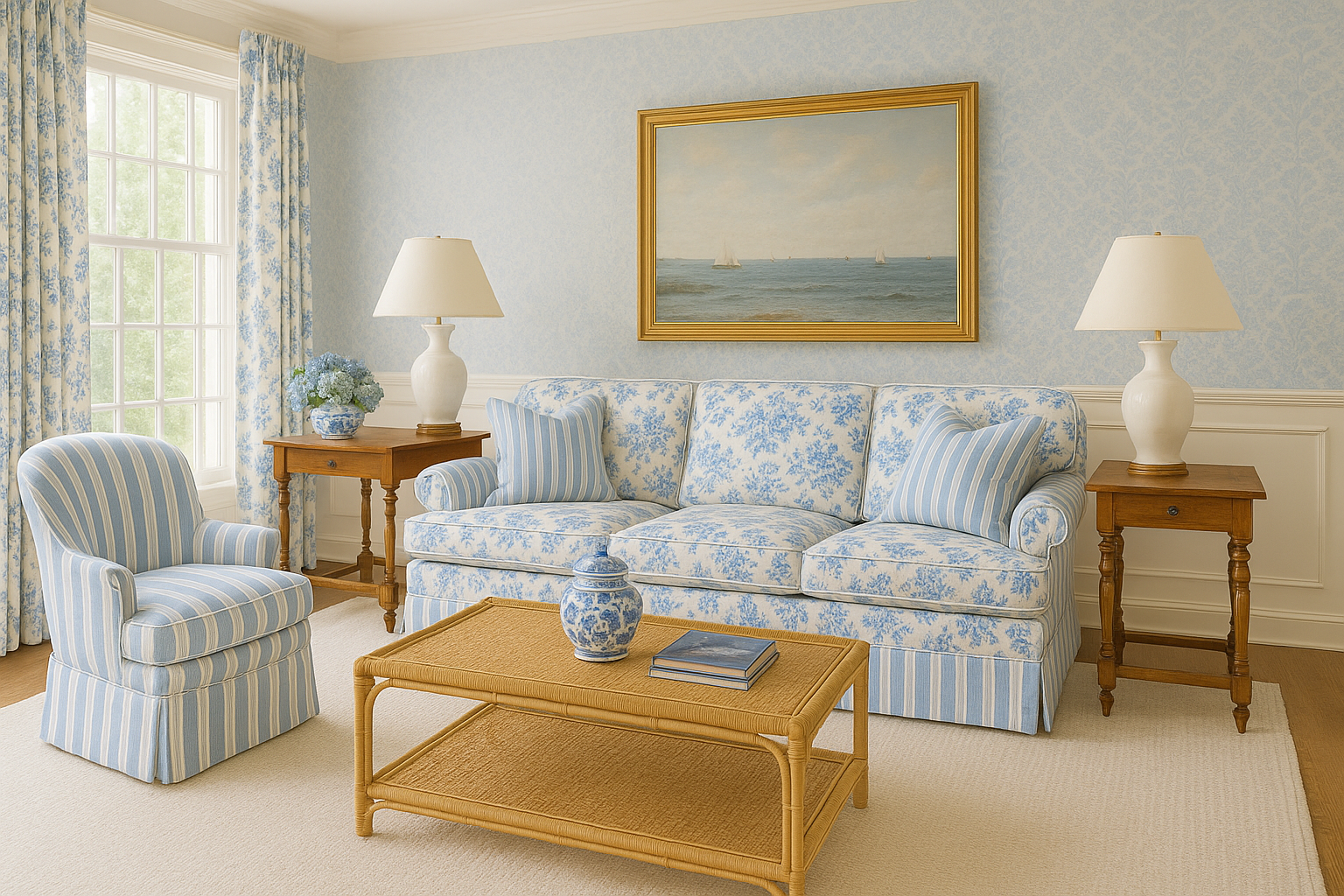
Think Nancy Meyers kitchens—only layered with block-printed pillows, chinoiserie vases, and rattan details. Coastal Grandmillennial is beachy but bookish. Fresh but familiar.

A modern tribute to classic Americana with a Southern wink, this style marries comfort with charm.

Tactile Notes: Cotton slipcovers, wicker, ticking stripe, jute, sea glass, ginger jars.

Try This: Style your console with the Natasha Raffia Tray and a cluster of hydrangeas.

Parisian Minimalist Style

Parisian Minimalist

Top search terms: “Parisian apartment decor,” “elevated minimalist”

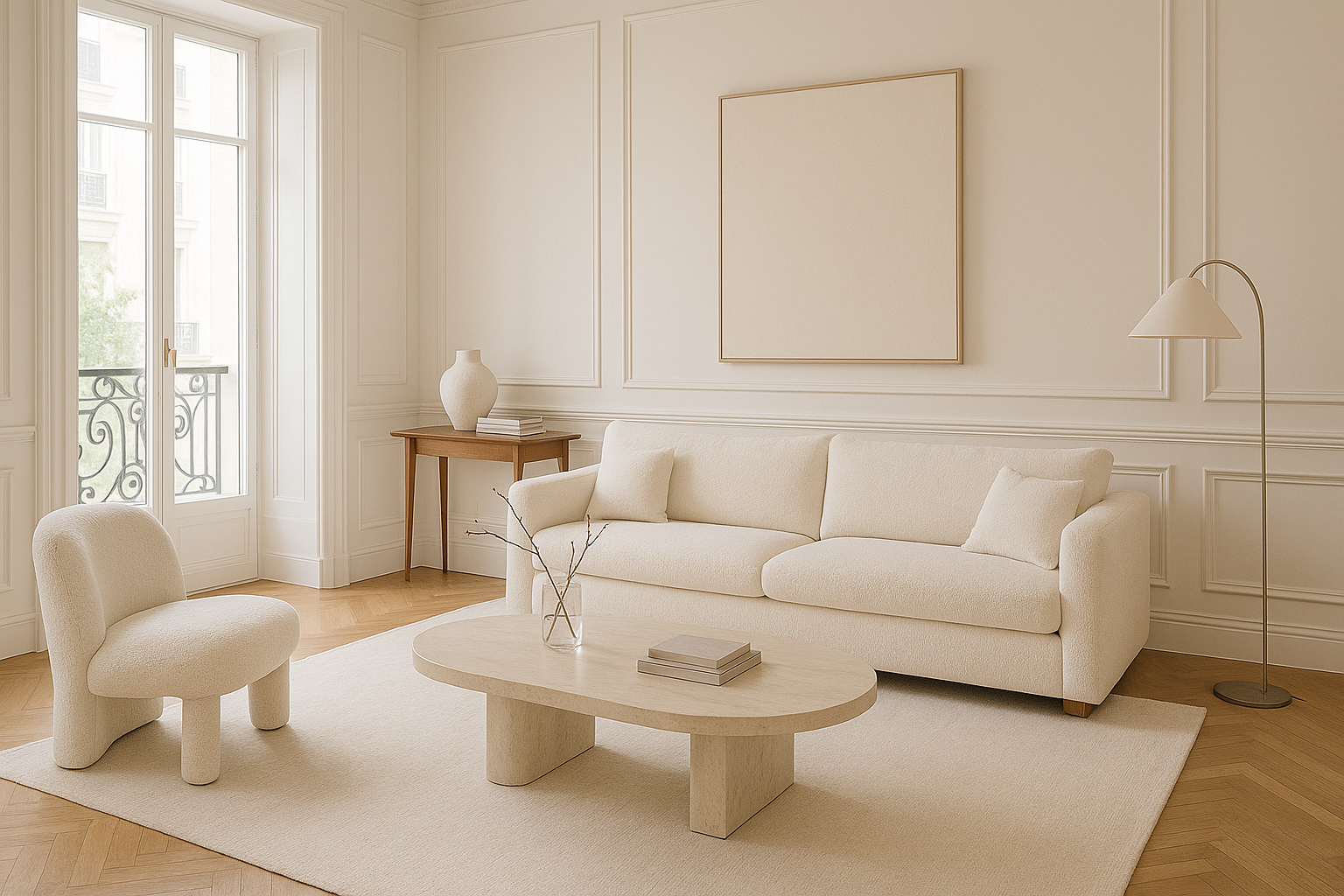
This is minimalism with poetry. A single sculptural chair in a room with crown molding. High ceilings, herringbone floors, and art that doesn’t explain itself.

“Parisian style isn’t about what’s there. It’s about what’s not—and why.” —Rachel Blindauer

Materials That Define It: Boucle, marble, blackened iron, smoked glass.

Try This: Float the Demi Dining Chair under a plaster pendant and let silence do the styling.

Midcentury Eclectic Style

Midcentury Eclectic

Top search terms: “Midcentury modern decor,” “eclectic home design”

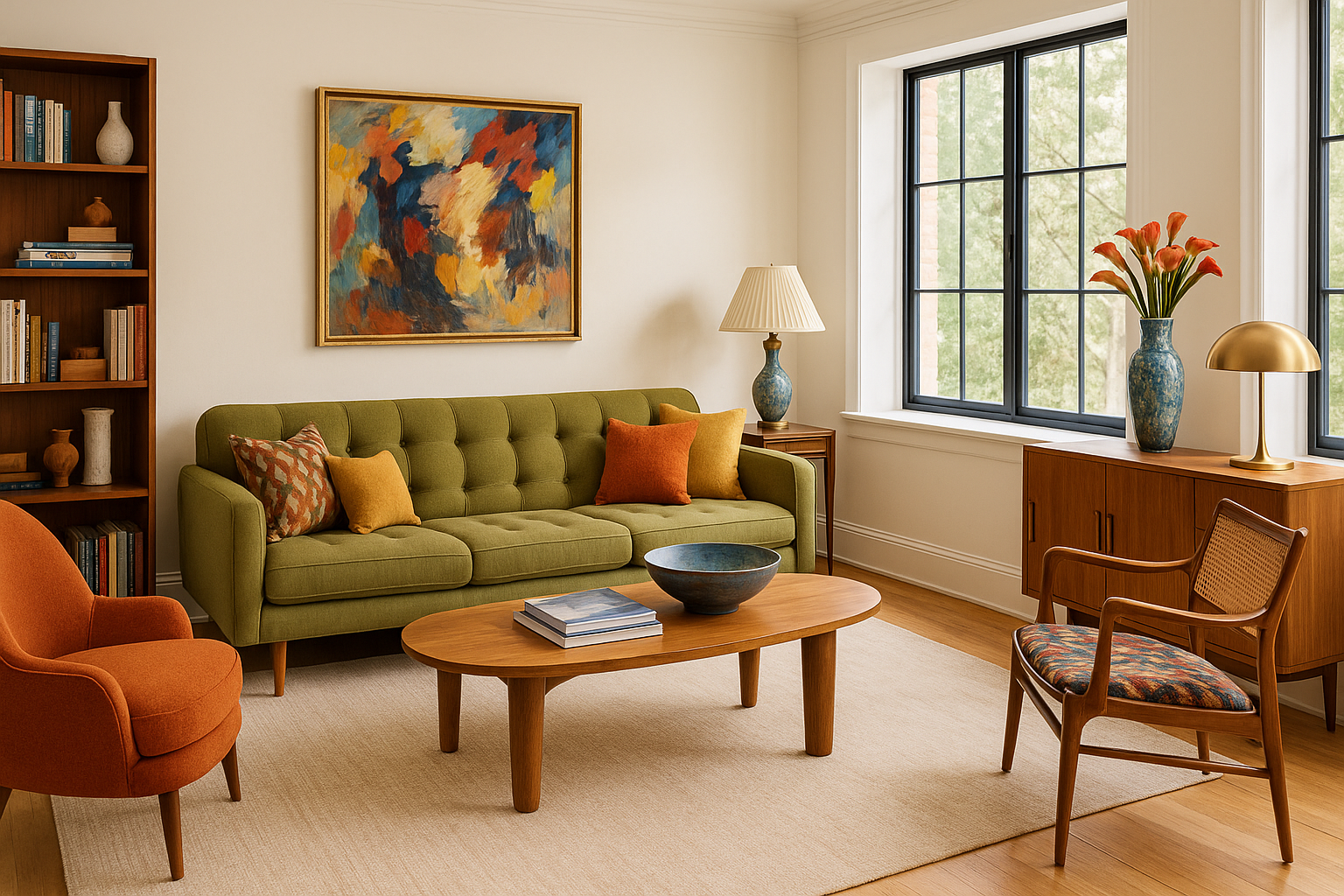
Post-war optimism meets thrifted charm. This look honors midcentury bones—walnut credenzas, sputnik lighting—but injects color, pattern, and whimsy.

It’s not about authenticity to era—it’s about energy.

Materials Palette: Terrazzo, velvet, brass, shag rugs, glass globes, leather.

Try This: Pair a 1970s-inspired chair with the Opaline Vase and layered abstract art.

Scandinavian Minimalism Style

Scandinavian Minimalism

Top search terms: “Scandinavian interior design,” “Scandi living room”

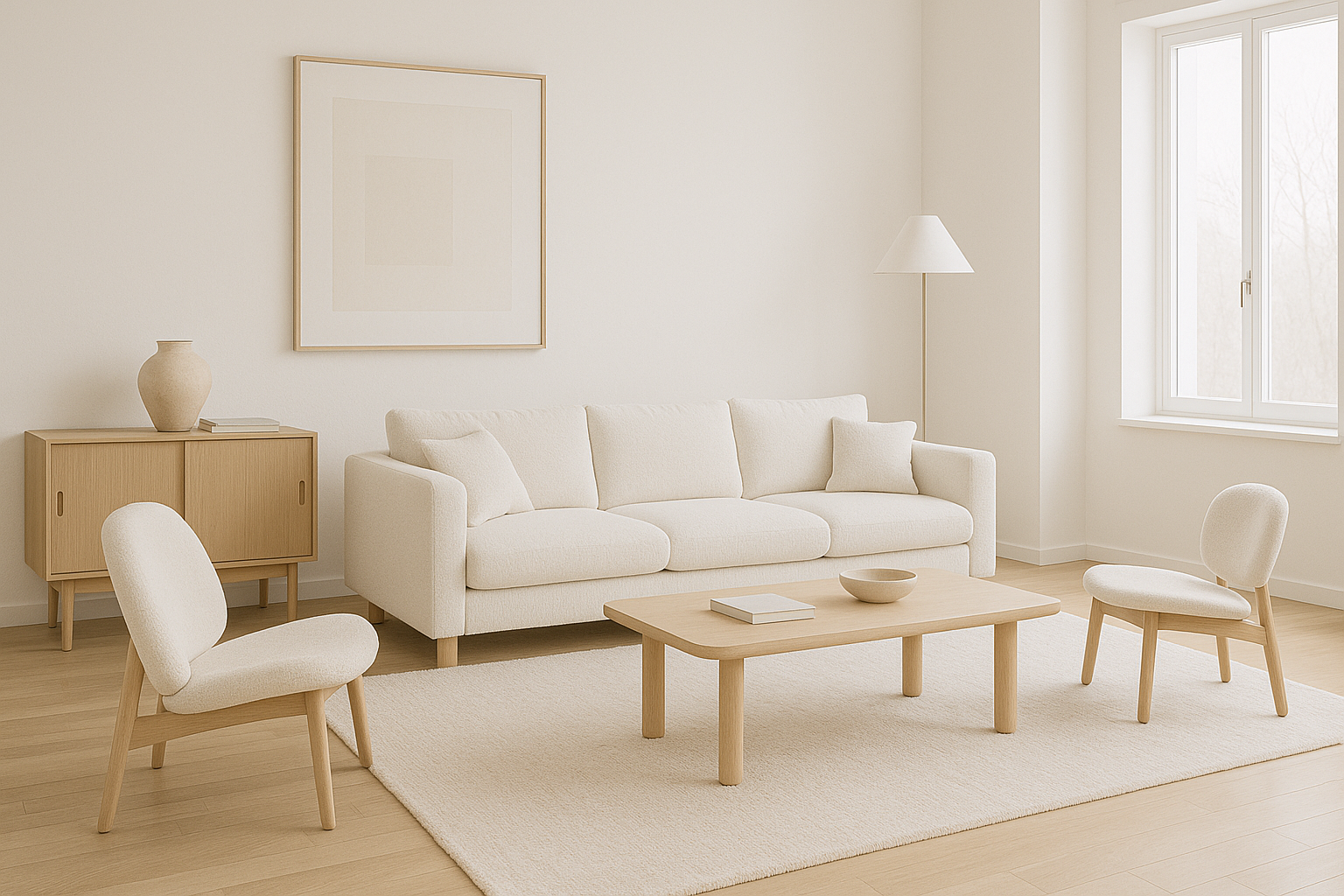
Understated and luminous. Scandinavian design draws from Nordic winters, emphasizing light, functionality, and warmth. It’s less about “things” and more about the feeling of space.

Material Focus: Birch, wool, paper, soapstone, ceramic.

Aspirational: What would your home look like if you only kept what you loved or earned its place?

Transitional Style

Transitional Style

Top search terms: “transitional design style,” “modern traditional home”

The most client-friendly of all styles. Transitional homes are grounded by traditional architecture but made livable with cleaner lines, soft textures, and updated finishes.

“When you want timelessness without the weight of tradition—this is the sweet spot.” —Rachel Blindauer

Typical Elements: Tailored upholstery, brass or nickel fixtures, muted palettes, statement lighting.

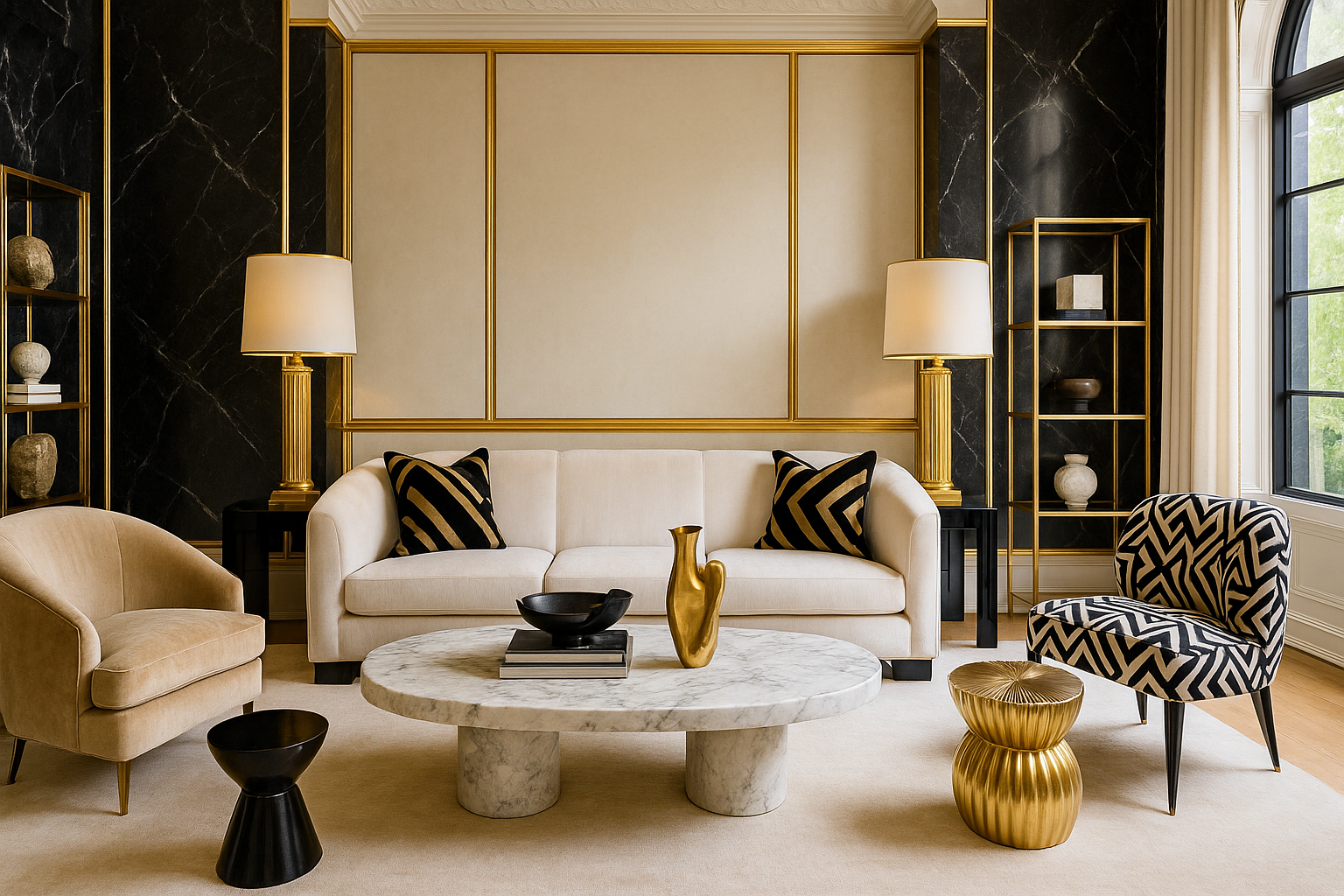
Hollywood Regency Style

Hollywood Regency

Top search terms: “Hollywood glam interior,” “regency home style”

Symmetry. Shine. Sex appeal. Inspired by old-Hollywood sets and Dorothy Draper’s maximalism, this style embraces glossy finishes, rich color, and dramatic flourishes.

Material Glossary: Lacquer, mirror, velvet, palm fronds, lucite.

Try This: Add Art Deco-style sconces and high-contrast art. Think glamour that doesn’t need to try too hard.

Japandi Style

Japandi

Top search terms: “Japandi interior design,” “Japanese Scandinavian style”

Minimal but not cold. Japandi combines the mindfulness of Japanese wabi-sabi with Scandinavian warmth. Think low furniture, diffused light, and curated imperfection.

Signature Materials: Ash wood, paper lanterns, clay, linen, stone.

Try This: Let negative space do the talking. Edit your living room to its essentials—and elevate each.

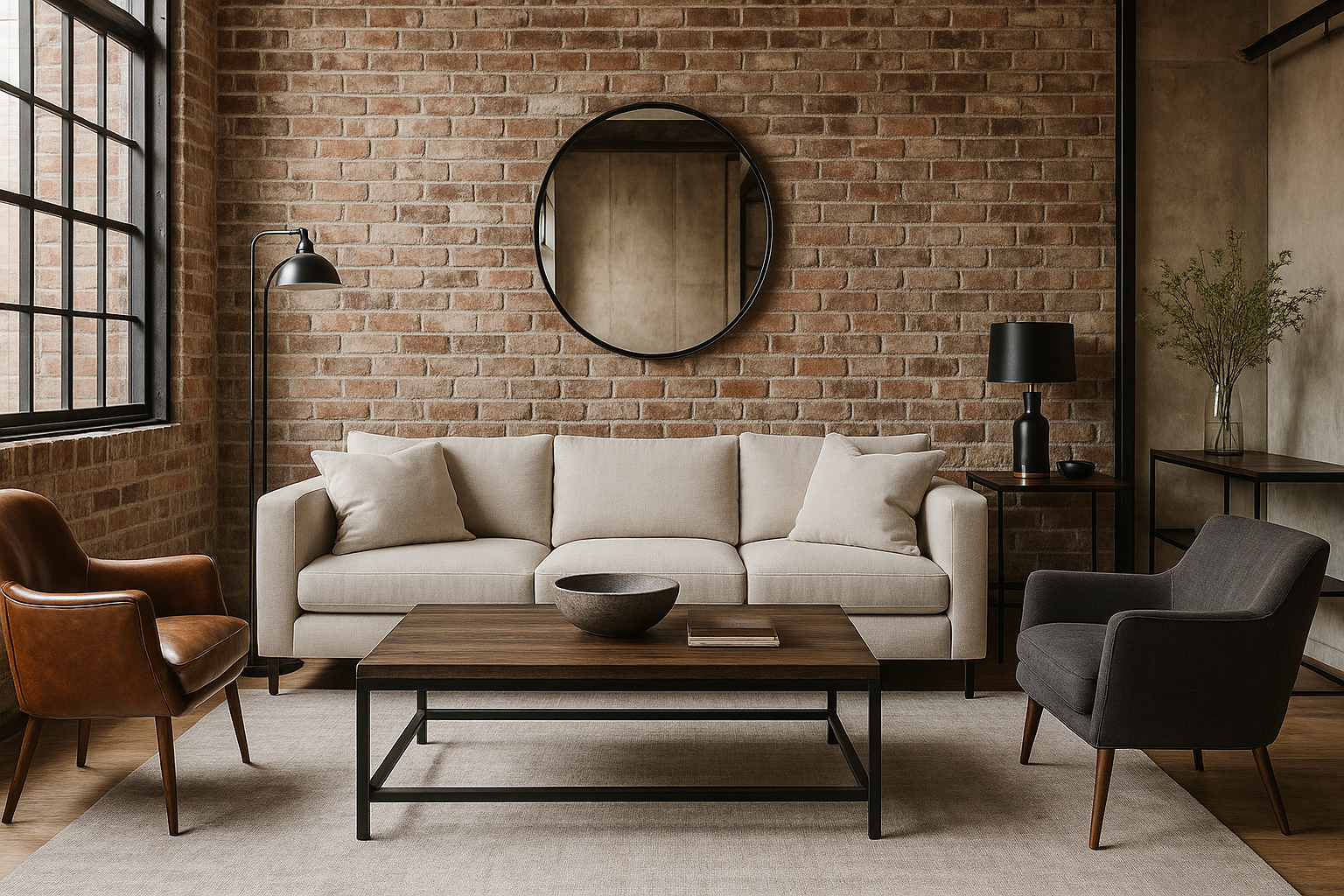
Industrial Modern Style

Industrial Modern

Top search terms: “industrial loft design,” “modern industrial decor”

Where warehouse grit meets refinement. This look brings together raw textures (exposed brick, aged leather) with sharp silhouettes and clean proportion.

Material Notes: Concrete, steel, dark wood, glass, vintage hardware.

Aspirational Prompt: Can your home feel both industrial and intimate?

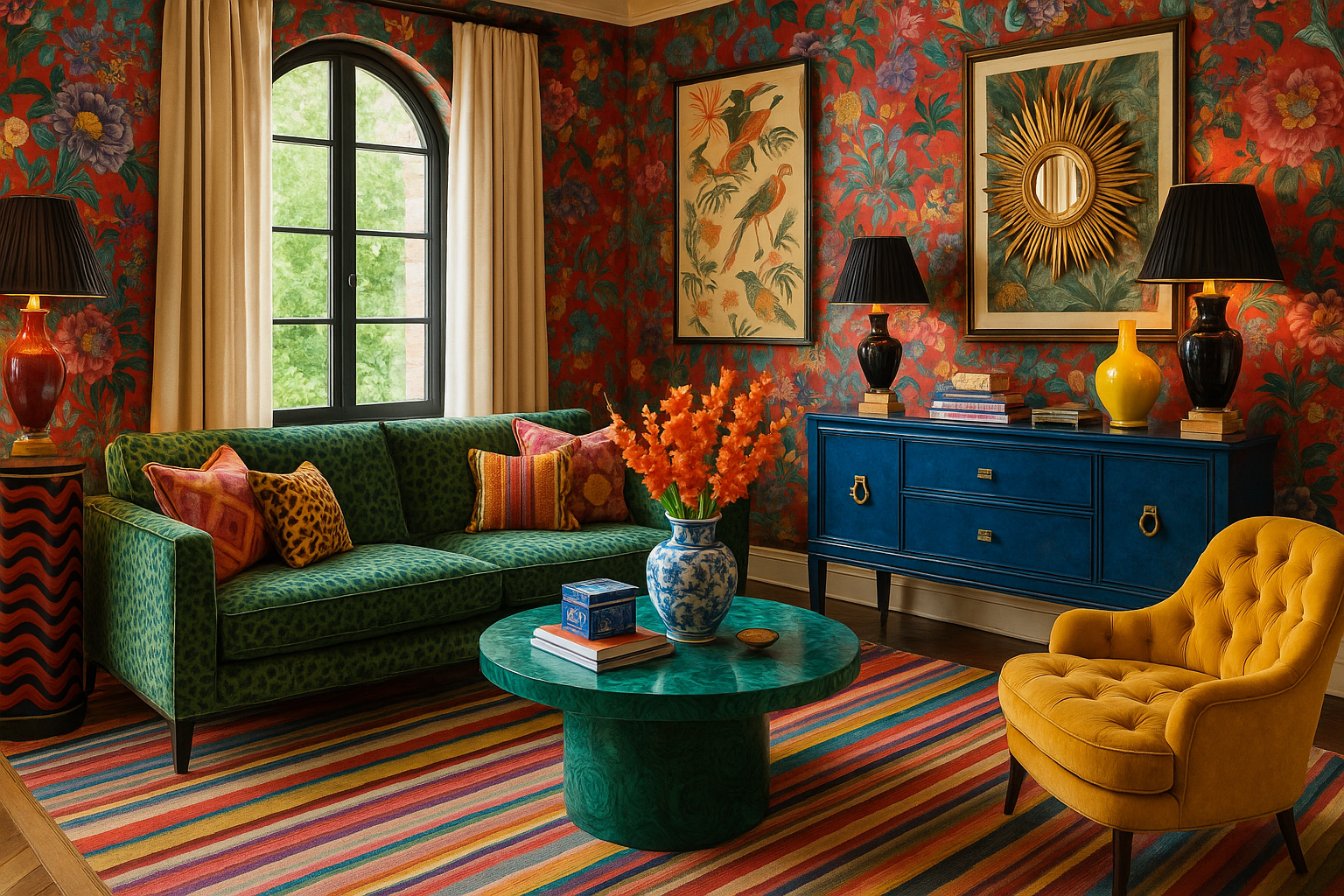
Maximalism Style

Maximalism

Top search terms: “maximalist interior,” “colorful eclectic home”

More is more. Done well, Maximalism is curated chaos—books, art, color, pattern. Each piece tells a story, and together, they create a world.

“Maximalist homes read like memoirs. You’re not decorating; you’re storytelling.” —Rachel Blindauer

Key Materials: Velvet, wallpaper, mixed prints, ceramics, collected objects.

Traditional European Style

Traditional European

Top search terms: “traditional interior design,” “European classic homes”

This isn’t granny’s house. It’s layered, intelligent, and rooted in history. Think English libraries, Parisian parlors, and Italian villas.

Material Vocabulary: Silk, antique brass, carved wood, limestone, tapestry.

Try This: Mix a 19th-century painting with clean-lined upholstery. Let heritage and modernity coexist.

“When a home has history, I don’t overwrite it. I frame it.” —Rachel Blindauer

Style Comparison Table

Style Key Materials Mood Best For
Modern Organic Plaster, linen, oak Grounded Retreat-like homes
Quiet Luxury Cashmere, brass, stone Refined Sophisticated primary homes
Coastal Grandmillennial Rattan, linen, blue + white Breezy Second homes, beach towns
Parisian Minimalist Boucle, marble, iron Sculptural Urban apartments
Midcentury Eclectic Walnut, shag, Murano glass Retro Vintage lovers
Scandinavian Birch, wool, ceramic Airy Minimalist families
Transitional Velvet, brass, neutrals Timeless Clients between styles
Hollywood Regency Lacquer, mirror, velvet Glamorous Entertaining spaces
Japandi Ash wood, paper, linen Serene Design purists
Industrial Modern Concrete, steel, leather Edgy Lofts + urban conversions
Maximalist Velvet, books, bold prints Expressive Art-forward creatives
Traditional European Silk, antiques, plaster Grand Historic + large homes


Find Your Style—Then Live It

The best-designed homes don’t just photograph well—they feel right. They support how you live, love, host, rest. They tell your story with clarity and care.

Not sure where to begin?

“Design isn’t about perfection. It’s about peace, clarity, and living intentionally.” —Rachel Blindauer

2 Hour Design Consultation

SOMETHING FOR EVERYONE

THE PIECES RACHEL RETURNS TO, AGAIN AND AGAIN