by Rachel Blindauer | April 29, 2026
The Five Seconds That Define a Home
A contractor I admire once told me something I have never forgotten: “You have five seconds. That’s how long it takes for someone to decide how they feel about a house.” He was talking about curb appeal, but the same principle applies—perhaps even more powerfully—to the foyer. The entryway is not a hallway. It is not a pass-through. It is the opening sentence of a story your home is telling, and like any good opening sentence, it must accomplish three things at once: establish tone, create curiosity, and make the reader want to keep going.
In my work designing residences in Sarasota, St. Louis, and Nantucket, I’ve come to believe that the entryway is the single most underinvested room in most homes. It receives the least square footage, the smallest budget allocation, and—consequently—the most generic treatment. A builder-grade pendant. A narrow console. A mirror that came with the table. And yet this is the room that every guest, every family member, every delivery person encounters first and last. It deserves more.
“The entryway is not decoration. It’s an invitation.”
The Console: The Anchor of Every Great Foyer
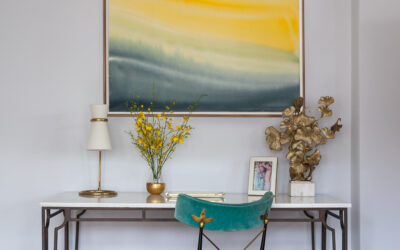
If the entryway is a sentence, the console table is the subject. It is the piece your eye lands on first, the surface that holds the objects you’ve chosen to represent your life to the world, and the platform upon which the rest of the composition is built. Choosing the right console is therefore not a casual decision—it is an architectural one.
Scale matters enormously. A console that is too small makes a foyer feel tentative; too large, and the room feels crowded before it’s begun. I look for pieces that occupy roughly two-thirds the width of the wall they’re set against, with a depth shallow enough to preserve circulation and a height that allows artwork or a mirror above to be read at eye level.
The Hamptons Wicker Scallop Console Table is a piece I reach for often. Its scalloped wicker detail adds visual warmth and texture that immediately distinguishes it from standard fare, while its proportions are refined enough for both a beachfront foyer and a traditional city entry. It is formal without being stiff—which is precisely the tone most luxury entryways should strike.
The Mirror: Light, Depth, and the Feeling of Arrival
Above the console, a mirror does three things simultaneously: it reflects light deeper into the home (critical in entryways that often lack windows), it creates a sense of expanded space, and it gives the arriving guest a moment of orientation—a chance to see themselves in the context of your home. That last function is more powerful than most people realize. A beautiful mirror above a carefully styled console tells your guest: this is a home that pays attention.
The Gilded Reflection Mirror, with its hand-applied gold leaf and substantial proportions, is the kind of piece that elevates a foyer from pleasant to memorable. It catches ambient light from adjacent rooms and scatters it across the entry, warming the space before a single lamp is lit.

The Lantern: Setting the Emotional Temperature
Overhead lighting in an entryway is not about brightness—it is about emotional temperature. A flush mount that is too clinical makes the space feel like a corridor. A fixture that is too ornate makes it feel like a stage set. The ideal entry light is warm, present, and proportional—a fixture that says welcome without shouting.
Lantern-style pendants are particularly well suited to entryways because their structure echoes architectural forms: the geometry of windows, the rhythm of paneling, the vertical lines of a doorway. The Belvedere Lantern, available in multiple sizes, allows this effect to scale with the space. In a double-height foyer, its clean lines and warm finish create presence without competing with the view or the staircase. In a smaller entry, it delivers the same warmth in a more intimate scale.
The Vignette: Styling Your Console with Intention
A console without objects is furniture. A console with the right objects is a vignette—a composed moment that communicates taste, history, and intention. The art of the console vignette lies in asymmetry, varied height, and restraint.
I typically build a console composition in three visual zones. On one end, height: a tall lamp or a vase with branches that draws the eye upward. In the center, a grounding object: a tray or a sculptural form that anchors the composition. On the opposite end, a smaller element—a candle, a box, a petite sculpture—that provides counterbalance without competing.
The Contour Forms, with their organic, sculptural silhouettes, provide exactly the kind of visual interest that a vignette needs in its center or at one end. The Heirloom Raffia Box adds texture and the gentle invitation of a hidden interior—guests always want to peek inside a beautiful box. And the Sanctuary Candle, with its warm scent and quiet presence, adds the dimension that no visual element can: fragrance. The moment you light it, the entryway goes from styled to alive.
The Small Details That Separate Good from Great
In the most memorable foyers I have designed, the magic lives in the details visitors do not consciously notice but absolutely feel. A subtle fragrance. The warmth of the light’s color temperature. The sound their shoes make on the floor—stone echoes differently than wood, which echoes differently than a layered rug on hardwood.
I always recommend a rug or runner in the entry. It absorbs sound, adds texture, and defines the space as a room in its own right rather than a threshold to pass through. Even a small, beautifully made rug changes the experience of arrival. And on the console, always leave one thing undone: a book left open, flowers not perfectly arranged, a key tossed casually beside the tray. Perfection feels staged. A beautiful room with one human gesture feels real.
Entryway Design: Your Questions Answered
What size console table is right for my entryway?
Measure your entry wall and aim for a console that spans roughly two-thirds of its width. Depth should be 12 to 16 inches for standard hallways. Height typically falls between 30 and 34 inches—high enough to style, low enough to see the mirror or art above.
How do I choose the right entryway mirror?
The mirror should be slightly narrower than the console beneath it. Hang it so the center is at eye level (approximately 57 to 60 inches from the floor). Frame material should complement—not match—the console.
What’s the ideal number of objects on a console table?
Between three and seven, depending on the console’s length. Odd numbers tend to feel more natural. Vary heights and textures, and leave some negative space—a cluttered console looks anxious, not welcoming.
Should my entryway lighting match the rest of the home?
It should be in conversation with the home’s overall style, but the entry is a wonderful place to make a slightly bolder or more distinctive choice. It sets the expectation for what’s to come.
Marais Chandelier
$2,300.00

Marais Woven Rattan Chest
$2,796.00

Sculptural Serenity Vase
$452.00
SOMETHING FOR EVERYONE
Before you go
Not sure what your style is? Take the two-minute Style Quiz and I’ll send you your look.