THE HOUSE THAT REMEMBERED THE WATER
There is a house on Siesta Key that I think about often. Not because it was the largest project or the most expensive, but because of what happened the first evening after we finished. My client—a woman who had spent thirty years in a traditional Colonial in Connecticut—walked barefoot through her new living room, past the rattan console and the woven pendant light that cast a lattice of shadow across the plaster walls, and stopped at the open French doors. The Gulf breeze moved through the room, lifting the linen curtains just slightly, and she turned to me and said: “This is the first home I’ve ever had that feels like it’s breathing.” That is what coastal design, at its best, can do. Not the coastal of seashell motifs and navy-striped pillows—though there is a place for those—but a deeper, more considered approach where the architecture, the materials, and the furnishings all defer to the same source: the water, the light, and the rhythm of a life lived near the sea.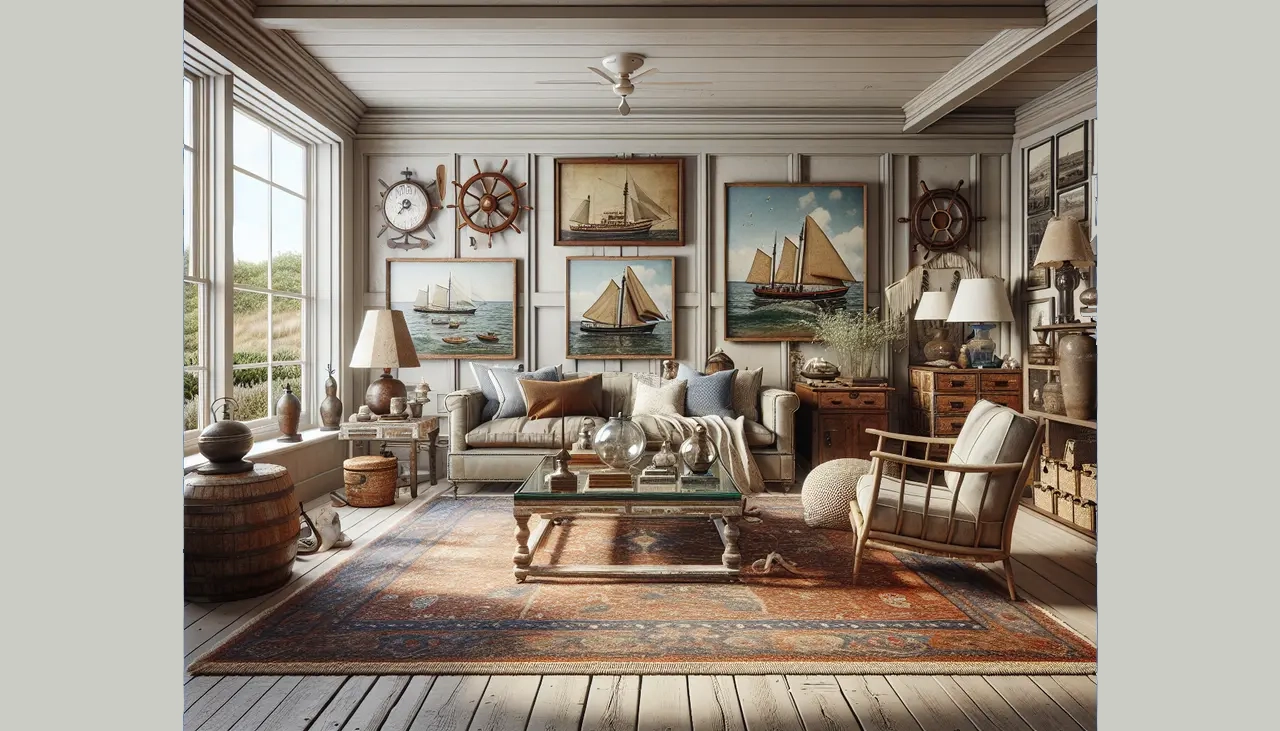
“Coastal design isn’t a theme. It’s a relationship with a place.”
BEYOND THE CLICHÉ: WHAT COASTAL SANCTUARY ACTUALLY MEANS
The word “coastal” has been so thoroughly commercialized that it takes deliberate effort to reclaim it. In luxury residential design, a coastal sanctuary is not defined by its palette (though palette matters) or its accessories (though they play a role). It is defined by how the space interacts with its environment—how it admits light, channels airflow, and uses materials that feel native to the shoreline rather than imported from a catalog. This means rattan that is hand-woven and beautifully scaled, not mass-produced and flimsy. It means linen that drapes with weight and texture, not polyester that merely looks the part. It means lighting that filters and diffuses the way sunlight does through sea grass—which is precisely what the Marin Woven Wicker Ceiling Light achieves. Suspended above a dining table or in a foyer, it creates an atmosphere of filtered coastal light that no recessed can will ever replicate.THE RATTAN REVIVAL: CRAFT, WARMTH, AND TEXTURE
Rattan has resurfaced in high-end design with a sophistication that would have surprised even its most ardent champions a decade ago. The material—a palm that grows in tropical forests and has been used in furniture making for centuries—carries a lightness and warmth that heavier woods cannot achieve. But the new generation of rattan pieces is anything but casual. The Hamptons Wicker Scallop Console Table is a case in point. Its scalloped detail and refined proportions give it a formality that works as beautifully in a Nantucket foyer as it does in a Sarasota great room. It bridges the gap between relaxed and refined—which is, ultimately, what coastal sanctuary design is about. Similarly, the Marigot Rattan Table Lamp and the Cala Rattan Floor Lamp bring handwoven texture into a room without tipping it toward resort-wear. Paired with brass hardware and crisp white plaster walls, rattan becomes a grounding element rather than a decorative afterthought.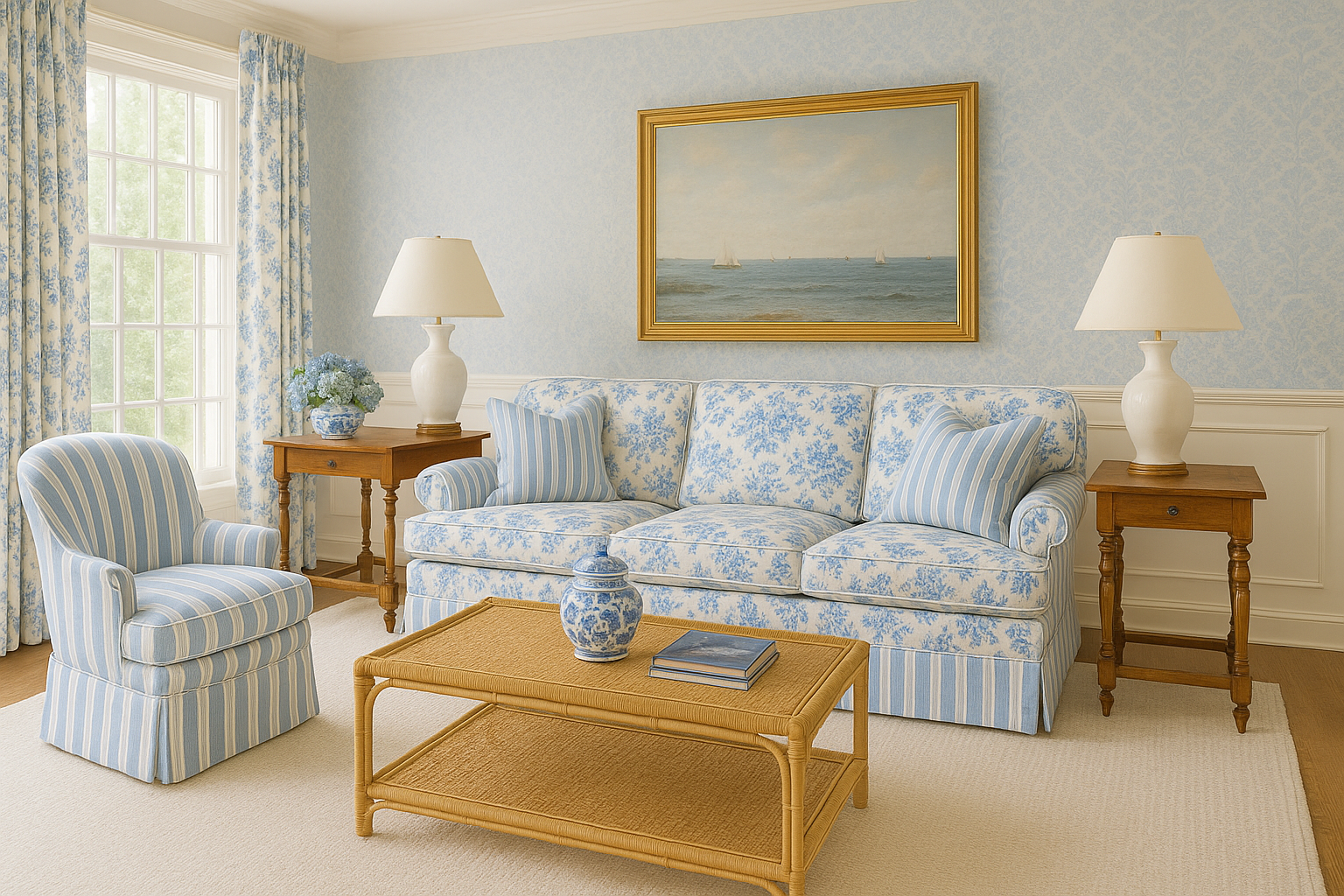
LIGHT AS A DESIGN MATERIAL
In coastal homes, light is not just a practical necessity—it is a design material in its own right. The quality of light along the Gulf Coast is markedly different from the light on Cape Cod, which is different still from the light in Southern California. A well-designed coastal home responds to its specific light: large windows placed to capture morning east light, sheer linens that soften harsh afternoon sun, and fixtures that create warm pools of gold after sunset. This is why I gravitate toward woven and rattan lighting in coastal projects. The patterns they cast—dappled, organic, ever-shifting with the sun’s arc—echo the natural play of light through tree canopy and water. It’s a subtle effect, but it’s the kind of detail that makes a space feel deeply connected to its site.BUILDING A COASTAL TABLESCAPE
The dining table is where coastal living comes into focus. I think of the table as a landscape in miniature—and in a coastal sanctuary, that landscape should echo the textures and rhythms of the shore. The Sonoma Rattan Charger is a piece I use constantly: it adds a woven, organic layer beneath dinnerware that immediately softens a formal setting without making it feel casual. Add hand-thrown ceramics, linen napkins in faded sea tones, and a low arrangement of dried grasses or local shells, and you have a table that feels like an extension of the environment rather than a break from it. This is the goal: continuity between inside and out, between the designed and the found.REFLECTIONS: MIRRORS IN THE COASTAL HOME
Mirrors in a coastal home serve a dual purpose: they amplify light and they frame the landscape. The Palma Rattan Gold Vanity Mirror, with its woven rattan frame and warm gold accents, does both. Placed in an entryway or a bathroom, it bounces light deeper into the room while adding a textural element that feels native to the coast. The key to mirrors in coastal design is choosing frames that feel organic. Avoid cold chrome or stark black—reach instead for materials that carry warmth: rattan, brass, natural wood. The frame should feel like it belongs to the room, not like it was borrowed from a different house.FREQUENTLY ASKED QUESTIONS
Can coastal design work in a non-coastal location?
Absolutely. Coastal sanctuary is a feeling, not a geography. The principles—natural light, organic materials, a connection to the outdoors—translate beautifully to lakefront homes, mountain retreats, and even urban apartments that want a sense of calm.
How do I keep coastal design from looking like a beach rental?
Quality of materials and restraint. Choose fewer, better pieces. Invest in handwoven rattan over machine-made. Use a sophisticated palette—warm whites, sand, sage, driftwood—rather than the expected blue-and-white. And always, always edit.
Is rattan furniture durable for daily use?
High-quality rattan is remarkably durable. Look for tight, consistent weaving and solid frames. Our pieces are designed for both beauty and daily life. With basic care, rattan ages gracefully for decades.
What colors pair best with rattan and wicker?
Warm whites, soft creams, sandy neutrals, and sage greens are ideal. For contrast, deep olive or navy can create a sophisticated backdrop that makes rattan glow.

SOMETHING FOR EVERYONE
THE PIECES RACHEL RETURNS TO, AGAIN AND AGAIN


Before you go
Not sure what your style is? Take the two-minute Style Quiz and I’ll send you your look.