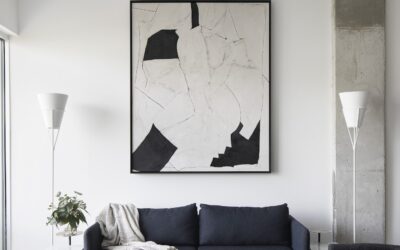
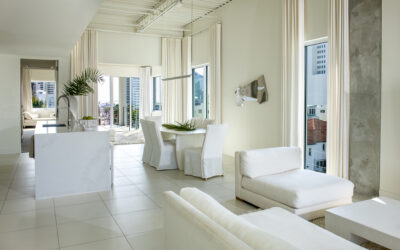
Our homes are more than the structures we live in—they are quiet collaborators in who we become. The right environment can make you calmer, sharper, and more capable; the wrong one drains energy you never realize you’re spending. After more than fifteen years designing residences, I’ve come to see interior design less as decoration and more as behavioral architecture: the deliberate shaping of spaces that help the people inside them function at their best.
A high-functioning home doesn’t happen by accident. It’s built through systems—how you organize your belongings, how you let light move through the day, how you design a kitchen that feeds both body and mind, and how you carve out room to recover. Here’s how I think about each one, with practical steps you can put in place this week.
The Architecture of Organization
Minimalism is a starting point, but organization is the operating system. A calm home isn’t about owning less for its own sake—it’s about designing storage and flow so every object has a logical home and every daily ritual has a dedicated stage.
High-functioning adults don’t spend cognitive bandwidth hunting for keys or excavating a closet. They live in homes with intentional zones: an entryway that catches the day’s chaos before it spreads, kitchen drawers that separate prep tools from serving pieces, a closet edited until getting dressed is a five-minute decision. I treat storage as architecture, not an afterthought—built-in millwork, concealed charging drawers, furniture that quietly doubles as filing. Done well, the organization disappears into the design.
Try this: Create a “landing zone” by your main entrance—a small surface for mail, a hook for bags, a drawer for keys and sunglasses. Two minutes resetting it each evening buys you twenty minutes of morning calm.
Light That Follows the Day
Natural light is one of the most powerful—and most overlooked—tools in a home. It lifts mood, sharpens focus, and steadies sleep by anchoring your circadian rhythm. Morning light especially tells your brain the day has begun.
Maximize it: keep windows unobstructed, add a skylight where you can, and place mirrors to bounce daylight deeper into a room. Orient a desk or breakfast table toward eastern exposure, and consider sheer shades that rise with the sun. The goal is a home that feels awake when you need to be, and softens as the day winds down.
Workspaces With Boundaries
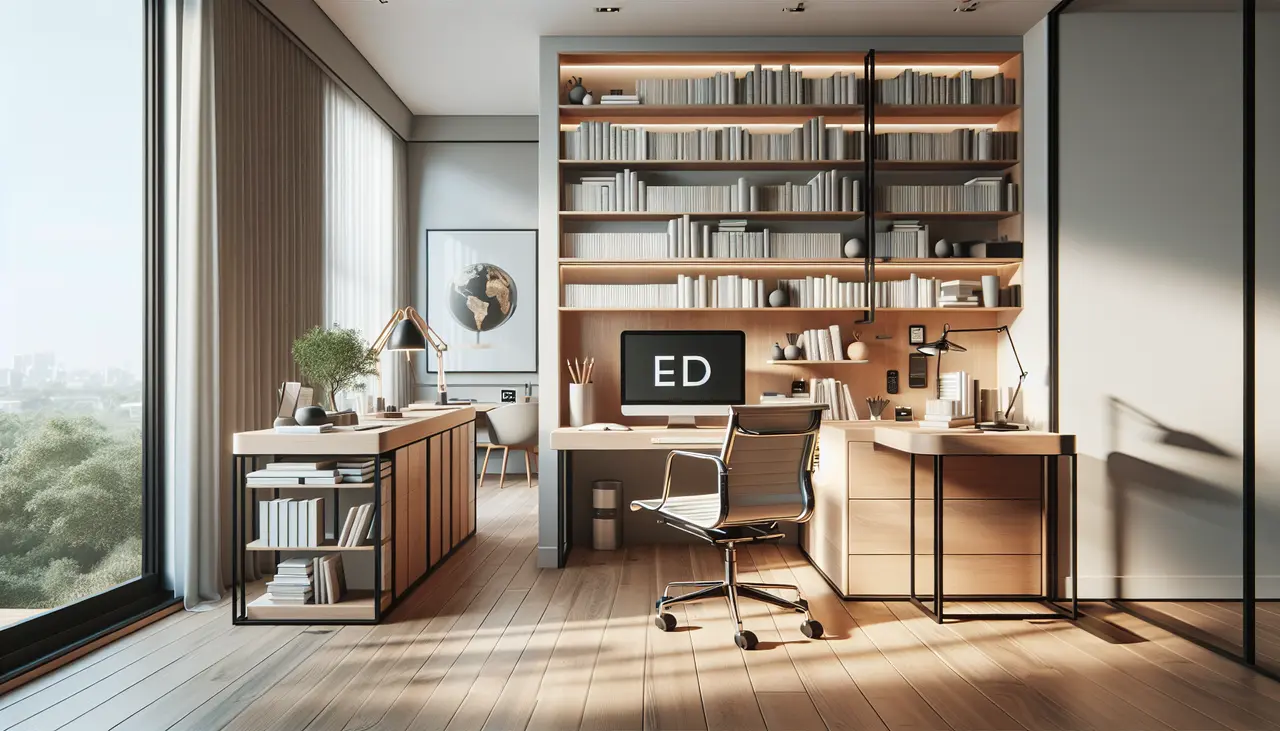
In a work-from-anywhere world, a functional home office is no longer a luxury. But the most productive ones share a single trait: boundaries. When the day ends, the space should be able to transform.
Carve out a dedicated zone—even a compact one—with an ergonomic layout and layered lighting that supports the full rhythm of work and rest. A rolling desk that tucks into a cabinet, or a folding screen that visually separates “office” from “living room,” protects both your focus during the day and your recovery in the evening.
The Edible Home: Growing Food for Nutrient Density
A high-functioning home feeds the people in it—literally. Growing even a little of your own food isn’t a rural hobby; it’s a design strategy with a real health dividend. Produce begins losing nutrients the moment it’s picked, and by the time most fruits and vegetables are harvested early, shipped, and stored, much of their vitamin content is gone. Food you grow and pick steps from your kitchen is eaten at its peak—more flavor, and far more of the nutrient density that makes healthy eating worth the effort.
Fruit Trees as Living Sculpture
Dwarf citrus—Meyer lemon, calamondin orange—thrives in a sunny window or on a protected patio, offering glossy green year-round and fragrant blossoms that become breakfast. Outdoors, an espaliered apple or fig trained flat against a wall becomes an architectural focal point that also produces fruit. A potted olive by a south-facing window doesn’t just look Mediterranean; it feels like a small promise of patience and longevity.
The Purple Bok Choy Principle
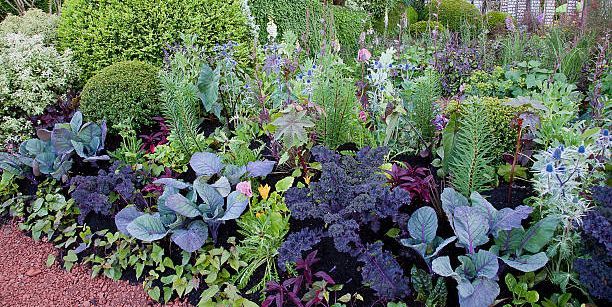
Not every kitchen garden hides in a backyard plot. Purple bok choy, with its violet stems and ruffled leaves, is as beautiful as any ornamental—and far more useful. Grown in a shallow planter on the counter or a raised bed visible from the dining room, it’s what I call edible design: nourishment that doesn’t sacrifice visual impact. A windowsill of herbs means fresh basil for Tuesday’s pasta without a grocery run. A tray of microgreens adds living texture to a backsplash and nutrients to lunch. When food production is woven into the look of your home, eating well stops being a chore and becomes part of your environment.
Try this: Start with three containers where you’ll see them daily—one for herbs (basil, rosemary, thyme), one for nutrient-dense leafy greens (purple bok choy, kale, arugula), and one for a dwarf tomato or pepper. Visibility is what drives consistency.
Room to Restore
A truly supportive home holds space for rest, movement, connection, and solitude. These aren’t indulgences—they’re what sustain a high-functioning life. A yoga nook with a mat rolled into a beautiful basket, a reading alcove with task lighting calibrated for evening wind-down, an open kitchen that keeps conversation flowing while dinner comes together: each one gives a different part of you somewhere to land.
I often build small daily rituals into a kitchen or dining design—a table scaled for real conversation, where “what did you learn today?” becomes part of the meal. These aren’t decorative choices. They’re behavioral architecture: the habits of a good life made physical.
Calmly Colorful: The Role of Color and Texture
My work is often described as “calmly colorful,” and that balance is deliberate. Color and texture are sensory data points: they shape mood and perception, and used with intention they can invigorate the spirit without overwhelming the mind. The deep violet of a bok choy stem, the warm ochre of a ripe lemon against glossy leaves, the matte grain of an unglazed terra-cotta pot—none of these are random. They keep the eye engaged and the nervous system settled at the same time. Texture adds the depth that makes a room feel considered rather than staged.
A Home That Helps You Become
Put it all together and a home stops being a passive container and becomes an active partner: organization that disappears into the millwork and gives back your mental bandwidth, light that regulates your energy, workspaces that protect your focus, and edible gardens that nourish both the eye and the body. That’s what I mean by a high-functioning home—not a showpiece, but a foundation for a life that’s well-lived and well-loved.
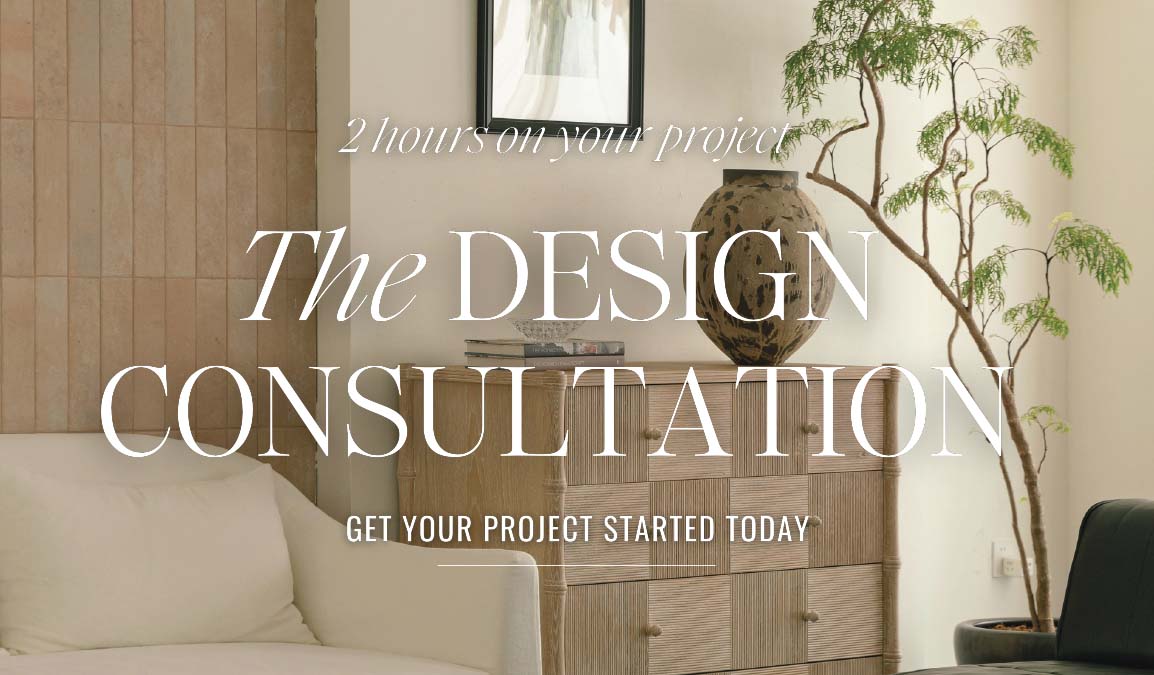
If you’d like help designing yours, I’d love to talk it through. Book a design consultation—virtual or in person—and we’ll build a home that works as beautifully as it looks.
SOMETHING FOR EVERYONE
THE PIECES RACHEL RETURNS TO, AGAIN AND AGAIN