The word “cozy” has been so thoroughly weaponized by the home decor industry that it has nearly lost its meaning. Cozy, in the language of fall marketing, means: add a chunky knit blanket, burn a candle, place three decorative pillows you will move every night before bed.
That is not what cozy means. Cozy is a technical quality of a room—a specific combination of scale, texture, light temperature, and material warmth that makes a space feel protective and restorative. It can be achieved in virtually any aesthetic, and it has nothing inherently to do with beige.
Scale is the first variable
The human nervous system responds to scale. Rooms where the ceiling feels closer, where furniture fills the space proportionately, where the human body feels properly nested rather than exposed, read as private and restorative. In a bedroom, your bed should be generous relative to the room. A king bed in a small room often creates more coziness than a queen—counterintuitive, but real. The bed becomes the room’s anchor, and the body feels correctly housed by it.
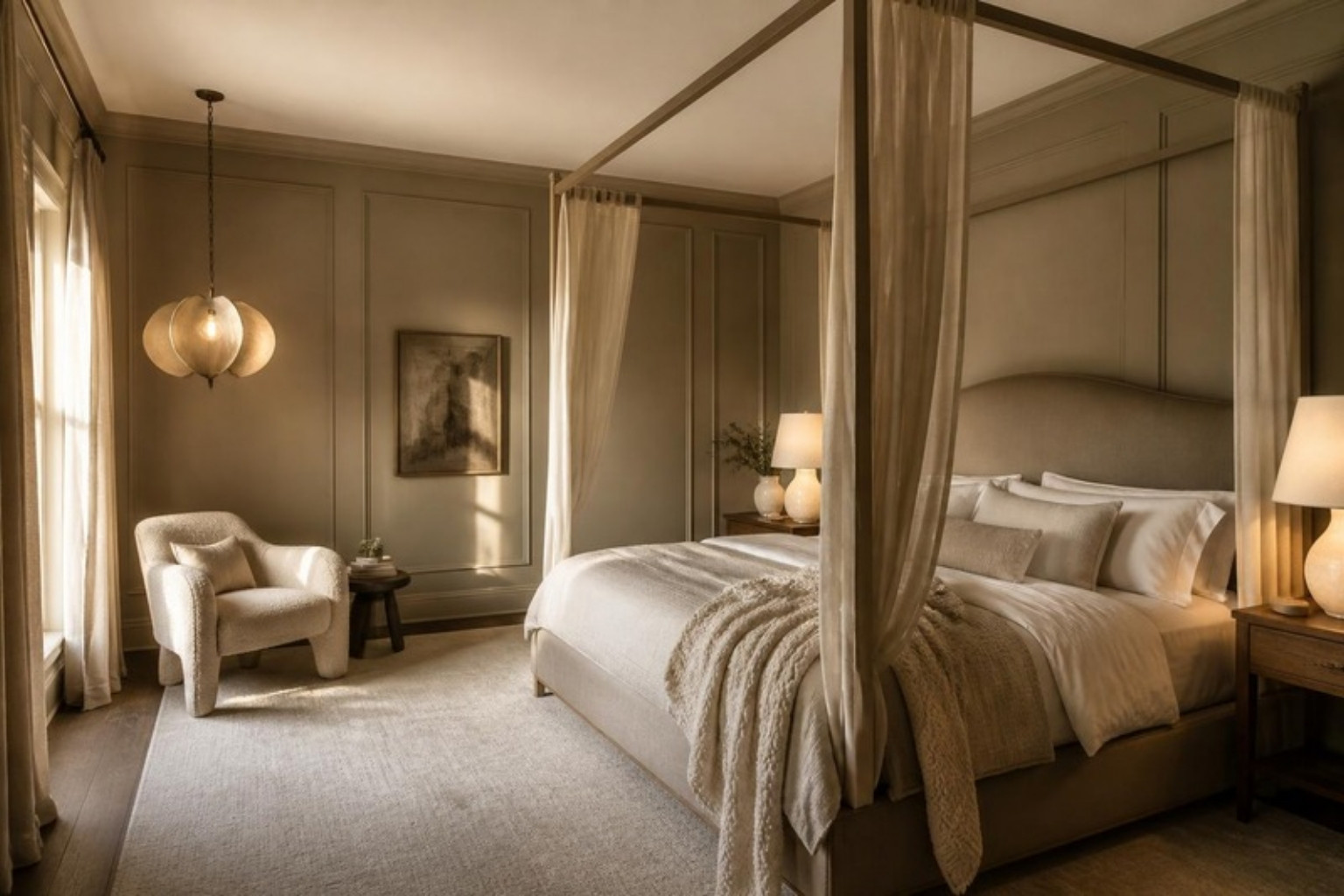
If you have high ceilings, bring them down visually: a statement ceiling light hung low, a canopy bed or curtains hung from ceiling to floor, artwork that draws the eye across rather than up. You’re not making the ceiling lower—you’re redirecting attention to the human scale of the space.
The Cozy Bedroom Edit

Dune Handwoven Cotton Coverlet
From $485

Hand-Loomed Cotton Throw
$79

Sorrento Alabaster Dome Table Lamp
$2,995
Texture is the second variable—and the most underused
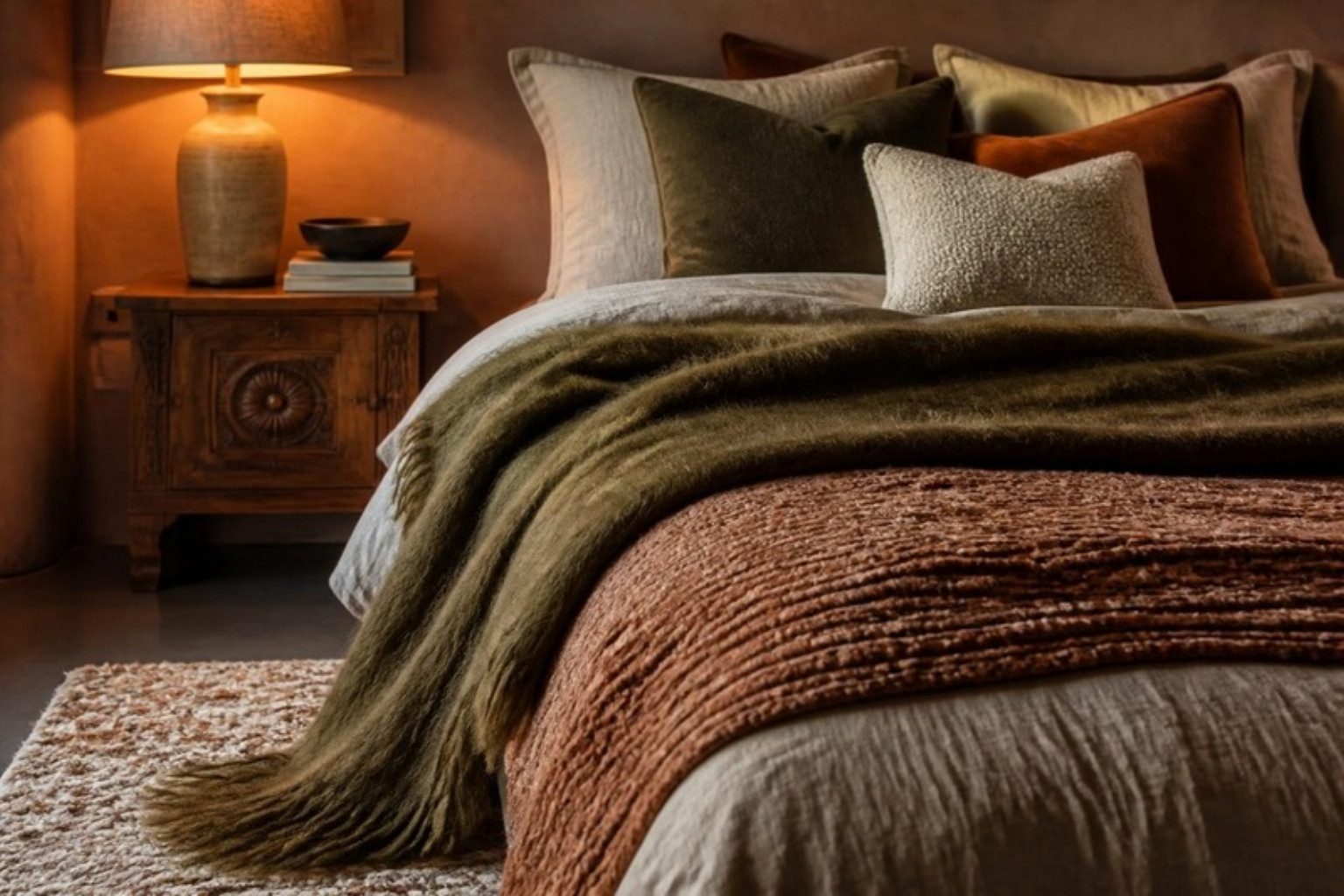
A room with a single texture feels flat and uninviting no matter what color it is. A room with multiple textures—even in a very limited palette—reads as rich, layered, and warm. For a bedroom, I aim for at least five distinct textures: the smoothness of a painted wall, the weight and drape of linen or cotton bedding, the pile of a rug underfoot, the grain of a wood nightstand, and something soft—a throw, an upholstered headboard, a fabric lampshade—that the eye can rest on.
You don’t need expensive materials. A rough-weave cotton duvet cover, a jute rug, a wooden bed frame, linen curtains, and a ceramic table lamp create the full texture spectrum at modest cost. The key is variety of surface—smooth to rough, soft to hard, matte to slightly shiny.
Light temperature is everything
This is the single most impactful and most neglected variable in bedroom design. The color temperature of your light sources determines whether your room feels warm or clinical regardless of what’s on the walls. Most people have bulbs that are far too cool (4000K or above)—the light equivalent of a fluorescent office ceiling.
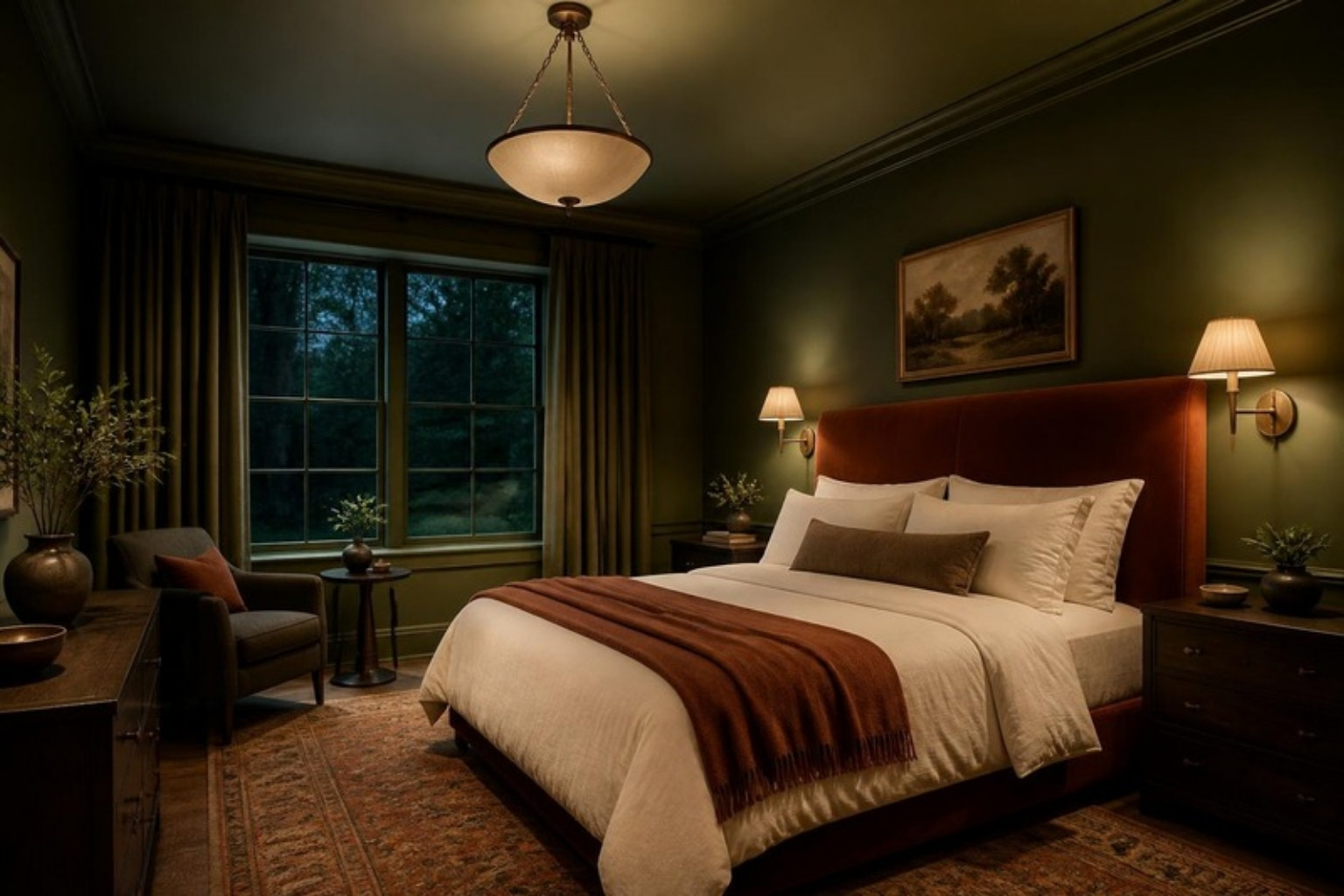
For a bedroom, every bulb should be 2700K or warmer—the color temperature of incandescent light, the warm amber light that humans have been falling asleep by for most of history. Switch every bulb in your bedroom to 2700K this week and watch the room change immediately. Beyond color temperature: overhead light is the enemy of cozy. Layer your bedroom lighting with bedside lamps at eye level, a low ambient source, and a focused reading light. The room should be lit from multiple low sources, not one high one.
Color that actually creates cozy
Beige is not cozy. Beige is neutral—it gets out of the way without adding much. Genuinely cozy bedroom colors are warm putty or plaster tones (Benjamin Moore’s Pale Oak, Farrow & Ball’s Elephant’s Breath), soft desaturated greens like sage or dusty olive that lower cortisol and feel organic, or deep enveloping tones—navy, forest green, deep plum—which, when paired with warm-temperature lighting, create a cave-like intimacy that is the most genuinely cozy effect in interior design. These colors feel radical until you’re inside them, at which point they feel inevitable.
The truly cozy bedroom is a considered space where every decision about scale, texture, light, and color has been made in service of how the body and mind feel inside it. Get those things right, and you won’t need the seasonal throw pillow.
Rachel Blindauer is an award-winning interior designer based in St. Louis. She offers 2-hour design consultations virtually and in person. Book at rachelblindauer.com.


Textured Waffle Weave Pillow
$127

Marais Chandelier
$2,300

Winslow Round Side Table
$2,224
SOMETHING FOR EVERYONE
THE PIECES RACHEL RETURNS TO, AGAIN AND AGAIN
Before you go
Not sure what your style is? Take the two-minute Style Quiz and I’ll send you your look.