“Wood finishes tell the story of an era—sometimes beautifully, sometimes a little too literally.” — Rachel Blindauer
In every home I enter, wood is one of the first things I notice. It reveals not just taste, but time. It can quietly elevate a space—or unintentionally trap it in a design decade we’ve long since moved past. As an interior designer, I believe updating these finishes doesn’t always require a gut renovation. Sometimes, a more restrained, informed touch is all it takes to shift a home from dated to timeless.
Here are five wood finishes that tend to reveal a home’s age, and the strategies I use to help clients refresh them without losing their original character.
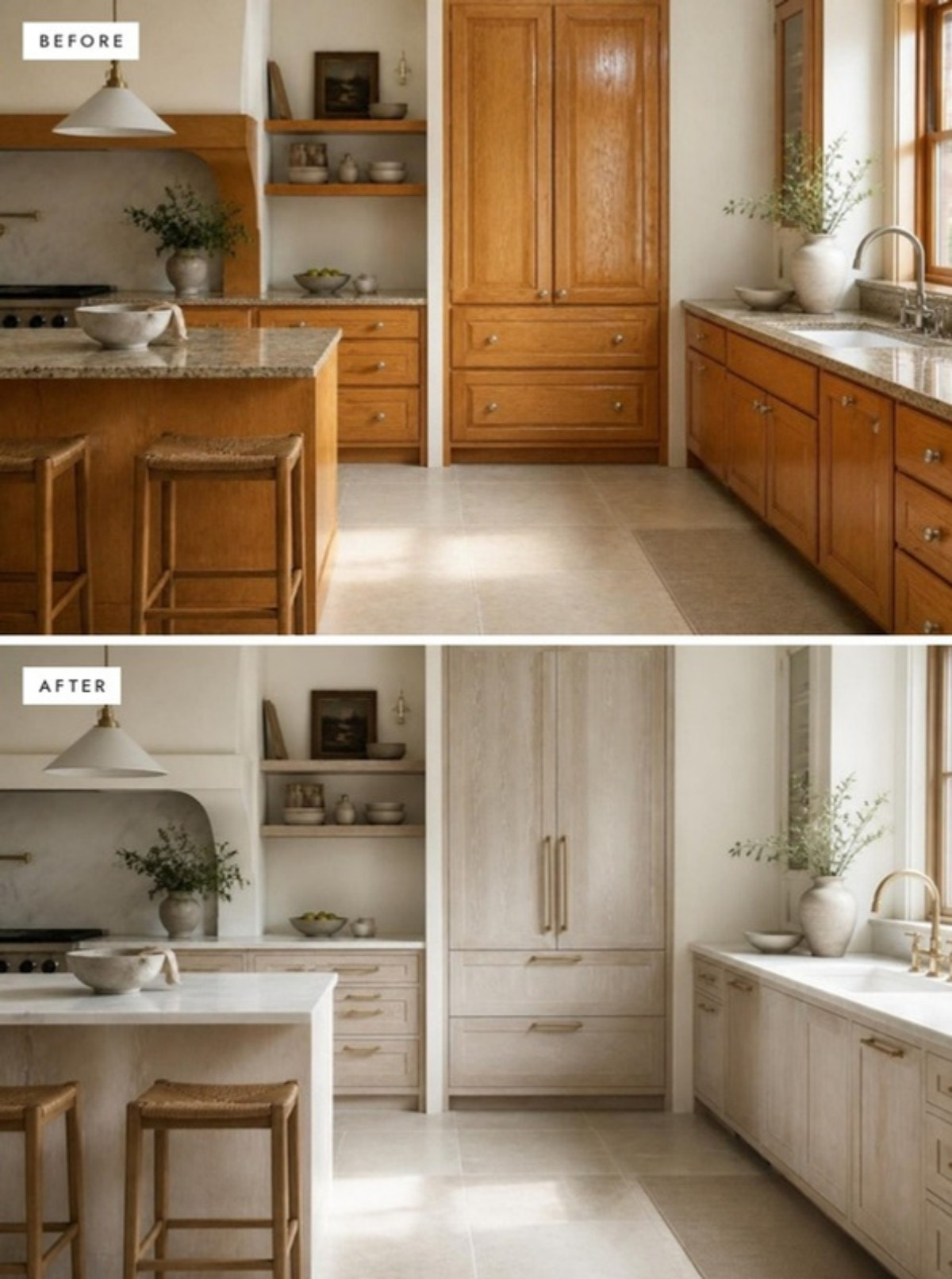
Orange-Toned Oak (1990s Builder Grade)
Why it dates your home: That telltale honey-orange hue found in so many suburban builds of the late ’80s and ’90s casts a warm, artificial glow that clashes with today’s cooler, more neutral palettes. It lacks the tonal depth we now associate with luxury.
How to update it: Skip the gray-wash trend, which often feels equally artificial. Instead, consider stripping and refinishing the oak in a mid-tone neutral. A lime-wash can also desaturate the yellow-orange undertones for a more sophisticated base. Pair with matte black or unlacquered brass hardware to introduce contrast and quiet tension.
“When a wood finish feels loud, the solution isn’t silence—it’s harmony.”
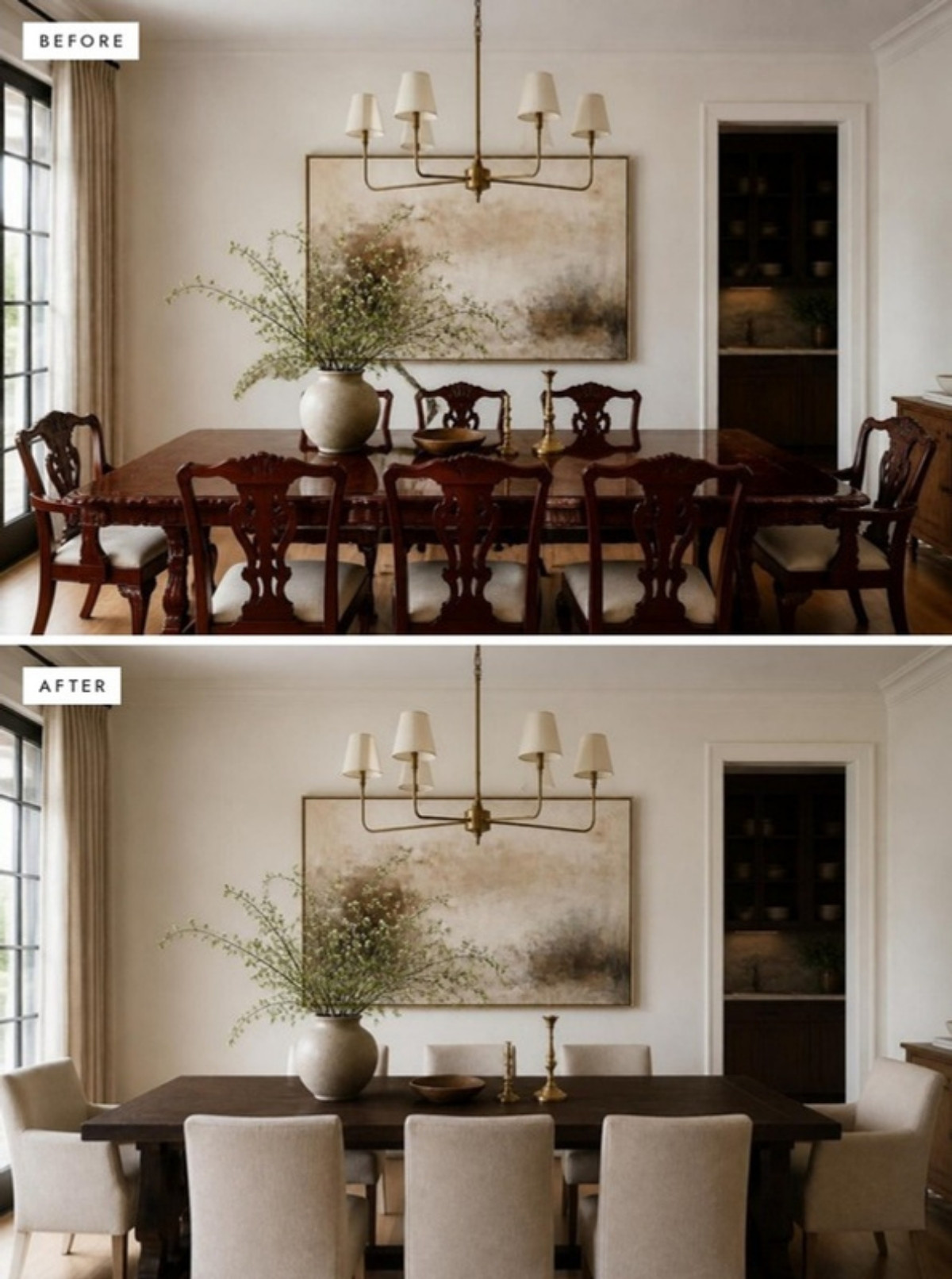
Red Mahogany with High Gloss (Early 2000s Formal)
Why it dates your home: This high-gloss stain, often seen in oversized dining sets or ‘executive’ home offices, creates a sense of heaviness that feels disconnected from the relaxed, layered interiors of today. It absorbs light and anchors the room—not always in a good way.
How to update it: A matte recoat or tinted wax can tone down both the sheen and the red. Surround the piece with textured materials—think bouclé upholstery or abstract linen art—to soften the weight and modernize the environment.
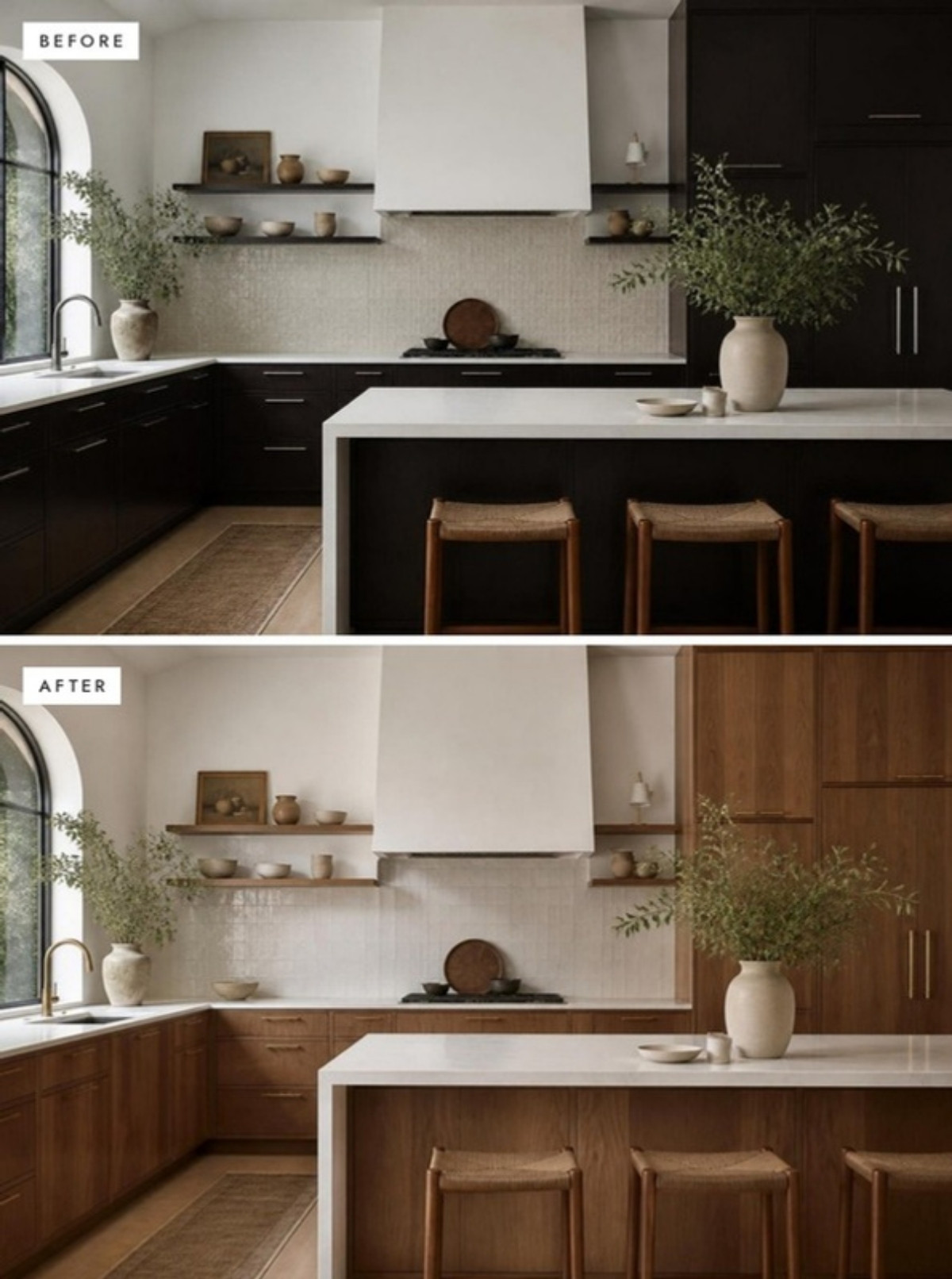
Espresso-Stained Cabinets (Mid-2000s Spec Homes)
Why it dates your home: Espresso cabinetry, popular in kitchens and bathrooms circa 2005, can now feel too slick and one-note, especially in rooms that lack abundant light.
How to update it: Hardware is a quick win—swap out chrome for aged brass or matte bronze. Layer in warm materials nearby: creamy Zellige tile, marble counters, or linen roman shades. If refinishing is an option, shift to a natural walnut tone for a warm yet contemporary feel. Explore cabinetry options and styling inspiration at shop.rachelblindauer.com.
Pieces to Pair With Wood

Prescott Brass Cabinet Pull
$45.00

Prescott Brass Appliance Pull
$56.00

Globe Brass Cabinet Pull
$97.00
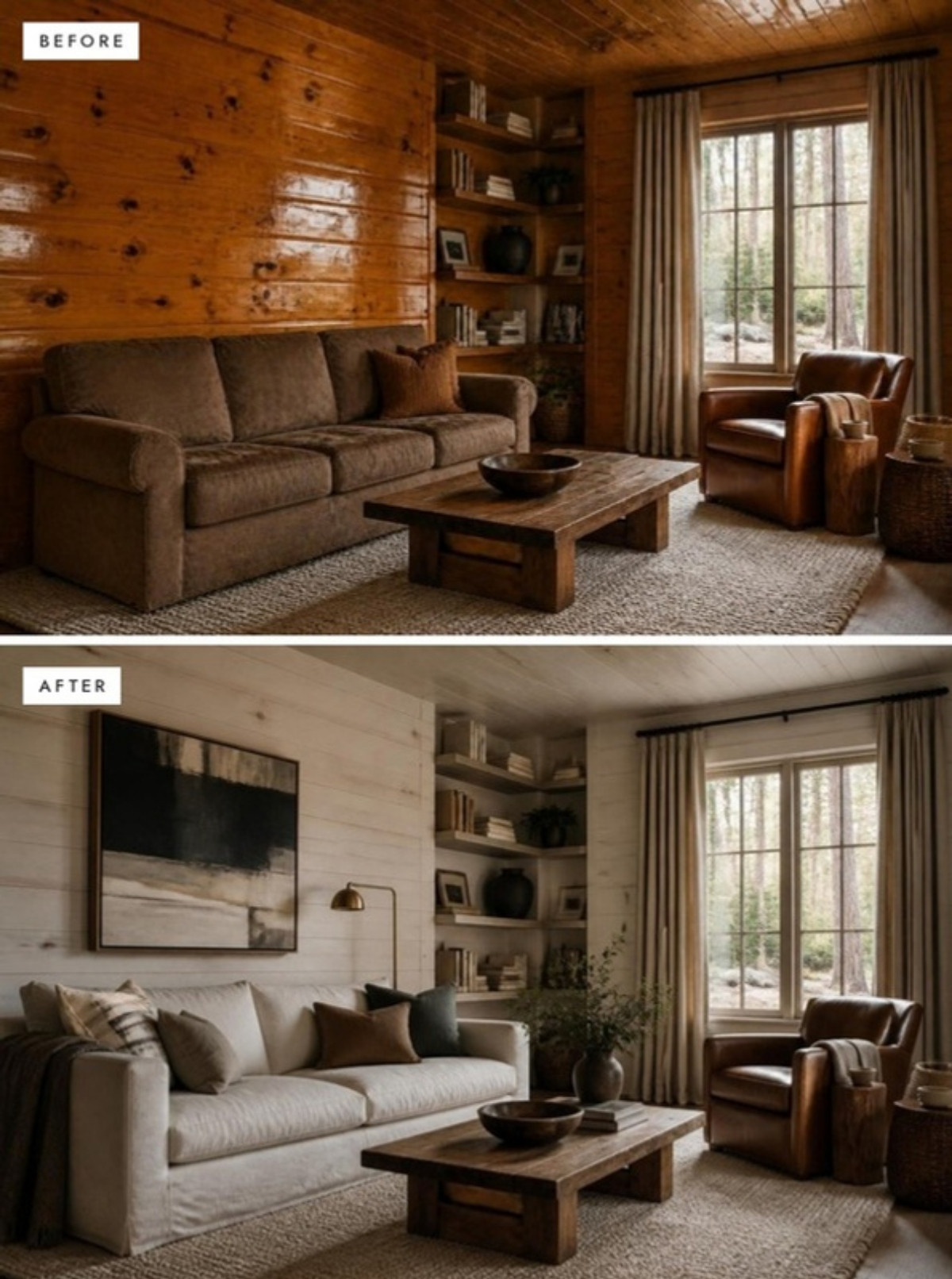
Knotty Pine (1970s Cabins & Basements)
Why it dates your home: Knotty pine paneling often evokes nostalgia—just not the right kind. Its yellowing hue and strong grain can overpower and darken a space.
How to update it: Preserve its character while toning it down. Whitewashing or limewashing neutralizes the color while keeping the texture. In some homes, painting the walls and leaving the ceiling pine creates a rustic yet modern balance. Explore more on how to layer textures with intention in our styling blogs.
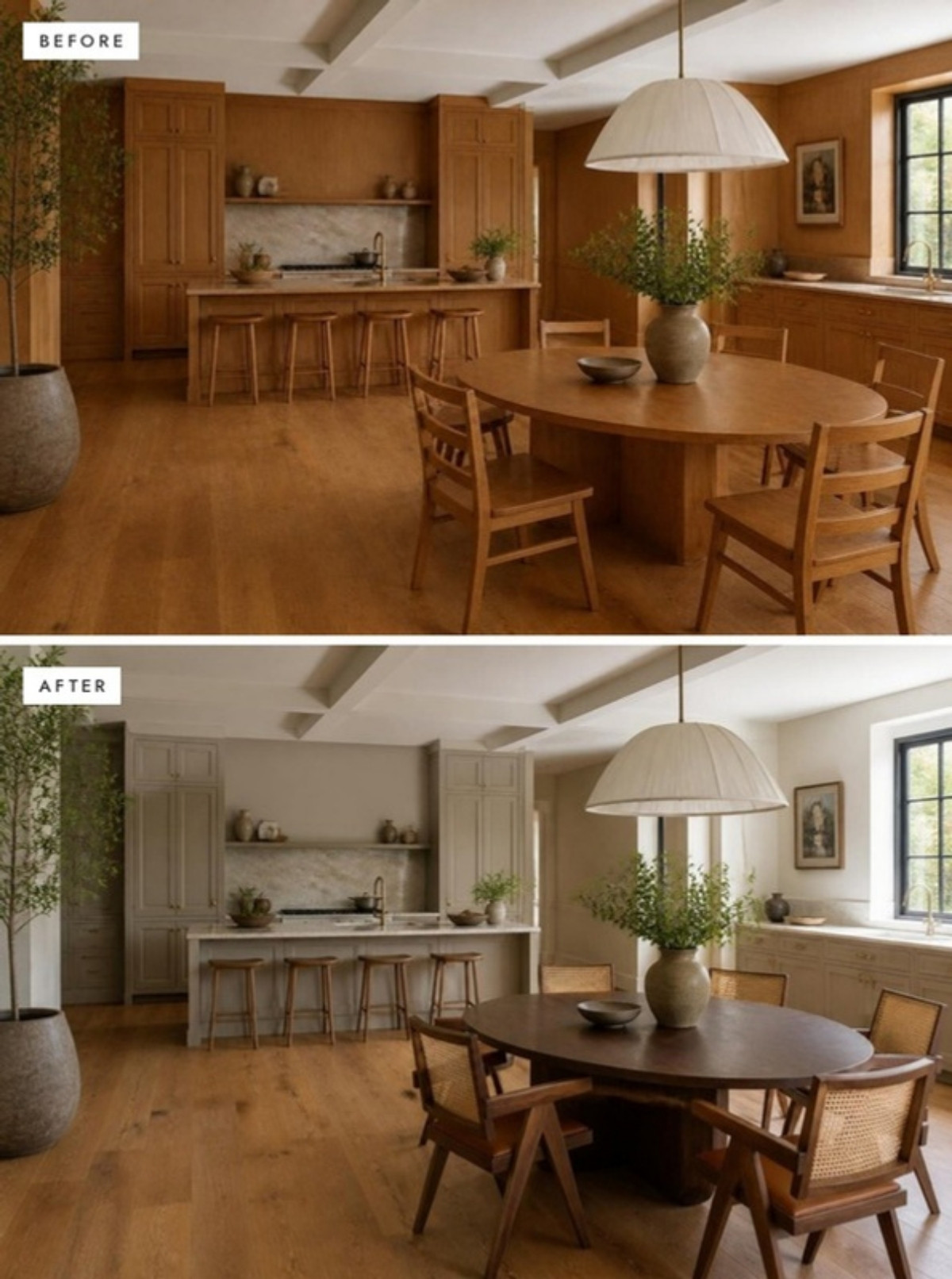
Matchy-Matchy Wood Sets
Why it dates your home: Matching floors, cabinetry, and furniture in the same wood tone creates a flat, showroom feel. While once a marker of “cohesive design,” it now reads as safe and overdone.
How to update it: Break the visual repetition. Leave the floors, but re-stain or paint the cabinetry. Introduce other materials like leather, cane, stone, or painted finishes. Layer in textile accents from our curated shop collection to bring contrast and dimension.
“Updating a dated wood finish isn’t about erasing the past. It’s about giving it new context.” — Rachel Blindauer
Considering a Renovation?
About Rachel Blindauer
Rachel Blindauer is an award-winning interior and product designer known for crafting spaces that feel as intelligent as they look. With over 15 years of experience, her work blends architectural clarity with emotional depth—transforming outdated interiors into refined, modern environments with soul.

Vauclair Oak Sideboard
$6,825

Amara Block Print Lumbar Pillow
$108

Westcott Arc Table Lamp in Aged Brass & Linen
$769
SOMETHING FOR EVERYONE
THE PIECES RACHEL RETURNS TO, AGAIN AND AGAIN
Before you go
Not sure what your style is? Take the two-minute Style Quiz and I’ll send you your look.