Over fifteen years of designing homes — and many more years of studying the ones that move me — these are the books that have genuinely shaped how I see space, proportion, material, and the relationship between a room and the life lived in it. This is not a list of every important design book. It is a list of the ones I return to, the ones I press into clients’ hands, and the ones I believe belong on the shelf of anyone who takes beautiful spaces seriously.
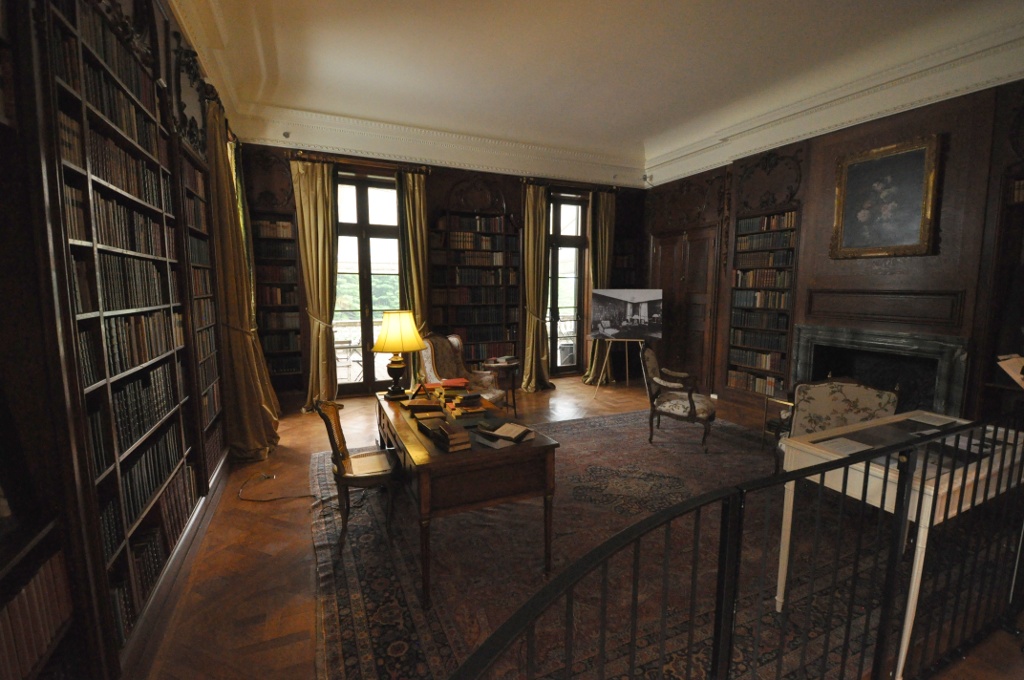
The library at The Mount, the house Edith Wharton built for herself in Lenox, Massachusetts. Photo by Magicpiano, CC BY-SA 3.0, via Wikimedia Commons.
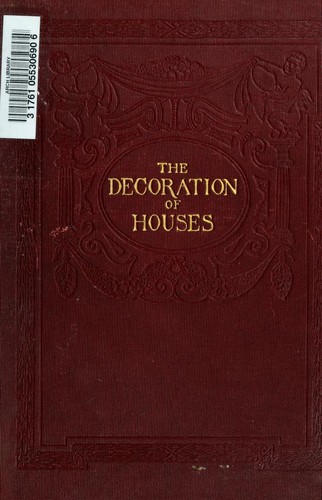
1. The Decoration of Houses — Edith Wharton & Ogden Codman Jr. (1897)
The foundational text of American interior design — and still one of the most radical. Wharton and Codman argued, against the cluttered fashion of their era, that rooms should be designed around proportion, logic, and how people actually live. Nearly every principle of refined interior design traces back to this slim volume. If you read only one book on this list, let it be this one.

Alain de Botton. Photo by Fronteiras do Pensamento, CC BY-SA 2.0, via Wikimedia Commons.
2. The Architecture of Happiness — Alain de Botton (2006)
A philosopher’s inquiry into why certain buildings make us feel at peace and others make us anxious, why we need beauty, and what our spaces say about who we aspire to be. De Botton writes with the kind of clarity that makes complex ideas feel obvious in retrospect. This book changed how I articulate the purpose of my work to clients — and to myself.
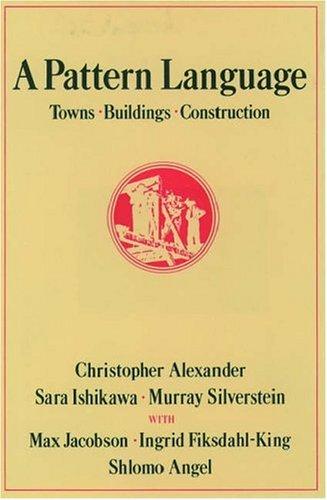
3. A Pattern Language — Christopher Alexander, Sara Ishikawa & Murray Silverstein (1977)
Not a decorating book. Something far more important: a catalog of 253 design patterns — from the scale of cities down to the depth of a window seat — that make built environments feel human and life-supporting. Alexander’s insight that good design is not about style but about the relationship between space and human behavior has been quietly influential on every project I’ve done.
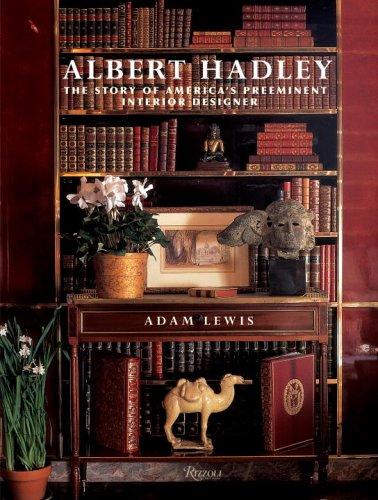
4. Albert Hadley: The Story of America’s Preeminent Interior Designer — Adam Lewis
Hadley’s rooms — spare, witty, perfectly proportioned, unmistakably alive — represent the highest tradition of American decorating. This biography traces the evolution of his taste and method across a sixty-year career. The photographs alone are an education in what restraint, done with absolute confidence, actually looks like.
5. Interior Design Master Class — edited by Carl Dellatore (2016)
One hundred essays by one hundred of America’s finest designers — including Alexa Hampton, Miles Redd, Thomas O’Brien, and Nina Campbell — each on a specific aspect of their craft. No other single volume gives you such direct access to the thinking of designers at the top of their field. I have never met a designer who regretted reading it.
6. Axel Vervoordt: Wabi Inspirations — Axel Vervoordt
The Belgian antiquaire and designer’s meditation on time, imperfection, and the beauty of the unresolved. Vervoordt’s rooms — stripped to their most essential elements, furnished with ancient artifacts and raw materials, illuminated by natural light alone — represent the quiet, material-led aesthetic that defines the most sophisticated interiors of the last two decades. Essential reading for understanding where refined design is headed.
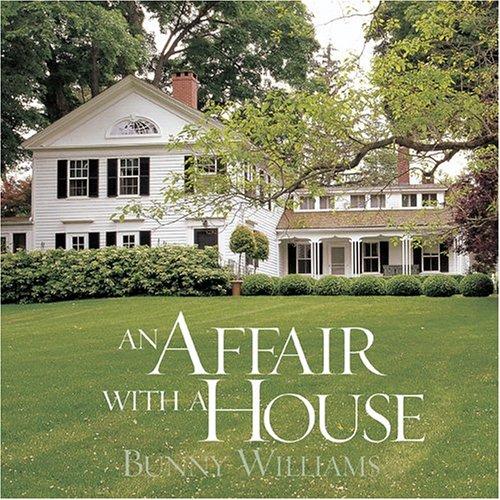
7. Bunny Williams: An Affair with a House — Bunny Williams (2004)
Williams’s house in Connecticut is one of the most instructive interiors in design history — not because it is perfect, but because it is so deeply personal. This book is a masterclass in mixing antiques with contemporary pieces, layering pattern without chaos, and creating rooms that feel genuinely lived in rather than curated for approval. Williams writes with warmth and enormous practical intelligence.
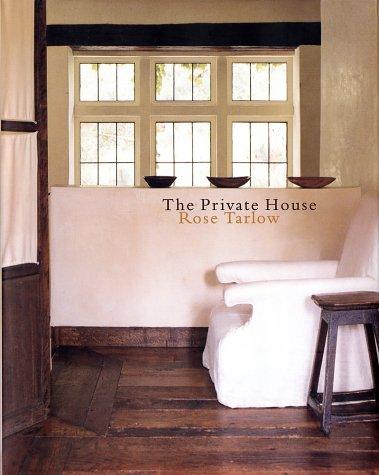
8. Rose Tarlow: The Private House — Rose Tarlow (2001)
Reclusive, exquisite, and deeply particular. Tarlow’s rooms prove that quiet confidence is the highest form of decoration — that you don’t need to explain yourself when everything in the room has been chosen with absolute conviction. This is a book to study slowly, over many readings.
9. Sister Parish Design — Apple Parish Bartlett & Susan Bartlett Crater
Sister Parish defined the American country house aesthetic for a generation of clients who included Jackie Kennedy. Her rooms were confident, colorful, deeply personal, and absolutely at ease with themselves. This book is a biography and a portfolio, and both are essential: understanding where a designer’s taste comes from is as instructive as seeing what it produces.
10. Learning to See — Vicente Wolf (2009)
Wolf is the master of the spare, light-filled, travel-influenced room — spaces that feel simultaneously global and deeply intimate. This book explains how he trains his eye: through travel, through collecting, through sustained attention to the way light behaves in different climates and latitudes. It is the most practical book I know about developing genuine visual intelligence rather than just following trends.
11. Chic Living — Mark D. Sikes (2016)
California ease married to classical bones, with an unwavering commitment to blue-and-white that never feels derivative. Sikes captures a very specific kind of relaxed American elegance — the kind that looks effortless and is actually the result of very careful thinking. His approach to pattern mixing, in particular, is something I return to regularly.

Edmund de Waal. Photo by Bernhard Holub, CC BY-SA 4.0, via Wikimedia Commons.

12. The Hare with Amber Eyes — Edmund de Waal (2010)
Not an interior design book at all — and the most important book on this list for anyone who collects. De Waal traces the story of 264 Japanese netsuke across five generations of his family, through Vienna and Paris and Tokyo, and in doing so writes the most profound account I know of why objects matter, what they carry, and what it means to live with beautiful things. Every collector and designer should read it at least once.
A Note on Building Your Library
The best design library is not comprehensive — it is curated. A shelf of twelve books that you have genuinely absorbed is worth more than three hundred you’ve skimmed. The books above represent fifteen-plus years of my own reading, returning, and re-reading. I add to the list slowly and deliberately, the same way I add anything to a room I care about.
If you’d like to discuss any of these books, or talk about how the ideas in them might apply to your specific home, I’m always happy to have that conversation in a design consultation.

Marais Chandelier
$2,300

Marais Woven Rattan Chest
$2,796

Sculptural Serenity Vase
$452
SOMETHING FOR EVERYONE
THE PIECES RACHEL RETURNS TO, AGAIN AND AGAIN
Before you go
Not sure what your style is? Take the two-minute Style Quiz and I’ll send you your look.