Styling a surface sounds simple until you actually try to do it. You place a stack of books, add a candle, step back, and something feels off. Too cluttered. Too bare. Too staged. Too random.
I have styled thousands of surfaces over the course of my career—coffee tables in Manhattan living rooms, console tables in lakefront foyers, shelves in primary bedrooms and home offices. And what I can tell you is this: the difference between a surface that looks designed and one that looks decorated comes down to a few principles that never change.
THE THREE RULES I NEVER BREAK
Every well-styled surface follows the same formula: vary the height, mix the material, and leave room to breathe.
Height variation is what gives a vignette dimension. If everything is the same height, the eye slides right past. You need something tall (a lamp, a vase, a sculptural object), something medium (a box, a small plant, a framed photo), and something low (a tray, a stack of books, a small bowl).
Material contrast is what makes a surface feel collected rather than catalog-ordered. Stone next to brass. Ceramic next to woven rattan. Glass next to wood. The tension between materials is what creates visual interest.
And breathing room—the negative space around each object—is what separates design from clutter. If you cannot see the surface beneath the objects, you have too many things on it.
HOW TO STYLE A COFFEE TABLE
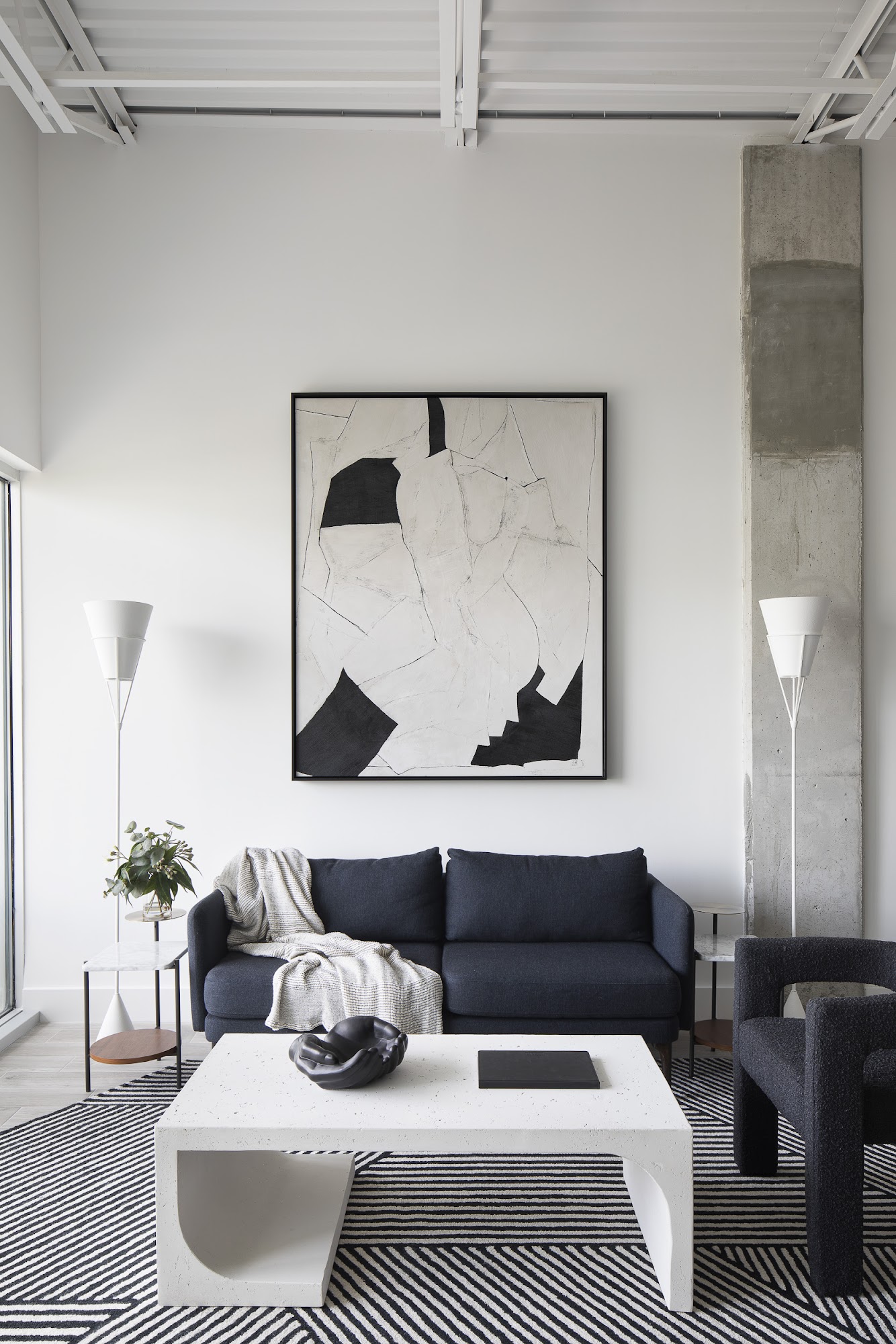
The coffee table is the centerpiece of a living room, and it is also the surface people are most intimidated by. The key is to work in zones. I typically create a grouping in the center or slightly off-center, leaving space on the edges for drinks and everyday use.
Start with a tray to anchor the grouping. The Forma Marble Curve Tray is one of my favorites—the curved marble feels sculptural on its own, and it creates a beautiful frame for whatever you place inside it.
Inside or beside the tray, add a sculptural object with height. The Eclipse Plinth Vessel gives you architecture in miniature. Its geometric form creates visual weight without taking up too much real estate. Alternatively, the Sculptural Serenity Vase offers organic curves that soften a room filled with straight lines.

Forma Marble Curve Tray
$105.00

Sculptural Serenity Vase
$452.00

Eclipse Plinth Vessel
$475.00

Travertine Trove Box
$264.00
For the low element, I love the Travertine Trove Box. It serves double duty—beautiful on the surface, functional for storing remotes, coasters, or anything you want to keep close but out of sight. A stack of two or three hardcover books beneath a small object works perfectly here too.
If your coffee table itself is a statement piece, you already have the hard part done. Keep the styling minimal—one tray, one object, one small stack. Let the table itself do the talking.
HOW TO STYLE A CONSOLE TABLE
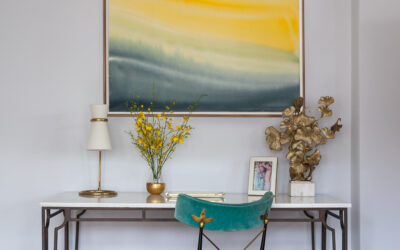
Console tables are the workhorses of a well-designed home. They anchor entryways, fill hallways, and ground the wall behind a sofa. The styling principles shift slightly because consoles are viewed from the front rather than from all sides.
Height is even more critical here because the console sits against a wall. You need something tall enough to bridge the gap between the table surface and whatever is hanging above it—a mirror, artwork, or sconce.
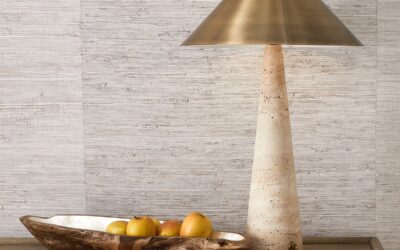
A table lamp is the easiest way to achieve this. The Aurelia Table Lamp has the height and presence to anchor one end of a console, while its warm finish pairs beautifully with both light and dark wood tones.
On the opposite end, create balance with a decorative object. The Linea Arc Vessel has a modern, architectural quality that works beautifully as a counterpoint to a lamp. Or use the Terra Fold Sculptural Vase for something more organic and textural.
In between, layer a small grouping: the Heirloom Raffia Box for warmth and texture, a small framed photo or the Éclat 24K Gold Photo Frame for a personal touch, and perhaps the Lyra Textured Ceramic Bowl to hold keys or small everyday items.

Aurelia Table Lamp
$185.00

Terra Fold Sculptural Vase
$110.00

Linea Arc Vessel
$769.00

Lyra Textured Ceramic Bowl
$400.40

Éclat 24K Gold Photo Frame
$375.00

Heirloom Raffia Box
$299.00

Hamptons Wicker Scallop Console Table
$1,893.00
If your console is the Hamptons Wicker Scallop Console Table, the woven texture already provides visual richness—keep the accessories more streamlined with clean lines and metallic accents.
HOW TO STYLE SHELVES AND BOOKCASES
Shelves are where most people go wrong, and it is almost always because they fill every inch. The secret to beautiful shelves is restraint: fill about sixty to seventy percent of the space and leave the rest open.
Work in odd numbers—groups of three or five—and alternate between vertical and horizontal orientations. A vertical vase next to a horizontal stack of books next to a small sculptural object. Repeat this rhythm across the shelves, varying the objects but keeping the pattern consistent.
The Palermo Rattan & Brass Catchall Tray is perfect for shelves because it corrals small objects into an intentional grouping. Place it on a middle shelf with a candle and a small decorative object inside.
The Harper Organic Formed Bowl, Gold Rim works beautifully on shelves too—its organic, hand-formed silhouette adds character, and the gold rim catches light in a way that draws the eye across the arrangement.

Palermo Rattan & Brass Catchall Tray
$405.00

Harper Organic Formed Bowl, Gold Rim
$395.00

Gilded Reflection Mirror
$1,600.00
For height on upper shelves, the Gilded Reflection Mirror leaned casually against the back of a shelf adds dimension and reflects light back into the room. It is a designer trick that instantly makes shelves feel more curated.

THE ACCENT TABLE: A SURFACE PEOPLE FORGET

Solenne Marble Accent Table
$179.00

Chatham Side Table
$2,064.00
Accent tables and side tables are often overlooked, but they offer a chance to create small, perfect moments throughout a room. The Chatham Side Table and the Solenne Marble Accent Table are both beautiful enough to stand on their own with minimal styling—a single candle, a small stack of books, or a drink.
The key with accent tables is simplicity. These are functional surfaces first. A lamp if the table is beside a chair or sofa. One decorative object. That is it. The beauty of a well-chosen accent table is the table itself.
MY FINAL ADVICE
The best-styled surfaces look effortless, and that is because the person who styled them understood that less is almost always more. Start with fewer objects than you think you need. Step back. Live with it for a day. Add one thing at a time until it feels right.
And invest in pieces with real material quality—stone, brass, ceramic, woven natural fibers. These are the objects that make a surface feel considered rather than decorated, and they are the ones that will still look beautiful in ten years.
Browse my full curated collection of designer-selected furniture, lighting, and accessories for every surface in your home.
Rachel Blindauer is a residential and hospitality interior designer known for creating spaces that balance luxury with livability. Browse her curated designer shop for hand-selected furniture, lighting, and accessories.
SOMETHING FOR EVERYONE
THE PIECES RACHEL RETURNS TO, AGAIN AND AGAIN
Before you go
Not sure what your style is? Take the two-minute Style Quiz and I’ll send you your look.