Quiet luxury is not minimalism. And it is certainly not neutrality for its own sake.
It is restraint with intention—the kind that reveals itself slowly, through surfaces that age beautifully, proportions that feel inevitable, and rooms that know exactly what they are without announcing it. In interiors, quiet luxury resists spectacle. It favors material honesty over decoration, proportion over polish, and spaces that feel edited rather than styled.
As an interior designer, I have spent years watching trends cycle through extremes—maximalism, then stark minimalism, then pattern overload. What endures, every time, are the rooms built on quality materials, considered layouts, and a restraint that feels generous rather than sparse. In 2026, this philosophy feels more relevant than ever, evolving with warmer textures, sculptural curves, and subtle connections to nature.
The Roots of Quiet Luxury in Interior Design
The most enduring interiors have never been loud. European townhouses with their centuries-old plaster walls and hand-laid stone floors. Early American coastal homes where wide plank boards and simple millwork spoke of craft without pretension. Mid-century modernist residences where every window placement was deliberate, every material honest about what it was.
These spaces share something essential: materials chosen to age gracefully, layouts that respect how people actually move through rooms, and a disciplined approach to color that lets light do much of the work.
Today, quiet luxury continues that lineage—infused with 2026’s emphasis on tactile warmth, biophilic wellbeing, and sustainable craft. After years of visual noise and performative design on social media, we are craving spaces that genuinely nurture. Calm sanctuaries that reflect discernment over excess.

What Quiet Luxury Really Means in 2026
At its core, quiet luxury prioritizes function, feel, and endurance—spaces that work intuitively and reward you more deeply the longer you live in them.
This means layouts with effortless circulation, where you never feel like you are fighting the room. It means long-lasting, eco-conscious materials that develop character over years rather than deteriorating. It means thoughtful, layered color that responds to changing light throughout the day. And it means furniture with sculptural presence and softened curves—pieces that look as good in person as they do in photographs, maybe better.
Nothing shouts. Everything invites lingering. In 2026, this also includes subtle biophilic touches—abundant natural light, organic forms, living greenery positioned where it catches your eye naturally—that enhance calm without adding clutter.
You know the feeling when you walk into a room and your shoulders instantly drop? That is the quiet power we are chasing.
Shop The Look


Materials That Define Quiet Luxury
Quiet luxury is tactile first. The materials that define it are surfaces that improve with age and touch—stone that develops a patina, wood that deepens in color, textiles that soften with every wash.
In my design practice, I start every project with materials before anything else. The palette of surfaces in a room—what you touch when you set down a glass, lean against a wall, or walk barefoot across a floor—determines whether a space feels expensive or merely decorated. True quiet luxury registers in your fingertips before your eyes.
Stone and Mineral Surfaces
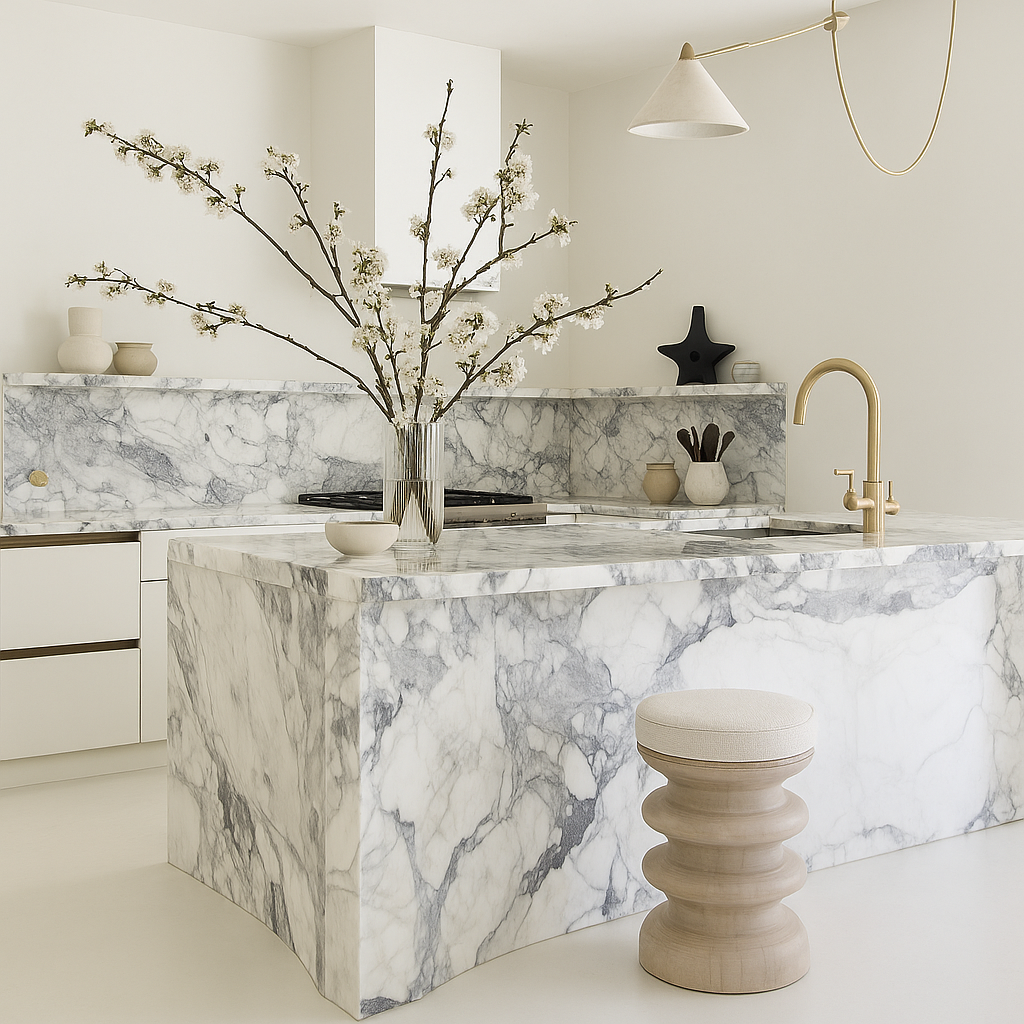
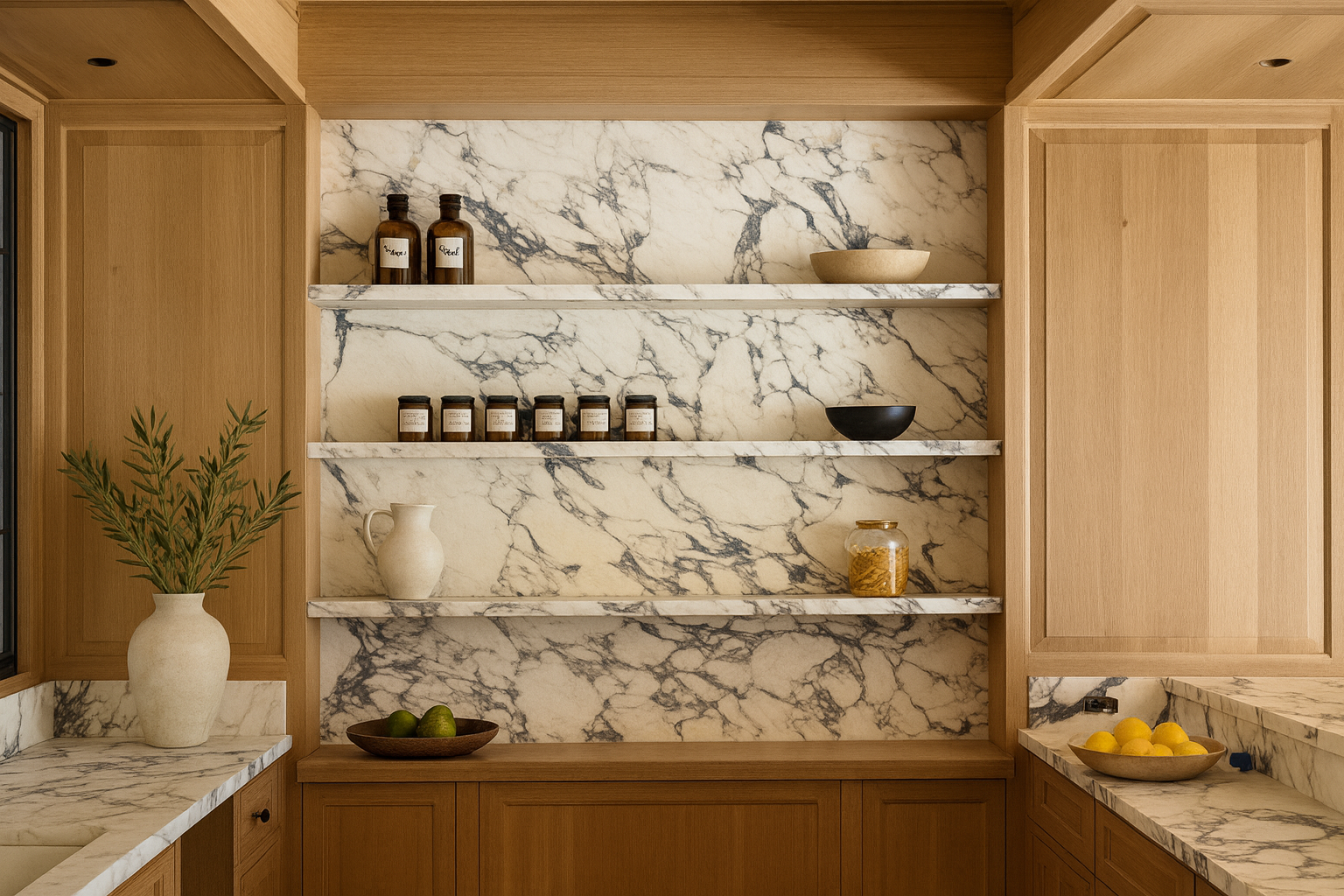
Honed travertine, limestone, and soft-veined marble ground a space with quiet authority. These are materials that have been used in the finest interiors for centuries, and for good reason—they carry visual weight without heaviness, and they age into something more beautiful than they started.
In 2026, the trend is moving toward textured stone finishes rather than high-polish. Limewash accents on plaster walls, leathered granite countertops, and tumbled marble floors all add organic depth that catches light softly throughout the day. I often incorporate sculptural stone pieces in my projects—a travertine pedestal table, a marble catchall tray—because they anchor a room effortlessly and connect the space to something ancient and enduring.
Wood with Character
White oak, walnut, and reclaimed timbers bring warmth and biography to quiet luxury interiors. The key is letting the wood show its grain, its knots, its natural variation—finished with oil or wax rather than heavy lacquer so it can breathe and develop richness over time.
In 2026, the most compelling wood applications pair beautifully with textured stone and soft textiles, creating rooms that feel layered and lived-in from day one. Wide plank floors, a hand-turned wooden bowl on a console, open shelving in a kitchen—these elements add soul that no synthetic material can replicate.
Textiles That Invite Daily Use
Linen, wool, and bouclé blends that soften over time are the textiles of quiet luxury. They are not precious—they are meant to be used, draped across, curled up in. If a fabric is too delicate to sit on without worrying, it has no place in a room designed for actual living.
Upholstery with gentle curves beckons you to stay. A swivel chair in heavy linen, an ottoman in performance bouclé, pillows that you actually lean into—these are the pieces that make a room feel both refined and completely welcoming. The best textiles in a quiet luxury interior should make you want to reach out and touch them.
Color in Quiet Luxury Interiors
Quiet luxury is far from beige-only. The palettes of 2026 are calmly colorful and warmly grounded: muted taupe, mineral greens, earthy ochres, soft mahoganies, and chalky blues that shift beautifully throughout the day as light changes.
The key is restraint in application, not in range. A room can hold several colors gracefully when each one is chosen for how it plays with its neighbors—and with the light at different times of day. I often recommend clients paint large swatches and live with them for a full day cycle before committing. The color that looks perfect at noon may feel entirely different at dusk.
In my paint guides on RachelBlindauer.com, I curate geography-specific palettes that account for regional light quality—because a warm taupe that sings in Sarasota may fall flat in a north-facing Nantucket living room. Quiet luxury demands this level of specificity.

Layout: The Invisible Ingredient
True luxury is designed, not bought. The most expensive furniture in the world cannot save a room with poor flow, awkward sightlines, or lighting that fights you at every turn.
In quiet luxury interiors, layout is the invisible ingredient that makes everything else work. Prioritize natural light fall—arrange seating where morning sun warms it, position dining tables where evening light creates atmosphere. Design seamless circulation so that moving through a room feels effortless rather than like an obstacle course.
This is where working with a designer early in the process pays for itself many times over. Getting the layout right from the foundation means every piece you add afterward has a place that feels inevitable. My consultations often start here—rethinking flow before we ever discuss a single finish or fabric.
Furniture: Fewer Pieces, Better Choices
Edited intentionality is the hallmark of quiet luxury furniture. Rather than filling a room, you are curating it—selecting fewer pieces, each one chosen for its sculptural presence, its comfort, and its ability to anchor the space around it.
In 2026, the most compelling furniture shares certain qualities: softened curves that invite touch, proportions that feel grounded rather than spindly, and materials that reward close inspection. A swivel chair in heavy linen. A chaise with the kind of curve that makes you want to stretch out. A side table in natural travertine that doubles as a sculptural object.
The best quiet luxury interiors feel like every piece was placed with care—and then the room was left alone. No filler, no matching sets, no pieces that exist only to occupy space. Just the essentials, chosen exceptionally well.
Bringing Quiet Luxury Home
Quiet luxury is not about spending more. It is about choosing differently—with patience, with specificity, and with an eye toward how a space will feel in five years, not just five minutes after the delivery truck leaves.
Whether you are starting from scratch or reimagining what you already have, the principles are the same: invest in materials that age well, design layouts that serve how you actually live, choose color with intention, and edit ruthlessly until every piece earns its place.
If you are ready to explore what quiet luxury looks like in your home, I would love to help. My design consultations are available virtually or in person in Sarasota, St. Louis, Nantucket, and Lincoln, MA—and consultation fees credit toward your project.